Overturning vetoes contradicted the opinion of consultancies on transfers
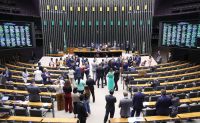
Congress's decision to overturn presidential vetoes on four points of the LDO (Budget Guidelines Law) contradicted the guidance of Legislative consultants on the topic. The technical teams from the Chamber and the Senate agreed with some of Planalto's arguments to justify the vetoes, especially in two cases.
Both the Budget, Inspection and Control Consultancy of the Senate and the Budget and Financial Inspection Consultancy of the Chamber of Deputies consider that the transfer of resources to municipalities regardless of whether they are in compliance or not violates articles of the Constitution that prohibit the Public Power from benefiting municipalities that owe Social Security
Municipalities were authorized to receive transfers such as amendments, the signing of agreements and the donation of goods, materials and inputs to municipalities with up to 65 thousand inhabitants, even if they are in default in the Cauc (Tax Requirements Information System).
For the consultancies' technical note, this is an important tool to "ratify" responsible management.
"However, the excessive flexibility of the requirement for fiscal regularity does not favor the diligent conduct of fiscal management by municipalities that are in default. In fact, provisions of the LDO should ratify responsible fiscal management, not chill it", says the text.
The note also addresses the veto that prohibited the transfer of goods by the government to municipalities during the electoral period. Electoral law already limits this type of transfer.
The approved LDO allowed the possibility of these assets being transferred even before the elections, as long as compensation is presented by the receiving entity. For example, the government can donate land, as long as the city hall builds a school on that space.
According to consultants, the law in force already mentions a limitation of this type of transfer for times of calamity to avoid the use of the public machine. This is the Executive's argument. According to Planalto, this could generate an unequal dispute between candidates in city halls and state governments.
"The legislator's intention appears to have been to avoid the use of public machinery and to promote, as much as possible, equality between candidates, whether or not they are in office. In this sense, the norm is expressed by excepting only the distribution of goods, values or benefits in cases of public calamity or state of emergency, as well as the maintenance of social programs established by law and already in execution", says the text.
Works on roads and waterways
Other rejected vetoes authorize the government to direct budget resources to works on state and municipal roads, as long as they serve productive flow or the integration of transport modes.
Planalto states that these measures also contradict "budgetary principles". With the veto overturned, Union and amendment resources can be used for the construction and maintenance of roads and municipalities if they are used for production and drainage.
In the same vein, parliamentarians also overturned the veto related to the waterway network to enable interventions in Brazilian waterways, even in stretches that are not directly under federal management.
Source: CNN