On Marilyn Monroe's centenary, why does mystery still surround her death?
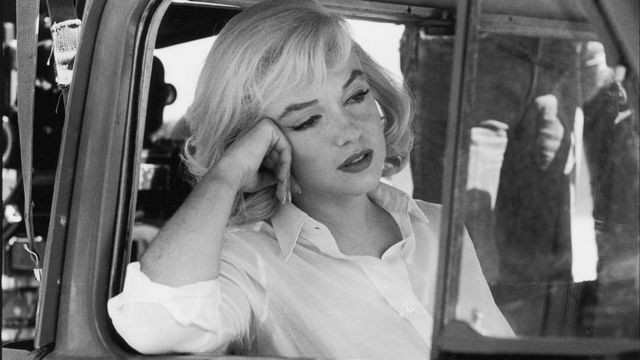
Marilyn Monroe was found dead in the early hours of August 4 to 5, 1962
Getty Images/via BBC
"The truth rarely comes to light. Usually, lies circulate... It's hard to know where to start if not with the truth."
These were the words of Marilyn Monroe in her last interview with Life magazine in 1962, shortly before her death.
Norma Jeane Mortenson (her maiden name) was born 100 years ago, on June 1, 2026.
Monroe died at the age of 36, leaving behind a life full of contrasts.
Adored by millions of people around the world, the star faced numerous psychological and emotional problems that she herself attributed to her childhood and, to a lesser extent, the weight of fame.
Her death in August 1962, officially classified as "probable suicide", sparked countless rumors and conspiracy theories that persist to this day.
Her story contains the perfect ingredients for a Hollywood film: sex, politics, secret agents and even alleged involvement with the mafia and with the American president of the time and his family.
The investigation
When the Los Angeles district attorney in the United States analyzed Monroe's case in 1982, journalist Anthony Summers traveled from the United Kingdom to California to try to unravel the mystery.
"I soon realized that the story was much broader and more complicated than I thought," he told BBC News Mundo, the BBC's Spanish-language service. "There was a lot to learn."
Summers bought a car and began visiting homes and making phone calls. He found people who were evasive or who refused to talk about it.
But Summers insisted.
He went on to interview more than 700 people, some of them with intimate knowledge of the actress's final days and hours. One of them was her housekeeper, Eunice Murray (1902-1994), in addition to the family of her last psychiatrist, Ralph Greenson (1911-1979).
Marilyn Monroe was one of the most photographed women in history
Getty Images/via BBC
As a result of this work, Summers published in 1985 the book "Marilyn Monroe, the Goddess: the Secret Lives" (released in Brazil by Editora Best Seller, in 1987).
The work served as the basis for the Netflix documentary "The Mystery of Marilyn Monroe: Unreleased Recordings" (2022).
"I didn't find anything that convinced me that she was murdered, but I did find evidence that the circumstances of her death were deliberately covered up," says Summers.
"And I would say that the evidence suggests that this happened because of the actress's connections with the Kennedy brothers."
Marilyn and the Kennedys
At the center of all the mystery surrounding the death of Marilyn Monroe, we can find the supposed relationship between the actress and the brothers John (1917-1963) and Robert "Bobby" Kennedy (1925-1968), respectively president and attorney general of the United States, at the time.
Summers managed to get direct sources to confirm that Monroe and the Kennedys frequented, with some regularity, the mansion of British actor Peter Lawford (1923-1984), brother-in-law of the politicians and acquaintance of the actress, on the beach of Malibu, California (United States).
Other of his interviewees spoke about a supposed sentimental relationship between Monroe and the two brothers (first with John and then with Bobby), which was never recognized by the Kennedy family.
In Summers' recordings, private detectives and former FBI agents claim that Monroe and the Kennedys were being spied on.
Investigators directly involved in the case told the journalist that the homes of the actress and Lawford had microphones installed by security forces and by mafia groups interested in uncovering a possible scandal to put pressure on the attorney general.
In addition, Summers reported having access to FBI files that demonstrate that the agency was investigating the actress for her alleged left-wing ideology and that her meetings with the Kennedy brothers were considered a matter of concern for security reasons.
Marilyn Monroe sang the famous Happy Birthday to President Kennedy in June 1962
Netflix/via BBC
Summers claims that this caused the Kennedys to to break off all contact with the actress.
Surveillance expert Reed Wilson told Summers that a wiretap recording revealed that, on the day of her death, Monroe told Peter Lawford to leave her alone.
"I feel used. I feel like a piece of meat. I feel like I was passed from one person to another," Monroe was quoted as saying.
"It's not that she was heartbroken," Wilson said. "It was more that she felt that she had been taken advantage of, that she had been lied to."
A plot to murder her?
The idea that Marilyn Monroe could have become an uncomfortable or even dangerous figure for the Kennedys gave rise to assassination theories.
But, for Anthony Summers, there is no evidence to support this hypothesis.
"To suggest that someone was murdered, you need to have some proof - and that proof doesn't exist", according to him.
But "the evidence from the night she died indicates that a story was invented and that the truth about how the events unfolded was not told", says the journalist.
According to the version released at the time, the housekeeper Eunice Murray saw a light [in the actress's room] at three o'clock in the morning on Sunday, August 5, and called psychiatrist Ralph Greenson.
When he arrived, he looked out the window and saw her stretched out on the bed, apparently dead.
Greenson then broke the glass and then he and Murray called the police.
But Summers gathered testimony from others with a different version.
Nathalie Jacobs, widow of Monroe's publicist, recalled that someone had warned her husband that there was an emergency with the actress around 10 or 11 pm on Saturday, August 4.
At the same time, the forensic doctor who performed the autopsy, Thomas Noguchi, determined how probable time of death 11 p.m. or midnight, which would indicate the date of death as August 4 and not August 5.
What was the reason for the discrepancy?
"It took me a long time to see what pieces of the puzzle I could find and see if they fit together," says Summers.
He got the information that an ambulance was sent to Monroe's house, which helped him "make a more real analysis of the times."
He became convinced that "there was a mistake about what happened, but not that she had been killed. The autopsy found no physical injuries, no signs of injections."
"They found sleeping pills... It seemed entirely possible that she had died from an accidental overdose. Or that she had deliberately killed herself, as she had tried before."
"I think it was more likely that it was a terrible accident, I would hope that she would have told someone or that she would have left a note, which, apparently, she did not. did."
New pieces of the puzzle
In the updates to his book, Summers managed to add missing pieces. One of them was the testimony of Monroe's hairdresser and confidant, Sydney Guilaroff (1907-1997).
Guilaroff later wrote in his biography that Marilyn called him at 9:30 pm on the night of her death. She seemed lethargic and uncomfortable.
She said she felt surrounded by danger and betrayed by powerful men. And she claimed that Robert Kennedy visited her that day and argued with her.
Monroe's housekeeper also told Summers that the attorney general visited the actress that afternoon and that there was a heated argument.
Summers believes that Kennedy needed to get out of town and that the delay in reporting Monroe's death may have served to ensure that he had already left when the news broke.
Robert Kennedy never acknowledged that he had been in Los Angeles on the day of Monroe's death. actress.
Fascination that endures
Marilyn Monroe in the year of her death, in 1962.
AP
Marilyn Monroe's life was full of glorious moments and deep pain. And, on the centenary of her birth, she continues to attract the fascination of the entire world.
Her image is "everywhere, from Connecticut [in the United States] to the Congo," according to Summers, "on mugs, bags - you name it." In the end, you could say that this pressure killed her."
The actress's last words to journalist Richard Meryman (1926-2015), who interviewed her for the American magazine Life, also reflect this desire to be taken seriously.
"Please don't turn me into a joke."
"I don't mind being joked, but I don't want to seem like I'm an artist, an actress with integrity."
*This report. was originally published in 2022, to mark the 60th anniversary of Marilyn Monroe's death. It has been updated to celebrate his birth centenary.
Source: G1