On Maria Bethânia's 80th birthday, discover eight less heard (but no less relevant) albums by the singer
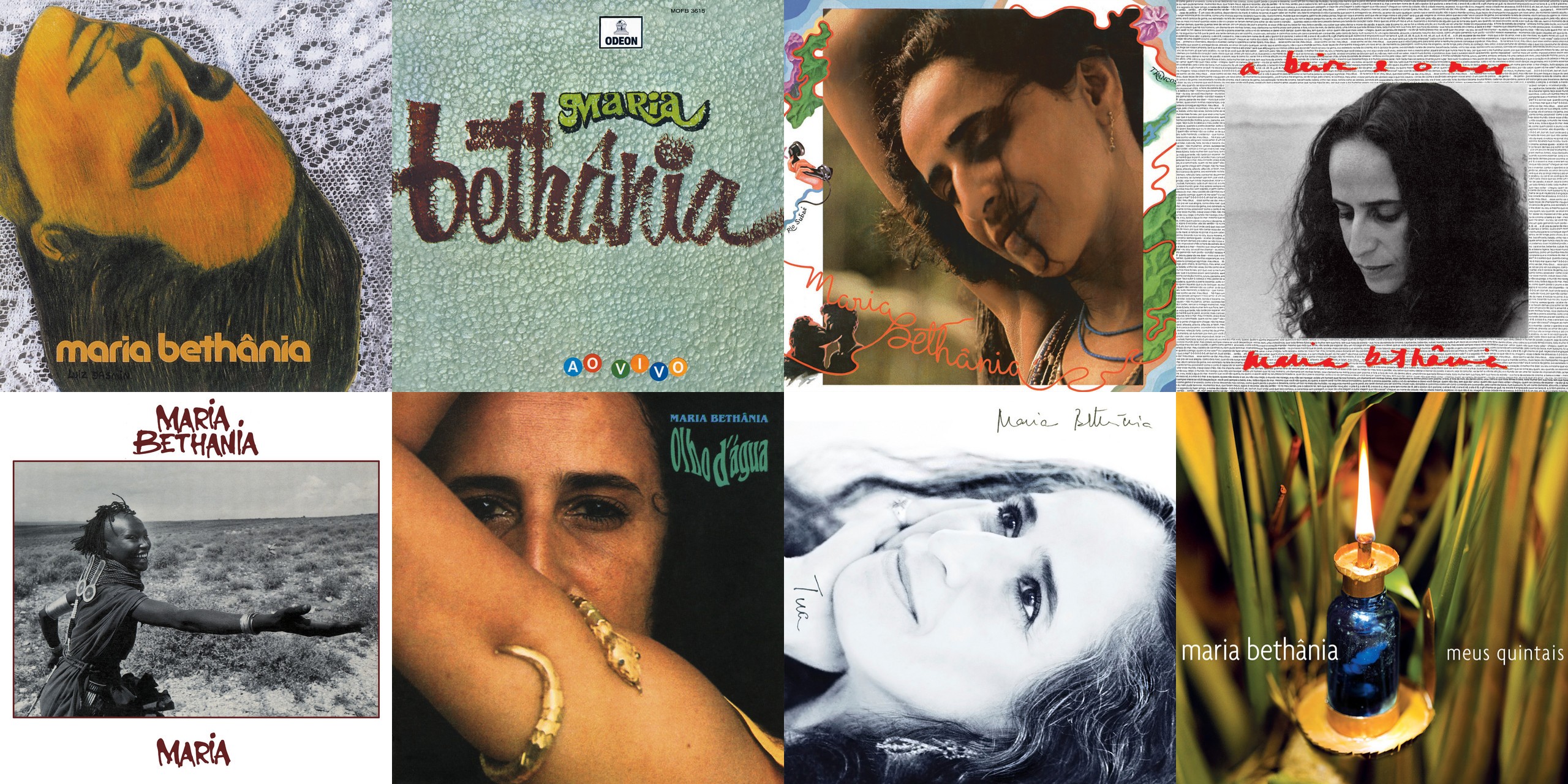
Covers of eight albums by Maria Bethânia
Reproduction / Montage g1
♫ MARIA BETHÂNIA 80 YEARS OLD
♬ On Thursday, June 18, Maria Bethânia turns 80, and, of these 80 years of life, 63 are on stage, if you count the artist's real debut in 1963 with the samba singing of Ataulfo Alves (1909 - 1969) at the opening of the play "Boca de Ouro" in a theater in Salvador (BA).
MPB's newest octogenarian will celebrate her 80th birthday without fanfare. Especially because, for the singer, the party that matters most to her was held last year to celebrate 60 years of her career with a show premiered in September 2025.
However, Maria Bethânia's 80th birthday is a reason for celebration for the subjects of Abelha Rainha - an epithet given to the Bahian singer due to the majestic carriage of the performer on stage. In light of the anniversary, Mauro Ferreira's Blog begins today, June 16th, the series of texts about Maria Bethânia's 80th birthday.
The first sheds light on eight of the artist's least heard albums. It is a fact that Bethânia's entourage knows all of these albums well, but the public that admires the singer without such devotion must certainly have heard much less about these eight albums, titles in line with the discography coherence that has remained intact since Maria Bethânia's debut on the music market in 1965.
Here are the eight albums ↴
Cover of the album 'Maria Bethânia' (1969)
Reproduction
♪ "Maria Bethânia" (1969) - This is Maria Bethânia's first solo studio album after the performer got rid of the label of "protest music singer" that the recording industry tried to impose on her. With a cover signed by Bahian artist Luiz Jasmin (1940 - 2013), the album "Maria Bethânia" reiterated the paths that would be followed by the artist throughout her discography. Between sambas-canção (some from the radio era), sambas by Brazilian composers and Afro-Brazilian themes, Bethânia exposed the strong theatricality of singing under the musical direction of maestro Lyrio Panicalli (1906 - 1984).
Album cover 'Maria Bethânia ao vivo' (1970)
Reproduction
♪ "Maria Bethânia ao vivo" (1970) - Second record show in the singer's discography, the album "Maria Bethânia ao vivo" portrays the atmosphere of the shows performed by the artist in Rio nightclubs in the second half of the 1960s before migrating to theaters and large concert halls in the 1970s. However, the recording was made on December 4, 1969 in a private space belonging to the Odeon record company for an audience made up of guests. The warmth of the live recording is impressive. As for the repertoire, it is worth highlighting the fado "Os argonautas" (by Caetano Veloso, released in 1969), "Irene" (another song from Caetano's 1969 vintage), "Ponto de Iansã" - a track in which the saint appears to descend into the performer at the opening of the album - and the samba de roda song "Marinheiro Só".
Cover of the album 'Alteza' (1981), by Maria Bethânia
Reproduction
♪ "Alteza" (1981) - Perhaps due to the overall unattractive repertoire, this album sold less than its three predecessors and signaled the wear and tear of the orchestral formula that had been followed by Bethânia in the last albums produced and arranged by guitarist Perinho Albuquerque (1946 - 2025). So much so that the singer would change route on her next studio album, the essential "Ciclo" (1983). However, among unknown songs by Djavan and Gilberto Gil, "Alteza" bequeathed the song "Maravida" - provided by Gonzaguinha (1945 - 1991) then at the height of his success and authorial production - and the samba "Purificar o Subaé", composed by Caetano and recorded by Bethânia with Caetano, Gilberto Gil and sister Eunice Veloso (1928 - 2011), the Nicinha.
Cover of the album 'A Beira e o Mar' (1984), by Maria Bethânia
Reproduction
♪ "A Beira e o Mar" (1984) - Album with an introspective character, recorded against the technopop that was already beginning to set the tone for Brazilian music, "A Beira e o Mar" arrived in stores without fanfare at the end of 1984 with Bethânia having a low price on the market phonographic.
Derived from the show "A hora da Estrela", presented by the singer in 1984, the album features some of the best recordings in Maria Bethânia's discography - starting with the heartbreaking interpretation of "Na Primeira Morning", a song that author Alceu Valença had released in 1980 without the slightest repercussion. Other gems are the then unreleased song "Para eu stopping me doer" - by Milton Nascimento and Fernando Brant (1946 - 2015), composers then debuting in Bethânia's solo discography (she had sung the duo in the group Doces Bárbaros) - and Caetano's song "O nome da Cidade", presented in the aforementioned show "A hora da Estrela". The samba by Roberto Mendes and Jorge Portugal (1956 - 2020) deserves an honorable mention, for which the album "A Beira e o Mar" was named. In a fleeting way with technopop, Bethânia confirmed the strength of her personality by resisting the empire of Sullivan & Massadas, a duo that never recorded while on the roster of the record label BMG, HQ of the composers. From this perspective, the album "Maria" symbolized the performer's declaration of independence. It is an internalized album, with an acoustic frame, in which Bethânia offered definitive interpretations of three already known songs by Caetano Veloso. The trio is formed by "Onde andarás" (1967), "Tá combina" (1986) and "O jealousy" (1987), this one recorded as a duet with Gal Costa (1945 - 2022), with an arrangement that exemplified the excellent use of synthesizers. In addition to Gal, "Maria" featured appearances by the French actress and singer Jeanne Moreau (1928 - 2017) and the South African group Lady Smith Black Mambazo.
Cover of the album 'Olho d'água' (1992), by Maria Bethânia
Reproduction
♪ "Olho d'água" (1992) - In another album with an internalized tone and low sales, Bethânia offered pearls to few in this perhaps is the most unknown title in the artist's discography. With an acoustic sound based on acoustic guitars, some played by the album's arranger and musical producer Jaime Alem, "Olho d'água" opened and closed with vignettes of "Sodade, meu bem, sodade" (Zé do Norte, 1953). Between one and the other, Bethânia ennobled "Medalha de São Jorge" (1992) - a jewel of the partnership of Moacyr Luz and Aldir Blanc (1946 - 2020) - and sang "Modinha" (Antonio Carlos Jobim and Vinicius de Moraes, 1958). There are other real diamonds in the vein of "Olho d'água", an album named after music written by Caetano Veloso on a poem by Waly Salomão (1943 - 2003). Among them, the song "Ahme da last star" (Dominguinhos and Fausto Nilo, 1992) and the chula "Vida vã" (Roberto Mendes and Jorge Portugal, 1992), a track that signaled that the hometown of Santo Amaro da Purificação (BA) is always a safe haven for Maria Bethânia's singing.
Cover of the album 'Tua' (2009), by Maria Bethânia
Reproduction
♪ "Tua" (2009) - Perhaps because it was eclipsed by the festive energy of "Encanteria", an album released simultaneously with "Tua" in a double album that had already been made by Bethânia three years earlier with the joint editions of the albums "Mar de Sophia" and "Pirata" in 2006, this delicate album went almost unnoticed. In "Tua", the singer celebrated autumnal love without the dramatic outbursts of the past, giving voice to beautiful songs such as "Até o fim" (Cezar Mendes and Arnaldo Antunes), "Você lost" (Márcio Valverde and Nélio Rosa), "Saudade" (Chico César and Paulinho Moska) - a song with a ruralist aura recorded by the singer in a feat with Lenine - and the guarânia "Guriatã" (Roque Ferreira), among other great moments. The title song "Tua" is written by Adriana Calcanhotto.
Cover of the album 'Meus Quintais' (2014), by Maria Bethânia
Reproduction
♪ "Meus Quintais" (2014) - While focusing on her own tribe, Bethânia presented an album immersed in rural Brazil populated by indigenous people, Yaras and caboclos. A Brazil that still pulses strongly in the less urban paths of the great national hinterland.
Unreleased songs such as "Casa de caboclo" (Roque Ferreira and Paulo Dáfilin) and "Xavante" (Chico César) carried a country, country and/or indigenous feeling that evoked the universe of "Brasileirinho", one of the most acclaimed titles in Maria Bethânia's robust discography in the current 21st century. The re-recording of "Mãe Maria" (Custódio Mesquita and David Nasser, 1943) was in tune with this Brazil from within in which fits both the country plea of "Lua beautiful" (Zé do Norte and Zé Martins, 1953) - made with the strings of the Rio group Tira Poeira - and the memory of "Moda da onça" (Paulo Vanzolini, 1960).
Source: G1