Oil recovers initial losses after US-Iran meeting is canceled
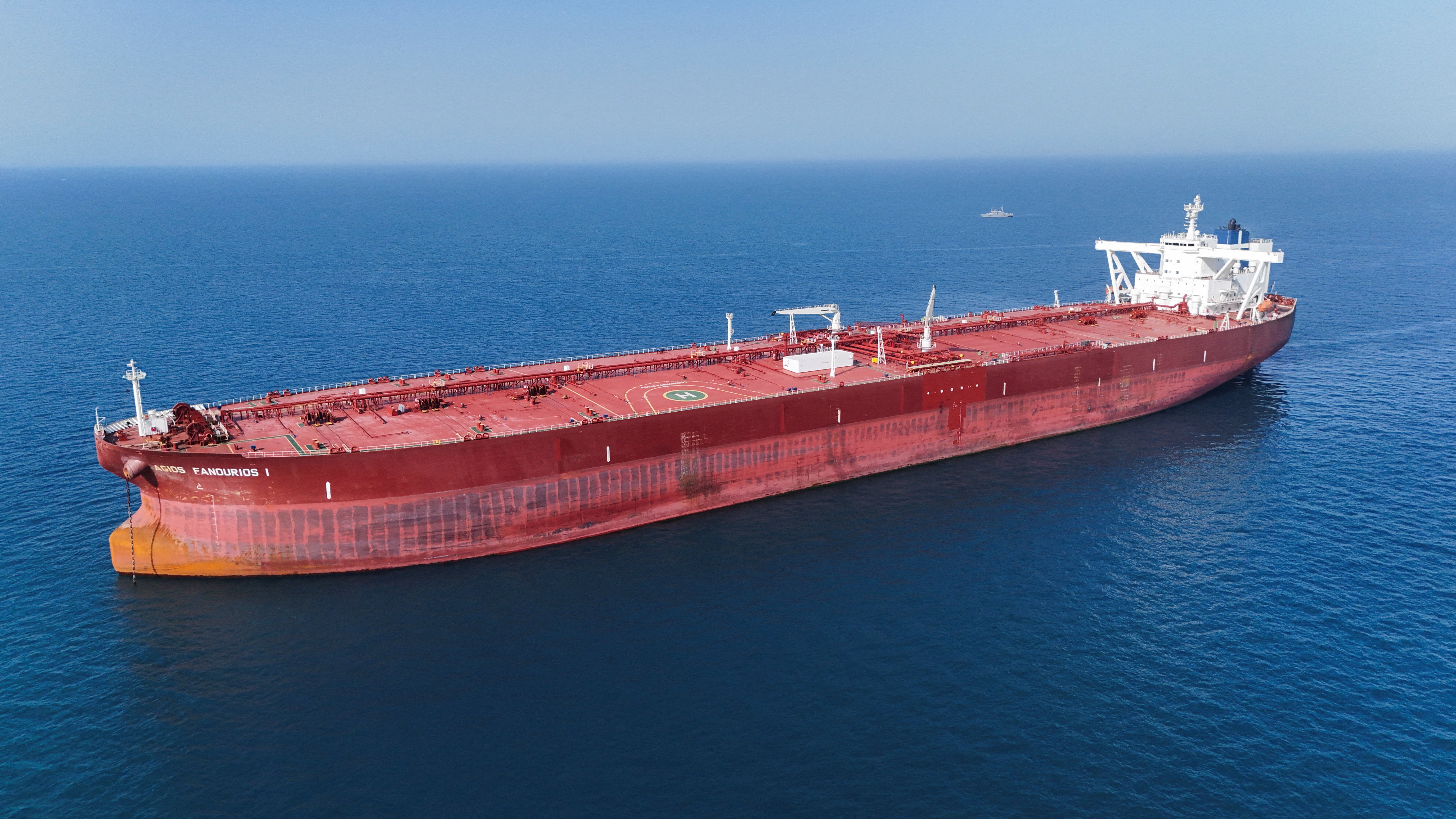
Drone image shows the Maltese-flagged oil tanker Agios Fanourios I, which sailed through the Strait of Hormuz and arrived in Iraqi territorial waters, near Basra, Iraq, on April 17, 2026.
REUTERS/Mohammed Aty/File Photo
Oil prices rose again this Friday (19) after the planned negotiations between the United States and Iran, which would take place in Switzerland, were cancelled. The interruption of talks increased investors' caution regarding the implementation of the peace agreement signed this week between the two countries.
The barrel of WTI oil, a reference in the United States, increased 0.8% and was traded at US$ 77.23. Earlier, the commodity even registered a drop due to the expectation of an increase in global supply after the signing of the understanding between Washington and Tehran and the resumption of navigation through the Strait of Hormuz.
The change of course occurred after the US Vice President, JD Vance, canceled his trip to Switzerland to meet with Iranian representatives. The Swiss Ministry of Foreign Affairs confirmed that the talks scheduled for this Friday will not take place.
Despite the day's rise, oil is still on track to end the week at a low. Prices had been pressured by the prospect of normalization of oil flow in the Middle East after the agreement that ended almost four months of conflict between the US and Iran.
After signing a preliminary agreement between the US and Iran, Israel posts a map with military occupation in Lebanon
In the Middle East, oil tankers began to cross the Strait of Hormuz again after the United States lifted the blockade on Iran on Thursday (18). The resumption of circulation through the route, responsible for a significant portion of world oil trade, is seen as a factor that could increase the supply of the commodity in international markets.
Analysts at RBC Capital Markets stated, however, that there are still doubts about the durability of the agreement. In a report, the institution assessed that the reopening of Hormuz could occur gradually, similar to what was observed in the Red Sea after the agreement reached with the Houthis in 2025, when maritime traffic continued below levels recorded before the crisis.
Stock markets retreat in Asia
Asian stock markets closed lower this Friday, in a profit-taking movement after strong recent increases.
In Japan, the Nikkei index fell 0.6%, after of having reached a new intraday record for the fifth consecutive session. In South Korea, the stock market fell 1.8%, although it still rose 9.5% in the week.
Stock markets in mainland China and Hong Kong remained closed due to the Dragon Boat Festival holiday. In Taiwan, markets also did not operate.
Foreign exchange traders watch monitors in the foreign currency trading room at Hana Bank headquarters in Seoul, South Korea.
Ahn Young-joon / AP
Dollar gains strength
The dollar advanced against the main global currencies after the Federal Reserve (Fed), the central bank of the United States, signaled a tighter stance on interest rates.
The index that measures the performance of the American currency against a basket exchange rate rose and was on track to end the week with an increase of 1.3%. The movement occurred after members of the Fed indicated the possibility of further interest rate hikes throughout the year.
Understand how the loss of value of the dollar around the world has an impact on Brazil
Jornal Nacional/ Reproduction
The appreciation of the dollar put pressure on precious metals. Gold fell 1.9%, while silver fell 3.6%.
In fixed income markets, US Treasury bond yields fluctuated after investors assessed the effects of US monetary policy and the impact of the recent drop in oil prices on inflation.
*With information from Reuters.
Source: G1