'Obstacles to trade and investment': American Chamber of Commerce for Brazil cites increase in costs after Trump administration threatens new tariffs
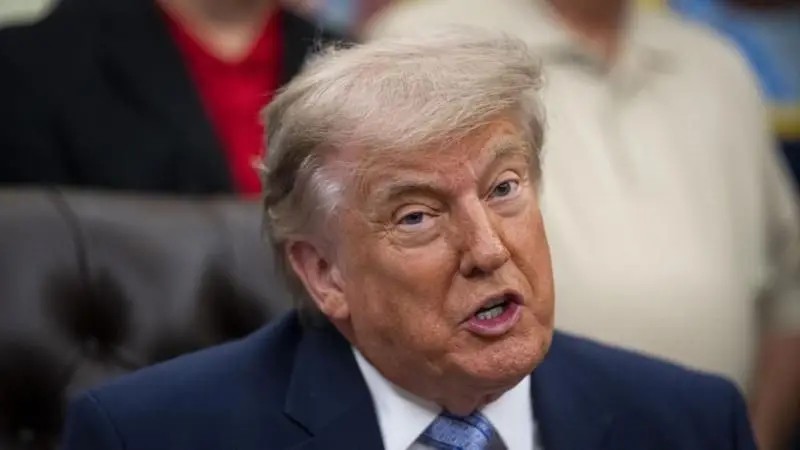
Donald Trump, President of the United States
EPA/Shutterstock via BBC
If 25% tariffs on certain Brazilian products are implemented by the United States, Brazil could face increased costs, reduced competitiveness and obstacles to bilateral trade and investment.
🗒️ Do you have any suggestions for a report? Send to g1
This is the view shared by the American Chamber of Commerce for Brazil (Amcham) following the publication of the conclusions of a long investigation carried out by the office of the United States Trade Representative (USTR).
In a document published on Monday (1), the American government said that certain practices of the Brazilian government are "unreasonable" and "encumber or restrict US trade" and, therefore, retaliatory tariffs of 25% should be imposed against products Brazilians.
Although this is just a USTR recommendation - the tariffs will still be discussed over the next few weeks -, Amcham states that diplomatic efforts are needed from both nations to "avoid a more onerous tariff treatment for Brazilian exports in the North American market in relation to their competitors from other countries".
Now on g1
"The report is not final and reinforces that there is still time to avoid the adoption of new tariffs. The business sector expects the two governments intensify their efforts in the coming weeks and reach a solution that addresses the issues under discussion, preserving the necessary conditions for the evolution of trade and investment in both countries", stated Abrão Neto, president of the organization, in a statement.
Also according to Amcham, the report of a second investigation conducted by the United States under Section 301, related to imports of products made with forced labor, which could result in additional tariffs for around 60 countries, including Brazil, should be published in the same weeks. Therefore, says the organization, a negotiated solution is even more important.
READ ALSO:
Trump government concludes that PIX is 'unfair': why does the Brazilian system bother the USA so much?
USA concludes that Brazil has 'unreasonable' practices and proposes 25% tariff
Trump tariff: see which Brazilian products should be left out of the 25% rate proposed by the USA
The conclusions of the investigation
In July last year, the United States government opened a trade investigation against Brazil based on the so-called Section 301 of the 1974 Trade Act, a legal instrument that allows Washington to investigate foreign practices considered unfair or discriminatory against American companies and products.
The conclusion report released this Monday is 107 pages long and brings conclusions from the investigation in six different areas.
Among other things, the document maintains that certain Brazilian policies and practices related to digital commerce, media payment electronics, intellectual property, combating corruption, market access and other matters negatively affect commercial interests of the United States.
One of the targets of the American investigation is the Pix payment system.
"Brazil has unfairly harmed American companies that operate in competing electronic payment services, including through policies that favor its national champion, Pix", states the report.
In response to the conclusions, the USTR proposes that "appropriate action would include the application of 25% tariffs on all Brazilian products", but with several exceptions that are listed in an annex.
These exceptions include products that could negatively affect the American economy if they were subject to tariff increases, products that cannot be cultivated and produced in the USA and articles whose taxation "would not contribute" to ending the Brazilian practices condemned in the investigation.
Uncertainty can deter investments
For economist Guilherme Klein Martins, professor at the University of Leeds, in the United Kingdom, the list of exceptions to tariffs that can be implemented protects sectors crucial to the Brazilian and American economies and, therefore, the immediate impact of taxation should be limited.
"Examples include the coffee sector and the aeronautical industry, whose exclusion aims to avoid inflation and problems in the supply chain in the United States. However, medium-complexity manufacturing sectors, which still export to the USA, may be more affected as they are not included in these exceptions", assesses the professor.
The economist highlights, however, that the discussion about Pix has a potential greater negative effect for Brazil. "Although it does not foresee immediate effects, the simple fact that the issue is on the agenda and could become a reason for dispute is a complicated factor. However, it does not seem likely that the government will change its stance because of this in the short term", he says.
Guilherme Klein Martins also draws attention to the increase in uncertainty for multinational investors. The expert points out that the decision comes days after the United States classified the Brazilian criminal factions Primeiro Comando da Capital (PCC) and Comando Vermelho (CV) as terrorist organizations.
This moment of tension in different areas, he says, could lead companies to hold back investments in the short term while awaiting developments. elections, a time when everything can be reviewed", he says.
Source: G1