The Great Debate: Brazil provokes Trump by citing risk of military action?
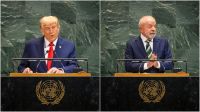
Federal deputies Ricardo Salles (Novo-SP) and Orlando Silva (PCdoB-SP) debated, on Wednesday (8), in O Grande Debate (from Monday to Friday, at 11pm), on whether "Brazil provokes Trump by citing the risk of military action".
The United States government classified as "absurd" the hypothesis raised by Itamaraty of American military action on Brazilian territory. In a note to CNN, a State Department spokesperson refuted the letter signed by the Brazilian Foreign Minister, Mauro Vieira, and sent to the Chamber of Deputies.
In the document, Itamaraty warned of the risks of classifying the PCC (Primeiro Comando da Capital) and Comando Vermelho as terrorist organizations, pointing out possible implications for Brazilian citizens.
For the American spokesperson, Mauro Vieira's allegations are vague and serve as a pretext for, according to him, helping and covering up "some of the most violent groups in the world". The episode generated intense political debate in Brazil, with parliamentarians differing on the nature and relevance of the document sent by Itamaraty to the Legislature.
Salles criticizes the government's stance on the classification
Deputy Ricardo Salles (Novo-SP) assessed that the hypothesis of American military intervention in Brazil is "absurd" and "completely insane". For him, the United States has no interest in carrying out military action in Brazil, which it considers a long-time partner.
However, Salles argued that it is legitimate for Americans to seek financial and judicial retaliation mechanisms against members of transnational criminal organizations such as the PCC and Comando Vermelho, which, according to him, have influence in countries such as Portugal and throughout Latin America.
Salles stated that Chancellor Mauro Vieira's speech is "totally unreasonable and unbalanced" and represents an attempt by the government of President Luiz Inácio Lula da Silva (PT) to reduce the impact of classifying these organizations as narco-terrorists.
"I am very surprised by the government's resistance to allowing an international organization to classify criminal organizations here in Brazil, which do so much harm to our country, as terrorist organizations", he declared.
The parliamentarian also criticized what he called "laxity" in matters of public security and took a stand against the PEC (Proposed Amendment to the Constitution) on public security, arguing that centralizing this policy in the federal government would be counterproductive.
Orlando Silva defends Itamaraty's technical response
Deputy Orlando Silva (PCdoB-SP) adopted a different position, stating that he had read Mauro Vieira's document and classifying it as "a technical response to a request for information made by the Chamber of Deputies itself".
For him, the letter points out the risks of applying the extraterritoriality of an American law in other countries, and there is nothing extraordinary in what was responded by Itamaraty.
Silva argued that the American decision to classify the PCC and Red Command as terrorist organizations could, paradoxically, limit international intelligence cooperation between the two countries.
"I want Brazil to cooperate with the American forces dedicated to intelligence, so that we can combat these organizations that have a transnational intervention. But Brazil must always defend its sovereignty", he stated.
The parliamentarian also defended the need for a national public security plan that articulates the Union, states and municipalities, and cited the strengthening of the Federal Police as an example of successful investment in the area.
The texts generated by artificial intelligence on CNN Brasil are made based on video cuts from the newspapers in its programming. All information is investigated and checked by journalists. The final text is also reviewed by the CNN journalism team. Click here to find out more.
Source: CNN