Accumulation of tension fronts increases challenges in the relationship between Brazil and the USA
The relationship between Brazil and the United States began to simultaneously bring together different fronts of tension.
To the negotiations to try to avoid the imposition of a 25% tariff on Brazilian products are added new commercial investigations led by Washington, episodes on security and a political dispute that has gained strength in the National Congress.
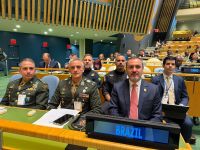
One of the topics that most mobilized the debate in recent days was a letter from the Brazilian Ministry of Foreign Affairs that mentioned the possibility of possible use of force by the United States following the classification of the PCC (Primeiro Comando da Capital) and the CV (Comando Vermelho) as terrorist organizations by the American government.
Although United States authorities deny that there is any discussion about military action in Brazilian territory, the document provoked a reaction from the opposition.
The Chamber's Foreign Affairs Committee approved the summons of the Minister of Foreign Affairs, Mauro Vieira, to provide clarification on the topic. The hearing date has not yet been set.
Opposition parliamentarians claim that the explanations presented by the government were insufficient and accuse the Executive of having treated an unfounded scenario.
In addition to the political dispute, the episode increased pressure from Congress on the government at a time of greater sensitivity in the bilateral relationship.
At the same time, Brasília seeks to preserve dialogue channels in the defense area. This Wednesday (8), during an agenda in Peru, the Minister of Defense, José Múcio, met with the Deputy Secretary of Defense of the United States in a meeting requested by the American government.
According to the Ministry of Defense, the meeting took place in an atmosphere of cordiality and its main theme was cooperation between the two countries in the fight against drug trafficking.
On the commercial front, the Brazilian government is concentrating efforts to try to avoid the entry into force of a 25% tariff studied by the United States.
The expectation is for a new meeting between the Minister of Development, Industry, Commerce and Services, Márcio Elias, and the American trade representative, Jamieson Greer, before the decision scheduled for next week.
Despite the negotiations, the assessment of members of the private sector and experts is cautious. Those who followed the two-day public hearing promoted by the USTR (Office of the United States Trade Representative) consider it unlikely that the tariffs will be completely reversed.
In this context, President Luiz Inácio Lula da Silva (PT) should not participate directly in negotiations with the President of the United States, Donald Trump. The government's strategy is to maintain negotiations at the ministerial level.
The senator and pre-candidate for President, Flávio Bolsonaro (PL-RJ), continues to defend that he can contribute to an agreement and has embraced a free trade area between Brazil, the United States, Mexico and Canada, which he calls Afta, in reference to the old NAFTA.
In addition to these fronts, another American investigation is ongoing and could produce new effects on the bilateral relationship. The Office of the United States Trade Representative is investigating the practice of alleged forced labor in 60 markets, including Brazil.
Although it deals with a different topic than the tariff dispute, the investigation increases American scrutiny of Brazilian commercial practices and reinforces a scenario in which differences between Brasília and Washington are no longer concentrated on a single topic and are now distributed across different areas of the relationship between the two countries.
US military intervention in Brazil is "an exercise in distant imagination", says expert | WW
Source: CNN