

Leia a noticia completa
July 9, 2025 marked a turning point in the commercial relationship between Brazil and the United States.
On that date, a year ago, US President Donald Trump announced that he would apply a 50% tariff on all Brazilian imports, claiming that this would be "necessary to rectify the serious injustices of the current regime".
Among quotes about former president Jair Bolsonaro (PL) and his trial for the January 8 attacks, Trump spoke of a "witch hunt" and "insidious attacks by Brazil against free elections and Americans' fundamental rights to freedom of expression."

The US president also addressed the STF (Supreme Federal Court), saying that the court had issued "hundreds of SECRET and ILLEGAL censorship orders on US social media platforms".
In the decree signed later, Trump sought to justify his executive order by a "national emergency" due to the "unusual" and "extraordinary" policies and actions of the Brazilian government that, according to the Republican, harm American companies, the rights of freedom of expression of US citizens and the country's foreign policy and economy in general.
But, when it came into effect, the tariff saved 44.6% of Brazil's exports to the USA, according to a calculation by the Ministry of Development, Industry, Commerce and Services.

Toque agora.
Among items that would receive a 10% rate were oil, orange juice, airplanes and their parts, as well as cellulose, considered strategic, difficult to replace and with inflationary potential.
Campaign promise
Since the presidential campaign, Trump has emphasized in his rallies how he "loved" the word "tariffs." The Republican's electoral promise was part of a strategy to strengthen the North American economy on two fronts:
- Promote the production of manufactured goods in the country;
- Reduce the deficit in the US trade balance.
Trump argued that the country saw its industry collapse, becoming dependent on imports from around the world. In this process, he claims that the USA stopped being an exporting country to buy more than it sells.
In 2024, the US trade deficit was US$918.4 billion, an increase of US$133.5 billion - or 17% - compared to 2023, according to data from the BEA (Bureau of Economic Analysis) and the US Census Bureau. In 2025, the result was marginally better: a deficit of US$901.5 billion.
After returning to the White House, Trump requested a series of studies to assess what he called a trade imbalance and unfair relations between the US and its trading partners. From the beginning, Brazil was in the sights of the republican administration, initially due to barriers applied by the country in the ethanol trade.
The beginning of it all
The 2nd of April arrives, a date baptized by the North American president as "Liberation Day". Countries were hit by so-called "reciprocal tariffs."
At the time, the rate reserved for Brazil was 10%.
Tariff to Brazil
With the announcement of the 50% rate, trade between the parties retracted and political tension began to build around the commercial imbroglio, as effective communication channels were not formed between the two countries.
And with the application of the 50% rate in August, the tariff debate also became politicized. By including the attack on the Supreme Court in his speech, Trump armed both the opposition and the situation.
Ex-president Jair Bolsonaro's "03" son, Eduardo, who has been in the US since the beginning of the year seeking collaboration with the foreign right to support his father, said that the tariff came as a consequence of the actions of minister Alexandre de Moraes. Alongside journalist Paulo Figueiredo, they stated that the tariffs were discussed in meetings they had with US government authorities.
The Lula government has already embarked on a speech for national sovereignty, defending the country's institutions and industry.
The popularity of the President of the Republic, which had been falling, gained momentum after the PT member antagonized the United States.
However, to respond to the tariff, a "separation between Church and State" was articulated. The negotiations sought to emphasize technical arguments, trying to depoliticize the discussion to avoid ideological friction with the Trump administration.
With support from the private sector, the dialogue was led by the vice-president and then minister of Development, Industry, Commerce and Services, Geraldo Alckmin (PSB).
The business community had greater openness with their North American counterparts, and even access to the White House, as in the case of businessman Joesley Batista, from the J&F group.
However, it was difficult to advance the conversation between governments via high-level channels. The conversation between the presidents also seemed, until then, even more distant.
Meanwhile, the government announced a series of measures - such as credit lines and tax rebates - to support exporters who had a good clientele in the USA to withstand the difficulties of the period.
Hug, chemistry and turning the tide
When Lula went to the United States in September to participate in the UN General Assembly (United Nations), there was not even any sign of a meeting with his North American counterpart.
It was in the corridors of the UN in New York where the two met and the dialogue began, by chance, with a hug.
"We didn't have much time to talk here, it was like, 20 seconds, but we talked, we had a good conversation and we agreed to meet up next week if that's what you're interested in. He seemed like a really nice man, actually, he liked me, I liked him. And I only do business with people I like," Trump said in his speech to the General Assembly.
"We had excellent chemistry there and that was a good sign."
From then on, the two had face-to-face meetings and exchanged phone calls, dealing with everything from trade issues to coordination between the two countries to combat organized crime.
Tariff: Private sector sees possible extension of exemptions after hearing | MORNING CALL
Tariff relief
On November 14, Trump overturned the reciprocal tariffs applied on April 2 to a series of agricultural products purchased by the US. The measure came amid the impact of tariffs on shelf prices in North American supermarkets.
Later, on November 20, the US president signed an executive order that eliminated the extra 40% tariff applied to part of Brazilian agricultural products, with retroactive validity to November 13.
According to Itamaraty, more than 200 Brazilian products had the additional charge suspended. The decision covered products such as beef, coffee, fruits, and also natural resources, such as oil.
In February 2026, came the movement that shook Trump's trade strategy: the United States Supreme Court ruled that the president violated federal law by unilaterally imposing comprehensive tariffs around the world, overturning the tariff.
Nevertheless, Brazilian exports to the country have evolved since then.
2026: A new tariff
Lula and Trump met again in May this year, in Washington. In addition to the commercial issue, they put on the agenda international cooperation in combating organized crime and the exploration of critical and strategic minerals.
At the time, Trump called Lula a "dynamic president" and said the meeting was very good.
On all these fronts, however, the situation with the United States remains unclear.
After the meeting, the US State Department classified the Red Command and the PCC (First Command of the Capital) as "Specially Designated Global Terrorists", contradicting the Brazilian government's proposals to combat crime in an integrated manner.
Regarding rare earths, a document sent by the State Department for an agreement on critical minerals misspelled Brazil's name, treating it as "country
Not enough, the Trump administration is now trying to resume pricing.
In early June, the USTR (Office of the United States Trade Representative) proposed the imposition of new 25% tariffs on all imports from Brazil under Section 301 of the US Trade Law - a trade policy tool that allows the US to investigate and retaliate against other nations against trade practices considered unfair. The investigation has been ongoing since the announcement of the 50% tariff.
The USTR determined that Brazilian government policies on digital trade, preferential tariffs, combating corruption, patent processing and piracy, ethanol and illegal deforestation generate legal uncertainty and unfair competition for US players.
The following night, he proposed the imposition of additional tariffs on products from Brazil and 59 other economies that had failed to take measures against trade in goods derived from forced labor.
The government mobilized to contest the US allegations and articulated, together with the private sector, a response to the lawsuits filed by the USTR. In parallel, it published an ordinance expanding the coverage of the Sovereign Brazil Plan, including companies with an impact of 1% on gross revenue due to tariffs or the war in the Middle East.
However, on the one hand, diplomacy sees negotiations being held back by the lack of clarity regarding the US's specific demands on Brazil. As the process progresses, the government has sought to maintain a channel of dialogue with USTR representatives.
In parallel, the private sector bet on traveling to Washington and coming face to face with the North American authorities.
Between Monday (6) and Tuesday (7), the USTR held hearings to hear arguments regarding the Section 301 investigation.
Agribusiness was present on the first day of discussions, conducting speeches with a more technical tone and little criticism of Brazil, with a deep narrative and even a defense by North American peers signaling less tension between the private sector, CNN Agro found.
Paulo Pupo, superintendent of Abimci (Brazilian Association of the Mechanically Processed Wood Industry), who attended the panels on the first day, reported that the discussions had a "higher technical level and fewer trick questions", which makes the dialogue "safer with the American authority".
Participants and spokespersons for entities that will participate in the hearing told CNN Money that the defense of Brazil's foreign trade included, in addition to challenging the validity of the investigation, an emphasis on the complementarity that exists between Brazilian and North American businesses and the long tradition that underpins the relationship between exporters here and buyers there.
After discussing the United States' trade investigation against Brazil with North American authorities, interlocutors from the private sector believe in the possibility that the list of items exempt from a possible new tariff will be expanded.
However, they recognize that it is almost inevitable that the rates will be applied to part of Brazilian products.
The USTR's final decision is scheduled for July 15th. To be seen.
Does trade opening reduce the impact of Trump's tariffs in Brazil? Understand
Source: CNN
As músicas que o Mundo está tocando agora
-
1
 Balancê
Sara Tavares
Balancê
Sara Tavares
-
2
 Majestade
Carlos A. Moyses
Majestade
Carlos A. Moyses
-
3
 It's A Great Day (for Me To Whoop Somebody's Ass)
Paul Thorn
It's A Great Day (for Me To Whoop Somebody's Ass)
Paul Thorn
-
4
 Paraíso
Danilo Santos
Paraíso
Danilo Santos
-
5
 Yesterday
Petula Clark
Yesterday
Petula Clark
-
6
 Maybe someday
The Cure
Maybe someday
The Cure
-
7
 Un Trocito De Cielo
Jaci Velasquez
Un Trocito De Cielo
Jaci Velasquez
-
8
 Call Me Up
Ezio
Call Me Up
Ezio
-
9
 Por Onde Anda Você?
Nina Fernandes
Por Onde Anda Você?
Nina Fernandes
-
10
 Con El Cielo
Hillsong Worship
Con El Cielo
Hillsong Worship
-
11
 Vem Com Teu Fogo
Adorazione
Vem Com Teu Fogo
Adorazione
-
12
 Excelente
Lucas Santos Tiago
Excelente
Lucas Santos Tiago
-
13
 Fake Amor
Melody
Fake Amor
Melody
-
14
 Rock And Roll In The Hay
Brad Cotter
Rock And Roll In The Hay
Brad Cotter
-
15
 Nunca Había Sentido Tanto Miedo
Alejandro Neri
Nunca Había Sentido Tanto Miedo
Alejandro Neri
-
16
 Hipnose
Manu Gavassi
Hipnose
Manu Gavassi
-
17
 Hey, Good Lookin'
Dean Martin
Hey, Good Lookin'
Dean Martin
-
18
 Augusta, Angélica e Consolação
Tom Zé
Augusta, Angélica e Consolação
Tom Zé
-
19
 Enquanto Cê Não Vem
Eu, Trovador
Enquanto Cê Não Vem
Eu, Trovador
-
20
 Pelo Teu Nome
Leonardo Campos
Pelo Teu Nome
Leonardo Campos
Historias das musicas em destaque
 Historia da musica
Learn to play Yesterday, by Petula Clark, and discover a beautiful classical interpretation
07/07/2026
Singer Petula Clark built a career marked by elegant interpretations and hits that spanned decades. His version of "Yesterday" presents...
 Historia da musica
Learn to play Call Me Up, by Ezio, and discover folk music full of personality
07/07/2026
The Ezio group is recognized for its compositions that combine folk, rock and sophisticated melodies. The song "Call Me Up" draws atten...
 Historia da musica
Learn to play Maybe Someday, by The Cure, and improve on the guitar
07/07/2026
Among alternative rock's most influential bands, The Cure has built a career full of memorable songs. "Maybe Someday" is one of the son...
 Historia da musica
Learn to play It's a Great Day for Me to Whoop Somebody's Ass by Paul Thorn
07/07/2026
With great humor and a vibe that mixes country, blues and rock, "It's a Great Day for Me to Whoop Somebody's Ass", by Paul Thorn, becam...
 Historia da musica
Learn to play Balancê, by Sara Tavares, and discover all the richness of Lusophone music
07/07/2026
Singer Sara Tavares marked international music with her unique identity, mixing African, Portuguese influences and contemporary sounds....
 Historia da musica
Learn to play Majestade, by Carlos A. Moyses, on the guitar with more emotion and technique
07/07/2026
Some songs manage to cross generations carrying messages of faith, hope and adoration. "Majesty", performed by Carlos A. Moyses, is one...
 Historia da musica
Learn to play Quem Você Exalta, by ExaltaSamba, on the guitar
07/07/2026
For those who like samba and pagode, "Quem Você Exalta", by ExaltaSamba, is a great song to develop new guitar skills. With a character...
 Historia da musica
Learn to play Con el Cielo, by Hillsong Worship, and strengthen your worship repertoire
07/07/2026
Hillsong Worship's "Con el Cielo" is an excellent choice for musicians who enjoy congregational worship and want to develop a solid gui...
 Historia da musica
Learn to play Por Onde Anda Você, by Nina Fernandes, and improve on the guitar
07/07/2026
The song "Por Onde Anda Você", performed by Nina Fernandes, conquers with the delicacy of the melody and the way it conveys feelings th...
 Historia da musica
Learn to play Para Só, by Danilo Santos, on the guitar with more emotion and technique
07/07/2026
If you're looking for an exciting song to expand your guitar repertoire, "Para Só", by Danilo Santos, is an excellent choice. The song...
Mais noticias para voce
 Noticia
09/07/2026
Bahrain's armed forces said they intercepted new attacks from Iran
The Bahraini Army stated, on Thursday morning (9), that it had intercepted several of Iran's air strikes. In a publication on توضح القيادة العامة أنه بإرادةٍ صل...
 Noticia
09/07/2026
The 10 best-selling electric cars in the first half of 2026
The electric car market continues to have good sales figures. In the year to date, between January and June, some models stood out, such as the most sold electr...
 Noticia
09/07/2026
Smurfit Westrock invests R$1 billion to grow in the paper and cellulose sector
Smurfit Westrock, one of the largest global paper and packaging manufacturers, consolidated an investment of R$1 billion in Brazil over the last two years to ex...
 Noticia
09/07/2026
Learn how to identify vision problems in children
On Eye Health Day, celebrated on Friday (10), experts warn of the need to carry out the Eye Test, which identifies possible vision problems. In addition, it is...
 Noticia
09/07/2026
'There is no longer a normal year': US farmers change harvest times and protect seedlings to face extreme heat
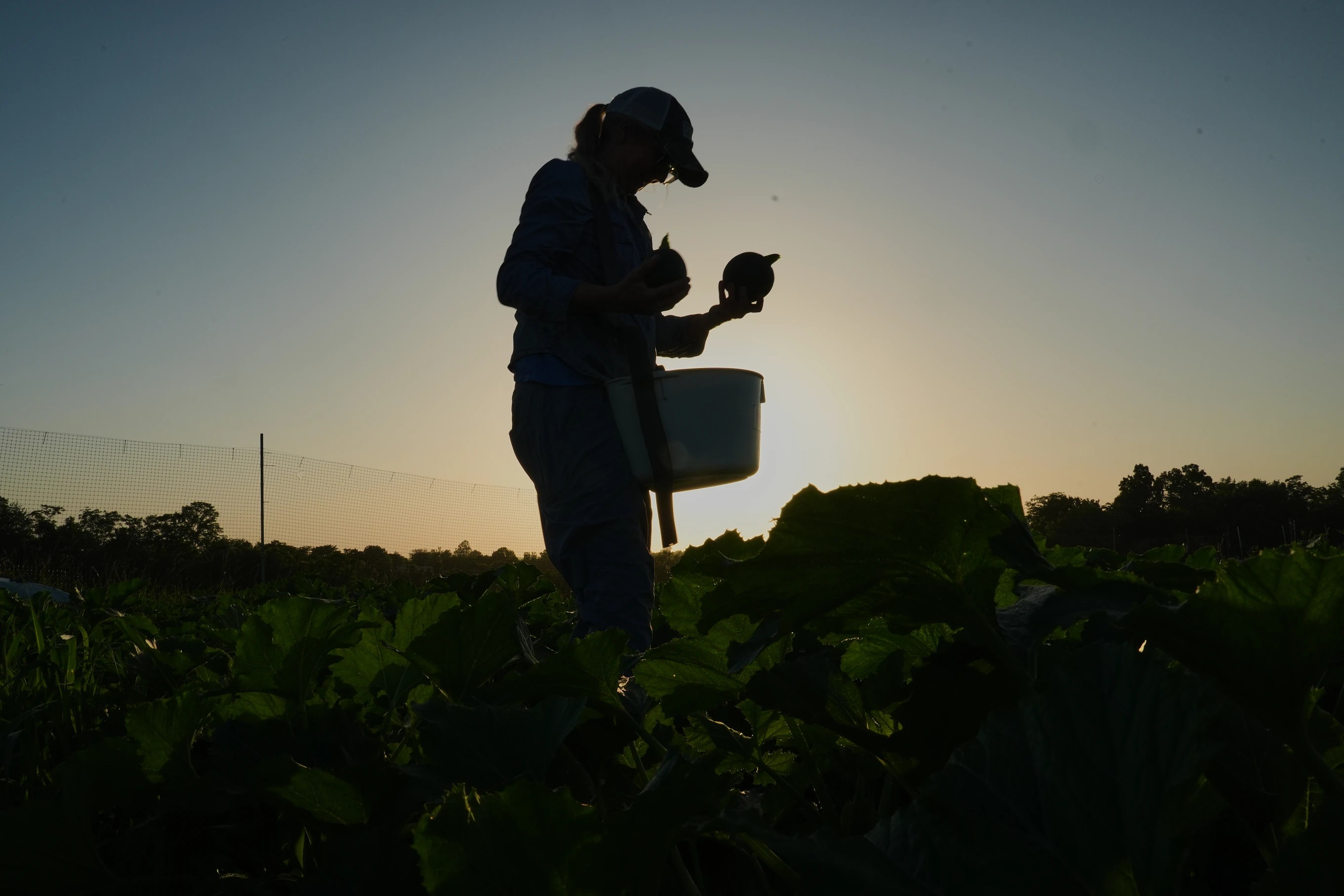
Annie Woods harvests Eight Ball zucchini at sunset on Wednesday, July 1, 2026, on her farm in Brooksville, Kentucky, USA.Joshua A. Bickel/APEven as the sun begi...
 Noticia
09/07/2026
Goal builds giant AI data center in Canada with energy equivalent to 800,000 homes
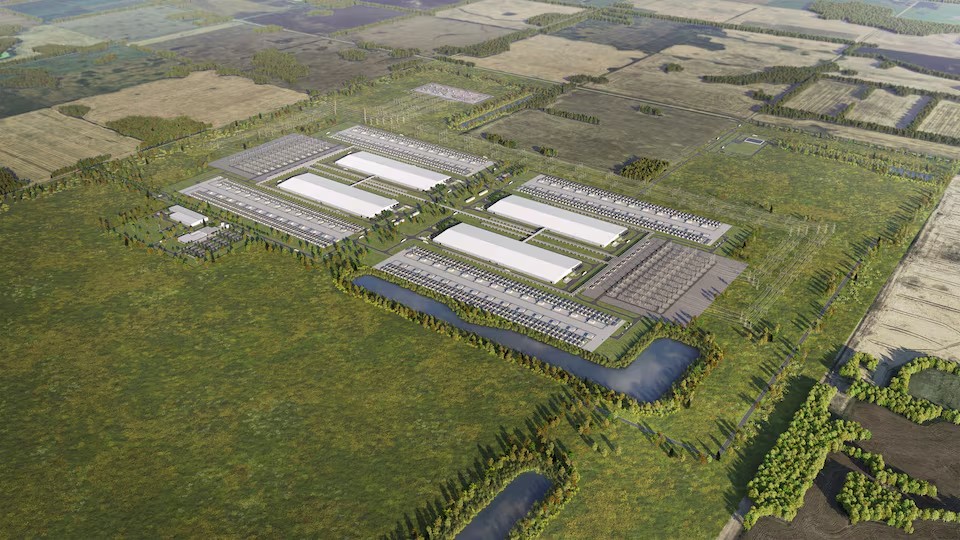
Data Center: servers function as data storage and protection systemsMeta Platforms announced the start of construction of a new data center optimized for artifi...
Participe da conversa
Seu comentario ajuda a manter a discussao viva e ainda convida outros leitores a continuar navegando pelo portal.
Seja o primeiro a comentar esta noticia.