
Leia a noticia completa
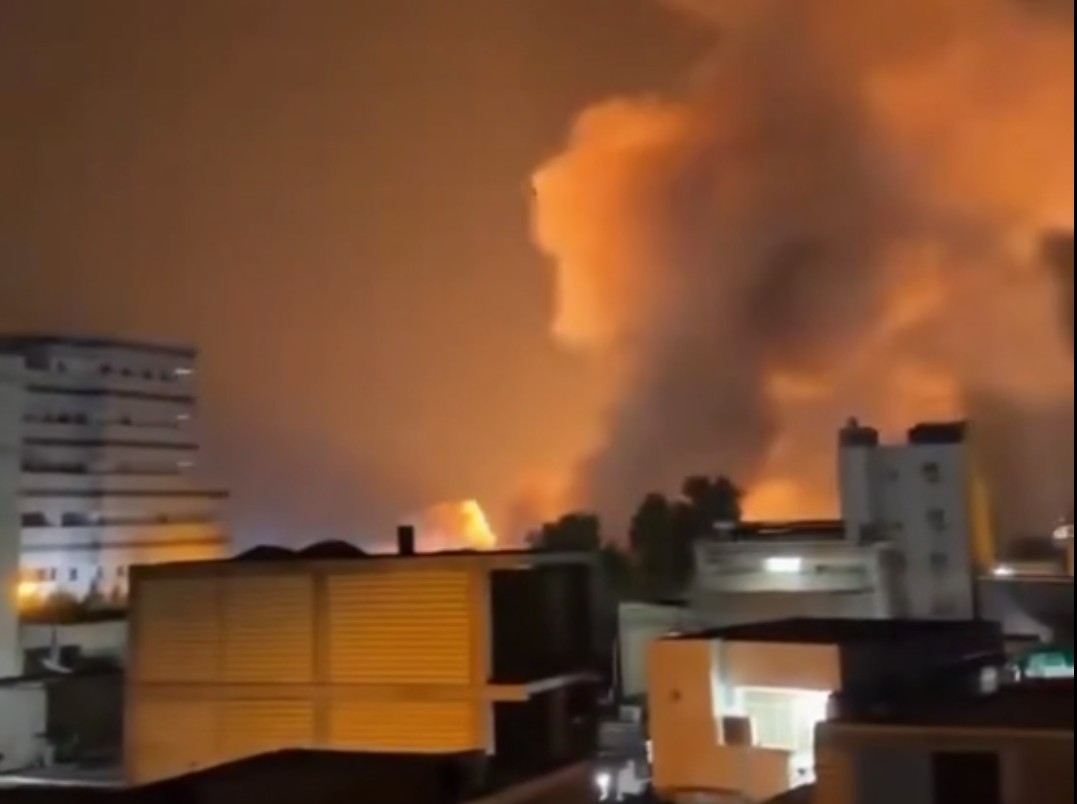
United States resumes bombing targets in Iran
The new attacks by the United States against Iran this Wednesday (8) are set against a dispute that goes beyond bombings: who exercises, in practice, control over the Strait of Hormuz. The maritime route is one of the most important in the world for the transport of oil and gas.
✅ Follow the g1 international news channel on WhatsApp
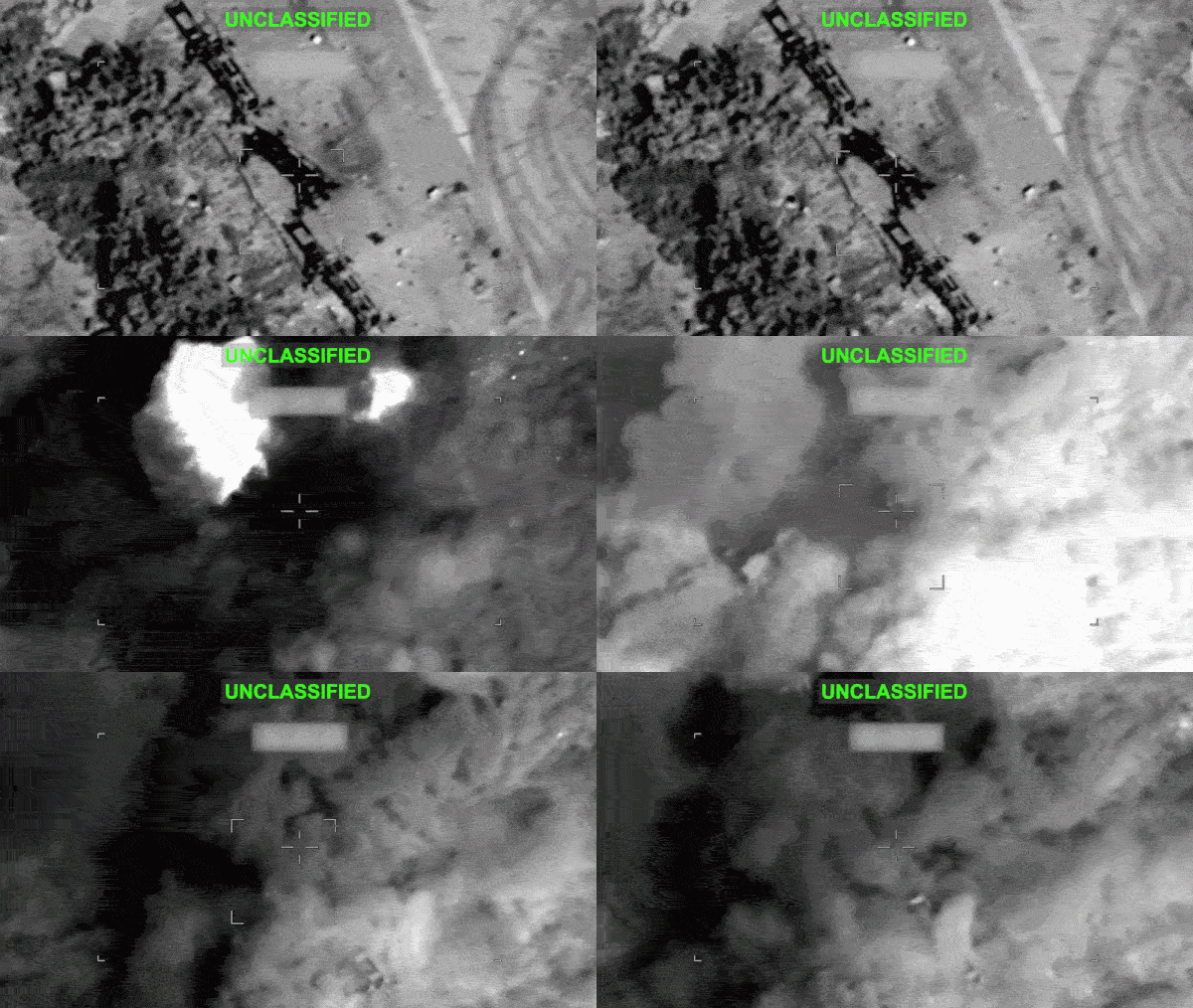
▶ Context: When announcing the new offensive, the US Armed Forces stated that the operation seeks to reduce Iran's ability to threaten freedom of navigation in Hormuz.
According to the Americans, the bombings are a response to attacks against commercial ships recorded on Tuesday (7).
President Donald Trump stated that the offensive is a direct retaliation for the episode and threatened to increase the attacks if new vessels are targeted by Iranian actions.
Iran did not claim responsibility for this week's attacks, but has already been accused of attacking commercial vessels crossing the region on other occasions.
The Strait of Hormuz is a maritime corridor of approximately 50 kilometers wide that connects the Persian Gulf with the Gulf of Oman and the Indian Ocean. Before the war, around 20% of all oil and gas traded in the world passed through the area.
Although Iran does not own the sea route, it controls the northern coast of the strait, as well as several islands and military positions. This allows the country to monitor practically all vessel traffic in the region.
In recent years, Iran has transformed this geographical position into an instrument of political and military pressure. After the start of the war, the country closed the strait to gain an advantage at the negotiating table.
Currently, the government of Iran advocates that the world recognize the country's sovereignty over the sea route.
Control of Iran
The damaged stern of a bulk carrier operated by the South Korean company HMM, after being hit by two unidentified objects in Hormuz, in May 2026
Ministry of Foreign Affairs of South Korea/Disclosure via REUTERS
Iran does not need to completely block passage through the Strait of Hormuz to cause impacts. A simple threat of attack already increases transport costs, raises the price of maritime insurance and puts pressure on the international energy market.
The Revolutionary Guard maintains a combination of fast attack boats, coastal missile batteries, sea mines and drones capable of hitting oil tankers and other commercial vessels that fail to comply with orders in the region.
The attacks recorded this week are examples of this strategy.
A tanker transporting liquefied natural gas was hit and caught fire near the coast of Oman, according to the UK Maritime Trade Operations Centre.
Two other vessels suffered damage, but managed to continue their journey. No one was injured.
According to British authorities, the three ships were sailing along a route close to the coast of Oman, an alternative to the corridor controlled by Iran.
Iranian state television stated that one of the ships attacked had disregarded instructions from Iranian authorities. Even so, the government did not officially assume responsibility for the action.
READ ALSO
Trump government reacts to Brazil's decision allowing the return of an alleged spy to Russia
VIDEO: Trump confuses Iran with Japan and calls Zelensky Putin during a press conference
New York building that generated alert for risk of collapse is stabilized
Map released by Iran shows control in the Strait of Hormuz region
Juan Silva/g1
Dispute
In addition to questions over Iran's nuclear program, the current crisis with the United States also involves a disagreement over who can set the rules for passing through the Strait of Hormuz.
As part of a temporary agreement reached between the United States and Iran in June, the two countries agreed that ships could pass through the strait without paying duties for a period of 60 days.
Still, Iran continues to insist that it is up to the country to control vessels passing through the Strait of Hormuz. Tehran also wants to charge a type of toll for the crossing.
According to the American press, Iranian authorities even discussed charging tolls of up to US$2 million per vessel.
The measure is criticized by maritime experts, who classify it as illegal and unfeasible.
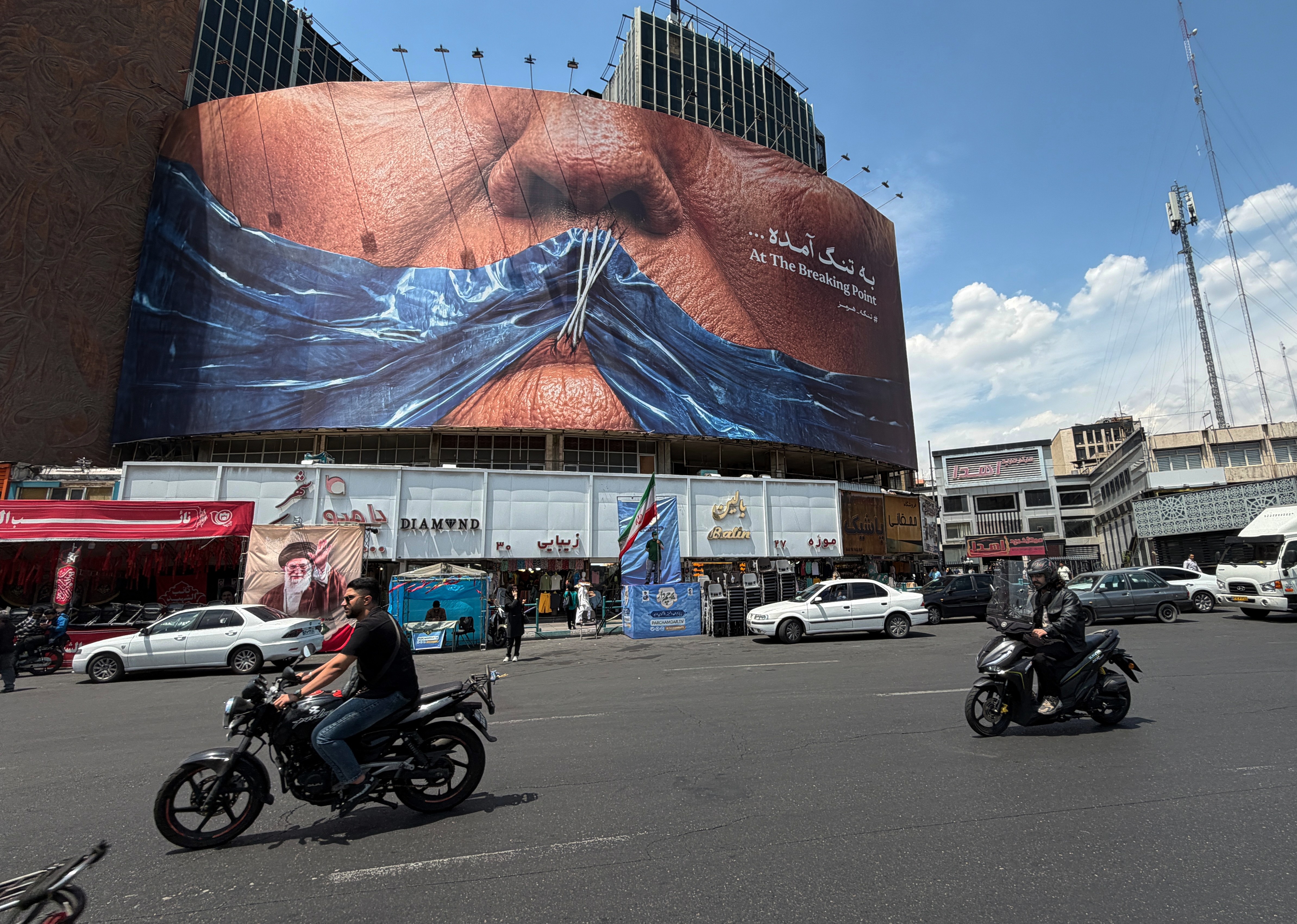
Vehicles pass by a billboard with an image of the Strait of Hormuz and the sewn lips of US President Donald Trump, in a square in the center of Tehran, Iran, Saturday, May 2, 2026.
AP Photo/Vahid Salemi
VIDEOS: now on g1
Now on g1
Source: G1


Toque agora.
As músicas que o Mundo está tocando agora
-
1
 Balancê
Sara Tavares
Balancê
Sara Tavares
-
2
 Majestade
Carlos A. Moyses
Majestade
Carlos A. Moyses
-
3
 It's A Great Day (for Me To Whoop Somebody's Ass)
Paul Thorn
It's A Great Day (for Me To Whoop Somebody's Ass)
Paul Thorn
-
4
 Paraíso
Danilo Santos
Paraíso
Danilo Santos
-
5
 Yesterday
Petula Clark
Yesterday
Petula Clark
-
6
 Maybe someday
The Cure
Maybe someday
The Cure
-
7
 Un Trocito De Cielo
Jaci Velasquez
Un Trocito De Cielo
Jaci Velasquez
-
8
 Call Me Up
Ezio
Call Me Up
Ezio
-
9
 Por Onde Anda Você?
Nina Fernandes
Por Onde Anda Você?
Nina Fernandes
-
10
 Con El Cielo
Hillsong Worship
Con El Cielo
Hillsong Worship
-
11
 Vem Com Teu Fogo
Adorazione
Vem Com Teu Fogo
Adorazione
-
12
 Excelente
Lucas Santos Tiago
Excelente
Lucas Santos Tiago
-
13
 Fake Amor
Melody
Fake Amor
Melody
-
14
 Rock And Roll In The Hay
Brad Cotter
Rock And Roll In The Hay
Brad Cotter
-
15
 Nunca Había Sentido Tanto Miedo
Alejandro Neri
Nunca Había Sentido Tanto Miedo
Alejandro Neri
-
16
 Hipnose
Manu Gavassi
Hipnose
Manu Gavassi
-
17
 Hey, Good Lookin'
Dean Martin
Hey, Good Lookin'
Dean Martin
-
18
 Augusta, Angélica e Consolação
Tom Zé
Augusta, Angélica e Consolação
Tom Zé
-
19
 Enquanto Cê Não Vem
Eu, Trovador
Enquanto Cê Não Vem
Eu, Trovador
-
20
 Pelo Teu Nome
Leonardo Campos
Pelo Teu Nome
Leonardo Campos

Historias das musicas em destaque
 Historia da musica
Learn to play Yesterday, by Petula Clark, and discover a beautiful classical interpretation
07/07/2026
Singer Petula Clark built a career marked by elegant interpretations and hits that spanned decades. His version of "Yesterday" presents...
 Historia da musica
Learn to play Call Me Up, by Ezio, and discover folk music full of personality
07/07/2026
The Ezio group is recognized for its compositions that combine folk, rock and sophisticated melodies. The song "Call Me Up" draws atten...
 Historia da musica
Learn to play Maybe Someday, by The Cure, and improve on the guitar
07/07/2026
Among alternative rock's most influential bands, The Cure has built a career full of memorable songs. "Maybe Someday" is one of the son...
 Historia da musica
Learn to play It's a Great Day for Me to Whoop Somebody's Ass by Paul Thorn
07/07/2026
With great humor and a vibe that mixes country, blues and rock, "It's a Great Day for Me to Whoop Somebody's Ass", by Paul Thorn, becam...
 Historia da musica
Learn to play Balancê, by Sara Tavares, and discover all the richness of Lusophone music
07/07/2026
Singer Sara Tavares marked international music with her unique identity, mixing African, Portuguese influences and contemporary sounds....
 Historia da musica
Learn to play Majestade, by Carlos A. Moyses, on the guitar with more emotion and technique
07/07/2026
Some songs manage to cross generations carrying messages of faith, hope and adoration. "Majesty", performed by Carlos A. Moyses, is one...
 Historia da musica
Learn to play Quem Você Exalta, by ExaltaSamba, on the guitar
07/07/2026
For those who like samba and pagode, "Quem Você Exalta", by ExaltaSamba, is a great song to develop new guitar skills. With a character...
 Historia da musica
Learn to play Con el Cielo, by Hillsong Worship, and strengthen your worship repertoire
07/07/2026
Hillsong Worship's "Con el Cielo" is an excellent choice for musicians who enjoy congregational worship and want to develop a solid gui...
 Historia da musica
Learn to play Por Onde Anda Você, by Nina Fernandes, and improve on the guitar
07/07/2026
The song "Por Onde Anda Você", performed by Nina Fernandes, conquers with the delicacy of the melody and the way it conveys feelings th...
 Historia da musica
Learn to play Para Só, by Danilo Santos, on the guitar with more emotion and technique
07/07/2026
If you're looking for an exciting song to expand your guitar repertoire, "Para Só", by Danilo Santos, is an excellent choice. The song...
Mais noticias para voce
 Noticia
09/07/2026
Electrical discharge kills young man in park that hosted COP30 in PA
A young man died after suffering an electric shock on Wednesday night (8), in Parque da Cidade, in Belém, Pará. According to witnesses, the victim was at the sk...
 Noticia
09/07/2026
One year after Trump's letter to Lula and announcement of tariffs: remember the main chapters of the trade dispute between the USA and Brazil
On July 9, 2025, the President of the United States, Donald Trump, sent a letter to President Luiz Inácio Lula da Silva (PT) announcing a 50% tariff on Brazilia...
 Noticia
09/07/2026
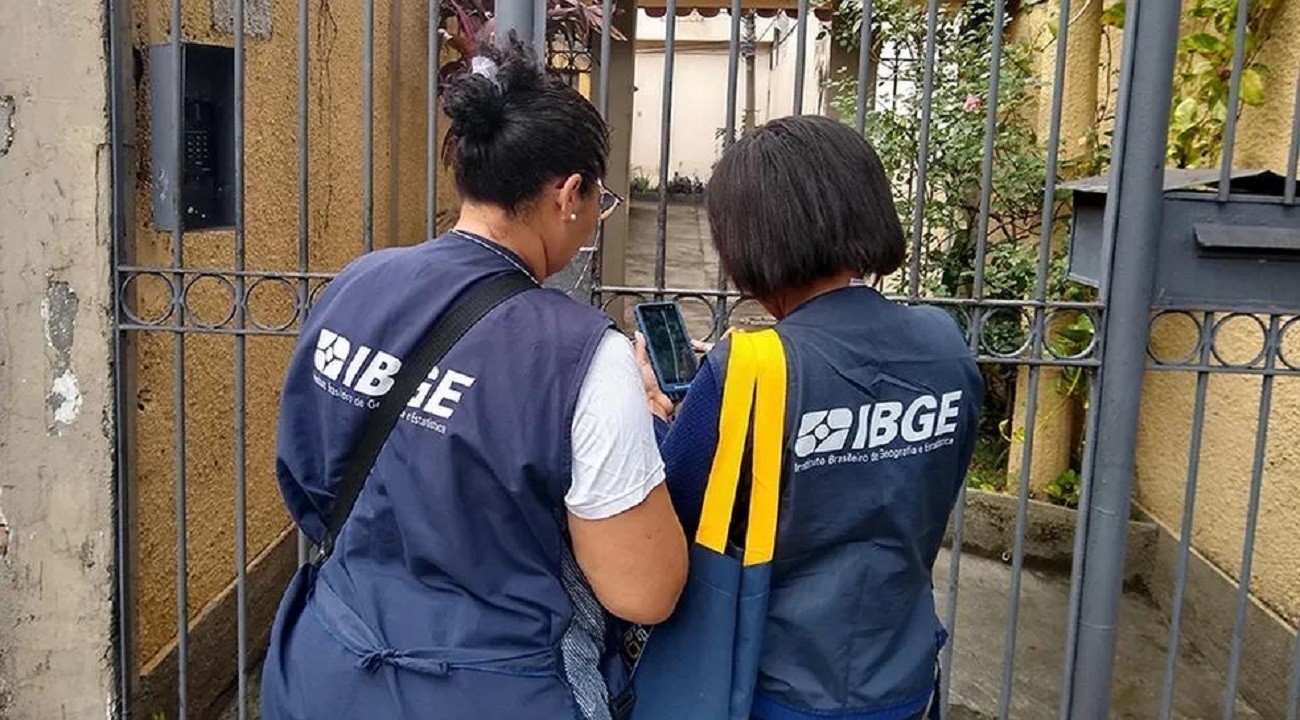
IBGE competition: after extension, registrations for more than 8 thousand places end this Thursday
IBGE extends registrations for competition with more than 8 thousand temporary vacanciesAfter being extended, registrations for the simplified selection process...
 Noticia
09/07/2026
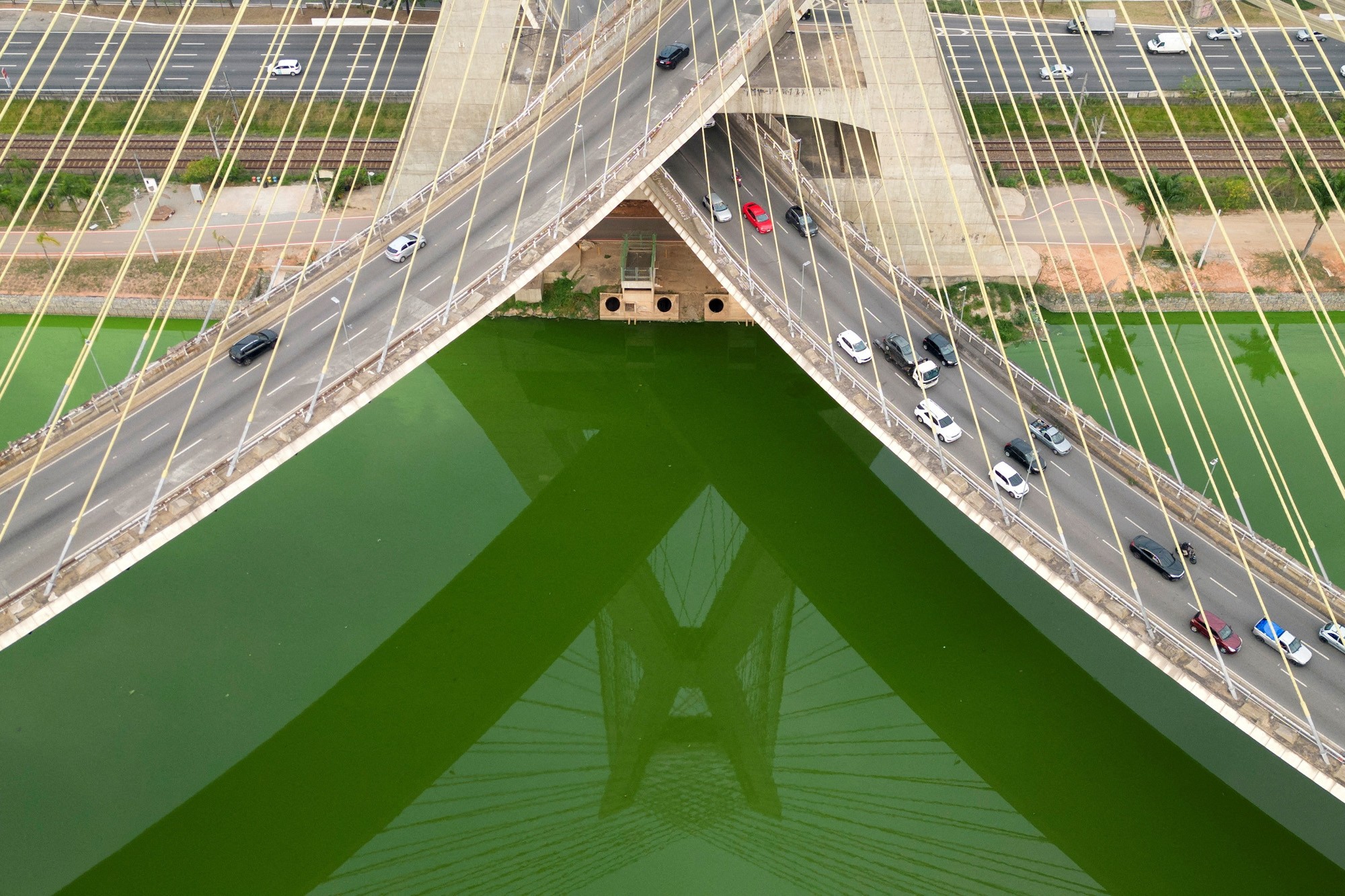
Why do most Brazilians work today, but São Paulo has time off? Understand reason and rules
The Constitutionalist Revolution of 1932 is remembered to this day in São PauloWhile millions of Brazilians leave their homes normally to go to work this Thursd...
 Noticia
09/07/2026
France and Morocco face each other on the 1st day of the 2026 World Cup quarterfinals; see timetable
Kylian Mbappé, from France, celebrates the team's first goalREUTERS/Bernadett SzaboThe quarter-finals of the 2026 World Cup begin this Thursday (9) with the gam...
 Noticia
09/07/2026
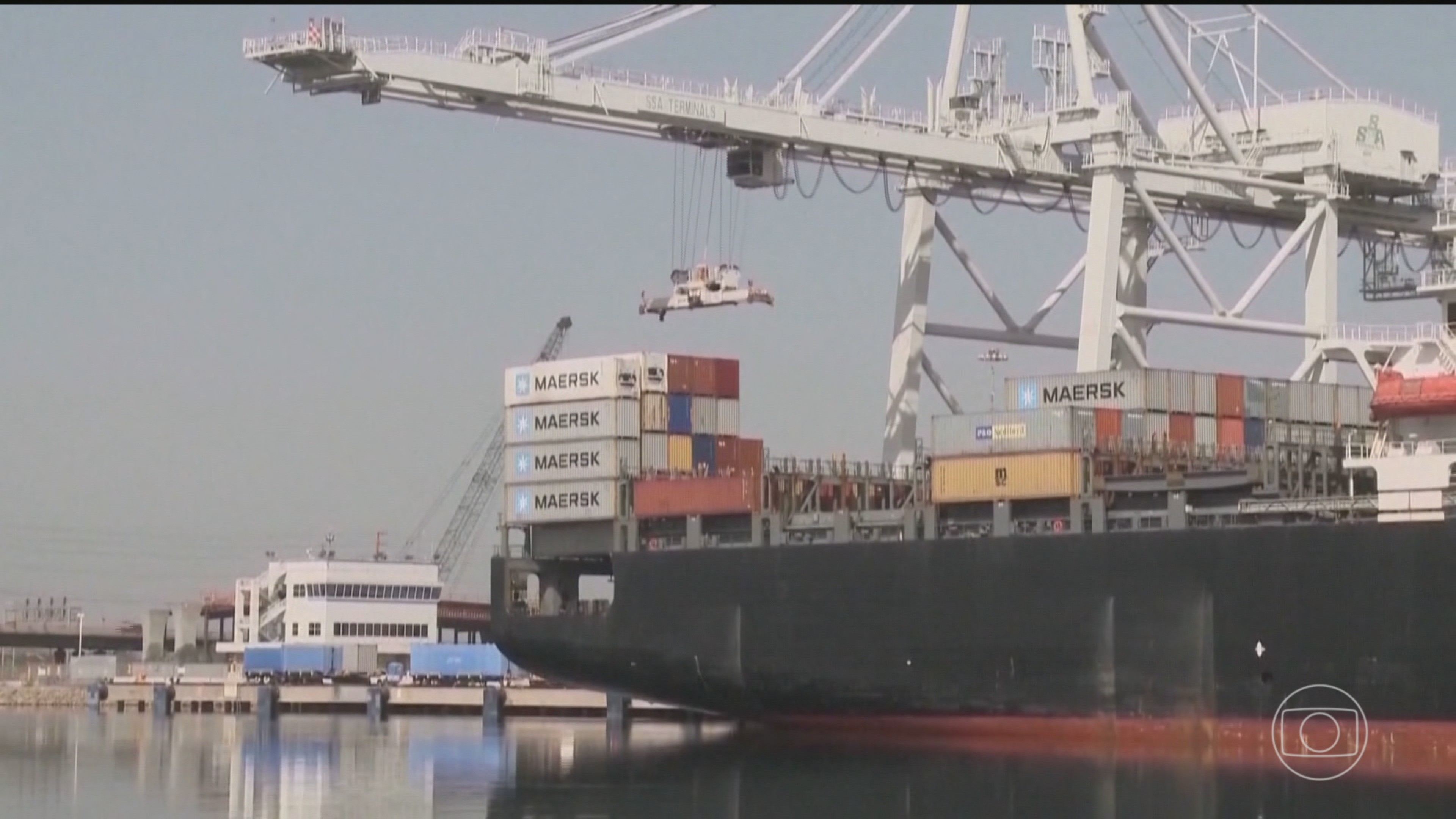
Itamaraty maps more than 40 American companies and associations that do not want tariffs on Brazilian products
The Ministry of Foreign Affairs mapped 43 American companies and trade associations that ask that Brazilian products not be taxed based on the open investigatio...
Participe da conversa
Seu comentario ajuda a manter a discussao viva e ainda convida outros leitores a continuar navegando pelo portal.
Seja o primeiro a comentar esta noticia.