New pricing: Federal government tried to block US investigation
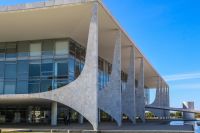
The Brazilian federal government tried to block the investigation led by the United States that resulted in the recommendation of new 25% tariffs on Brazilian products. Brasília was awaiting a positive signal from the Americans before the proposal was formalized. The investigation is by CNN anchor Tainá Falcão.
According to information gathered behind the scenes at Palácio do Planalto, the Brazilian government had relatively positive expectations regarding the commercial investigation, known as Section 301.
The expectation was that the meeting between the two leaders could have some effect on the investigation, with the possibility of retreat on some points by the Americans.
Expectations disappointed after meeting in Washington
After the meeting in Washington, members of the Brazilian government returned to the country with the assessment that there was a loophole to stop or at least reduce the scope of the investigation by the USTR (United States Trade Representative), the office of the United States trade representative.
"The reading there was that direct dialogue between the presidents could decontaminate part of this discussion and reduce, as a consequence, the pressure for new sanctions on Brazil", reported Tainá.
With the American decision, announced this Tuesday (1), to propose the 25% tariff - which can be implemented on July 25th -, the assessment in Planalto has completely changed.
Aides to President Luiz Inácio Lula da Silva (PT) came to understand that the Section 301 investigation was never restricted to commercial terms.
The current understanding is that the arguments used against Pix, against the Brazilian government's digital policies, rules on the use of artificial intelligence and big techs have once again supported tougher measures against the country.
Political component and Bolsonaro's actions
Behind the scenes in Brasília, the assessment is that the United States' decision is linked to a broad set of political-ideological differences and strategic positioning between the two governments.
In this context, Lula's allies began to relate the 25% measure to the actions of Bolsonaro family interlocutors - including Flávio Bolsonaro and Eduardo Bolsonaro - with the American president.
Flávio Bolsonaro's recent offensive in Washington, with meetings with American President Donald Trump and members of the White House and the State Department, is cited as an element that may have contributed to the hardening of the American position.
Flávio Bolsonaro, in an exclusive interview with Itatiaia, denied having acted to harm Brazil, stating that he asked the American president not to tax the country.
The Brazilian government also argues that the United States would have no reason to apply the 25% tariff, since Brazil is among the few countries with which the Americans maintain a trade surplus in bilateral relations.
In the view of members of the economic team, this weakens the justification for tariff barriers.
The texts generated by artificial intelligence on CNN Brasil are made based on video cuts from the newspapers in its programming. All information is investigated and checked by journalists. The final text is also reviewed by the CNN journalism team. Click here to find out more.
Source: CNN