New exhibition shows casts of Pompeii victims 'frozen' at the moment of death
People visit the archaeological site of Pompeii, near Naples, in southern Italy
AP Photo/Alessandra Tarantino
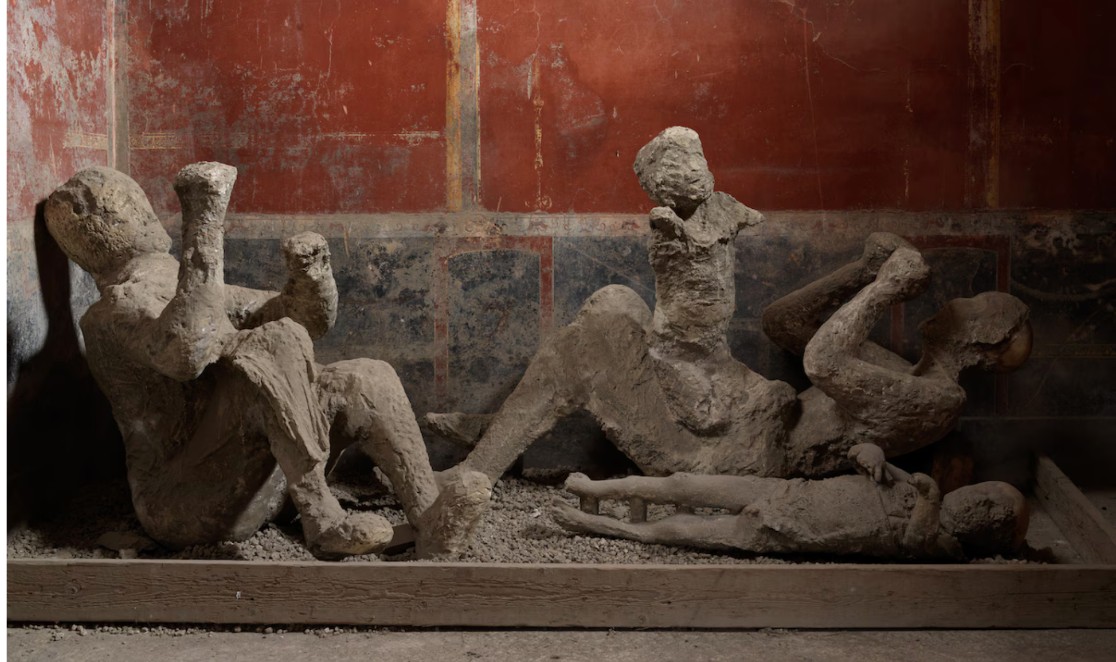
More than 20 plaster casts of victims who died in the catastrophic eruption of the volcano in Pompeii went on permanent display this Thursday (12), in Italy.
The casts, which scholars call "pain impressions", record in an impactful way the position in which each resident was when he died, in the year 79. The reproductions were made by pouring liquid plaster into the spaces left by the decomposed bodies in the hardened ash.
The intention was "to give dignity to these people, who are like us - women, children, men - who died during the eruption, but, at the same time, to make it understandable", said Gabriel Zuchtriegel, director of the Pompeii Archaeological Park. According to him, the idea is to make the public "understand what really happened in Pompeii".
Created by Giuseppe Fiorelli in 1863, the technique faithfully preserves the position, expression of pain and details of the victims' clothes, making the casts unique testimonies. The method is still used by the team of researchers working in the archaeological park.
What was previously thought to be a mother and her son was reevaluated after a study published last week
Image: Pompeii Archaeological Park
Pompeii is the only known location that allows the recovery of this type of evidence, allowing visitors to see reproductions of destroyed objects and the people who lived and died at that time.
The eruption of Mount Vesuvius killed around 2,000 residents of the city. In the region, the total number of victims may have reached 16 thousand. Pompeii was covered by ash, which later solidified with pyroclastic flows.
During the excavations, the remains of more than a thousand victims were found trapped in houses or shelters, buried by a rain of pumice and volcanic rocks or killed by the collapse of roofs and walls under the weight of the debris, which reached around three meters in height.
The 22 casts on display were chosen from among the best bodies preserved. The victims were found in different parts of the city, from central areas to gates and roads leading outside, where residents tried to escape.
"They have a strong emotional impact on visitors and can be very moving," said Silvia Martina Bertesago, archaeologist at the Pompeii Archaeological Park. the porticoes of Palestra Grande, in front of the Amphitheater. In addition to an area dedicated to human remains, the space brings together finds such as plants and food that remained buried for centuries under meters of ash and lava.
View of the Archaeological Park of Pompeii, near Naples, southern Italy
AP Photo/Andrew Medichini
VIDEOS: most watched on g1
Source: G1