Mystery of the Medici deaths is solved by scientists; find out how
A study analyzed the remains of two members of the Medici family, which questioned the famous theory that they had been poisoned. According to DNA analysis of both, the diagnosis of malaria was detected.
The study was published by ISience in June 2026 and published this week by Science magazine.
The presence of six species of Plasmodium, a genus of intracellular protozoan parasites responsible for causing malaria, was detected in the DNA of Grand Duke Francesco I de' Medici (1541-1587) and Cardinal Giovanni de' Medici (1543-1562).
The Medici were part of the Italian bourgeoisie that ruled Florence and later Tuscany for most of the period from 1434 to 1737. They were very influential in Europe when they provided the Roman Catholic Church with four popes (Leo X, Clement VII, Pius IV and Leo Medici.
Malaria in Europe
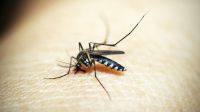
Plasmodium falciparum, the causative agent of the most lethal form of human malaria, is an obligate unicellular protozoan transmitted by female mosquitoes of the genus Anopheles. According to the document, the protozoan is believed to have proliferated in agricultural communities in sub-Saharan Africa 5,000 to 4,000 years ago, and due to human migrations, it is still uncertain when it spread to Europe.
In Italy, malaria had already been described at times by Hippocrates and Celsus, who provided some of the first descriptions of the disease, associating it with periodic fevers, weakness and other symptoms now recognizable as malaria.
During the Middle Ages and early modern times, the disease remained endemic. Malaria was only eradicated in the 1950s, in Tuscany, when campaigns were put into practice.
DNA analysis of members of the Medici family
As previous analyzes were unable to identify the genetic variation of the strains of Plasmodium falciparum that circulated in central Italy during the 16th century, experts decided to extract ancient DNA from the osteological remains of the two members of the Medici family, because the deaths were compatible with malaria infections, and their remains were preserved in metal boxes in the Medici Chapels, in Florence, which guaranteed favorable conditions for DNA extraction.
Experts extracted DNA from four rib samples, three belonging to the Grand Duke and one from the Cardinal's group. The DNA extracts identified six species of Plasmodium (P. falciparum, P. vivax, P. malariae, P. ovale spp., P. knowlesi and P. cynomolgi).
The results demonstrate the presence of Plasmodium spp. in the remains of both, although in much smaller quantities in the Grand Duke.
It was also identified that the Cardinal strain may have derived from a strain of P. falciparum that was already circulating in the Italian peninsula, Velia-186: 1st - 2nd century AD, and in other parts of Europe, in Lower Austria, between 371 and 176 BC, and in France, between 1280 and 1395.
Who were the Grand Duke and Cardinal?
Grand Duke Francesco I de' Medici (1541-1587) and Cardinal Giovanni de' Medici (1543-1562) were brothers, sons of the same father, Cosimo I de' Medici (first Grand Duke of Tuscany), and the same mother, Eleonora of Toledo.
The Cardinal, together with his mother and another brother, contracted malaria during a family trip to the coast and marshes of Tuscany, a region known at the time for being affected by "Tertian fever".
According to reports, these three members of the Medici family succumbed to severe fevers over a period of four weeks, towards the end of 1562.
Twenty-five years later, the Grand Duke and his wife, Bianca Cappello, visited the Medici villa in Poggio a Caiano (Prato), located in an area of rice fields with precarious sanitary conditions, a typical environment of endemic malaria. The couple died in 1587, after experiencing intermittent high fevers, compatible with malaria.
The sudden and almost simultaneous deaths, however, gave rise to rumors of arsenic poisoning by brother Cardinal Ferdinando.
Suspected cases of Ebola in SP and RJ have another diagnosis | CNN BULLETIN
Malaria on the world stage
Malaria was eradicated in Europe in the 1970s, but remains present in sub-Saharan Africa, Oceania, South and Southeast Asia and South America, being responsible for 280 million cases worldwide in 2024 alone.
Plasmodium falciparum is still the main causative agent.
The discovery of a hitherto uncharacterized strain of this species, originating from the Italian Renaissance, expands knowledge about the diversity of circulating strains in a period for which information about this species is very limited, expanding knowledge about the variation of *P. falciparum* in historical times.
Source: CNN