Mission in the Strait of Hormuz could start 2 to 3 days after agreement between US and Iran, says Macron
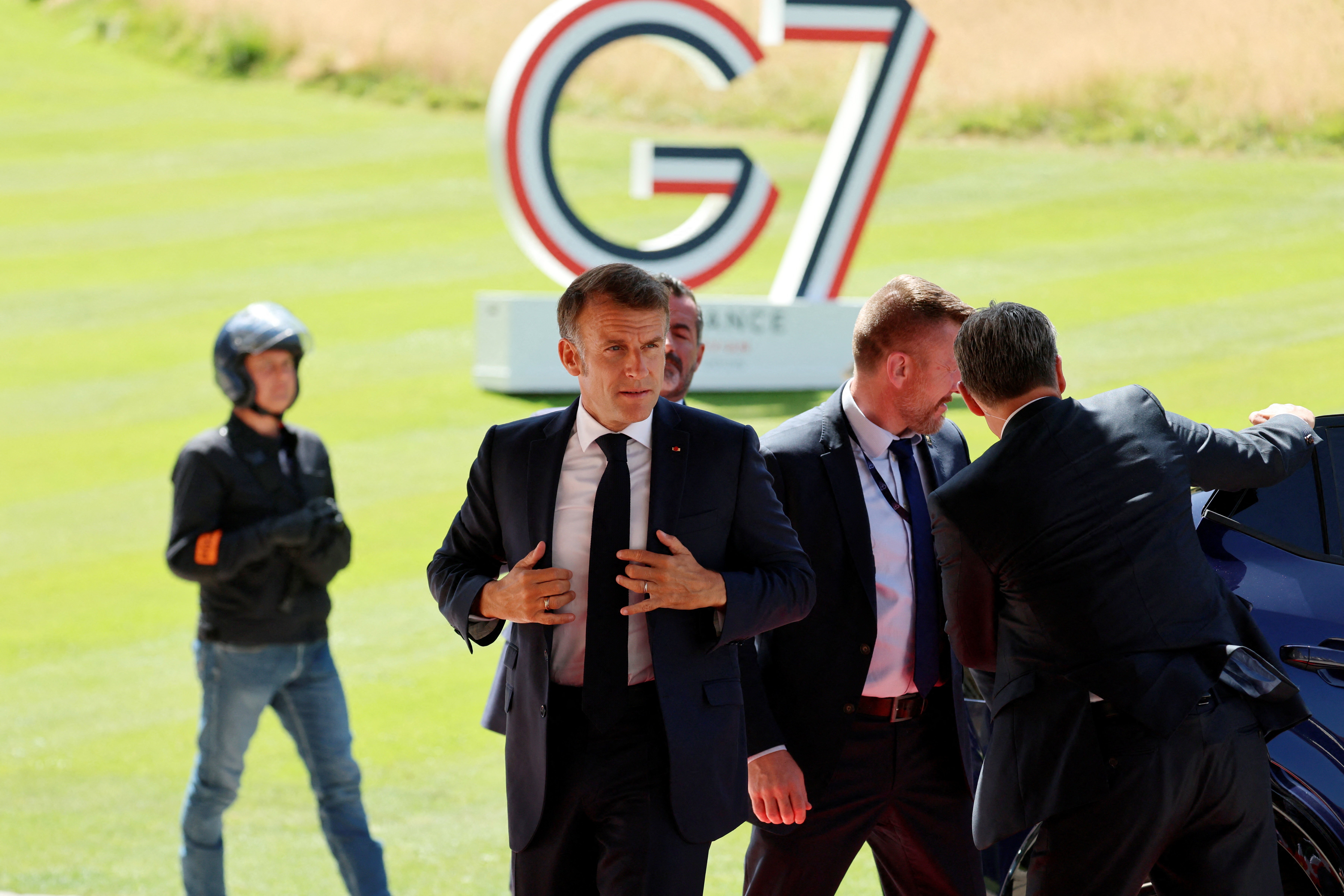
Emmanuel Macron at the G7 summit
LUDOVIC MARIN/Pool via REUTERS
The President of France, Emmanuel Macron, stated this Monday (15) that the mission announced by him and the British Prime Minister, Keir Starmer, to guarantee security in the Strait of Hormuz after the end of the war between the United States and Iran can be implemented 2 to 3 days after the signing of the agreement between the two countries.
AO LIVE: follow coverage of the conflict in real time
✅ Follow the g1 international news channel on WhatsApp
USA and Iran reach peace agreement, but reopening of the Strait of Hormuz should not be immediate; understand
The French leader said that, in addition to his country and the United Kingdom, Italy and the Netherlands are also ready to help with the mission. It also declared that the G7 will do everything to ensure the normalization of maritime traffic on the route and argued that its reopening "must be done without tolls."
According to a source from the Iranian Fars news agency, Tehran added a clause on the imposition of maritime service fees for vessels wishing to transit through the Strait of Hormuz to the agreement with the United States, shortly before its announcement.
"In the final moments of the negotiations, the text of the memorandum of understanding was changed to emphasize "The use of the term 'maritime services' means that the United States has accepted that fees will be paid to Iran," the agency said, citing the anonymous source.
Trump: NATO was useless in reopening the Strait of Hormuz
The mission in Hormuz was announced by Macron and Starmer in April.
The two European leaders, who brought together colleagues from several countries in a meeting to discuss the issue, announced that a dozen countries are ready to contribute resources to a defensive mission aimed at restoring freedom of navigation in the sea route, through which 20% of all world oil production passes. The strait is a global necessity and a global responsibility," Starmer told reporters alongside the leaders of France, Germany and Italy.
Macron also declared that "no privatization" of the sea route will be accepted - press reports say that both Iran and the US have considered charging tolls for passing vessels - and that "recent developments are encouraging, even if we must remain cautious."
Macron and Starmer have led international efforts to increase diplomatic and economic pressure on Iran. Starmer accused the country of "holding the world economy hostage". US President Donald Trump raised tensions by announcing a retaliatory blockade against Iranian ports.
Michel Euler/AP
Representatives from the United States were not present at the meeting and the country's president, Donald Trump, highlighted the plans resulting from the summit in a post on the Truth Social network:
"Now that the situation in the Strait of Hormuz is over, I received a call from NATO asking if we needed any help. I told them to stay away unless who just want to fill their ships with oil. They were useless when necessary, a paper tiger!".
Since the start of the war against Iran, on February 28, Trump has been harshly criticizing NATO.
The North American president was dissatisfied with the refusal received from the other countries in the alliance to help unblock the Strait of Hormuz.
On Wednesday (15), he stated: "NATO was not there for us, and will not be there for us in the future."
On April 1, he said he was 'seriously' considering taking the US out of the North Atlantic Treaty Organization in an interview with the British newspaper "The Telegraph".
SANDRA COHEN: War in Iran, trust between Trump and NATO allies implodes
See the videos that are trending on g1
Source: G1