Missing deportees: what is known about the hotel that collapsed with more than 100 Venezuelans who had been expelled from the USA
Video shows exact moment when double earthquake hits Venezuela
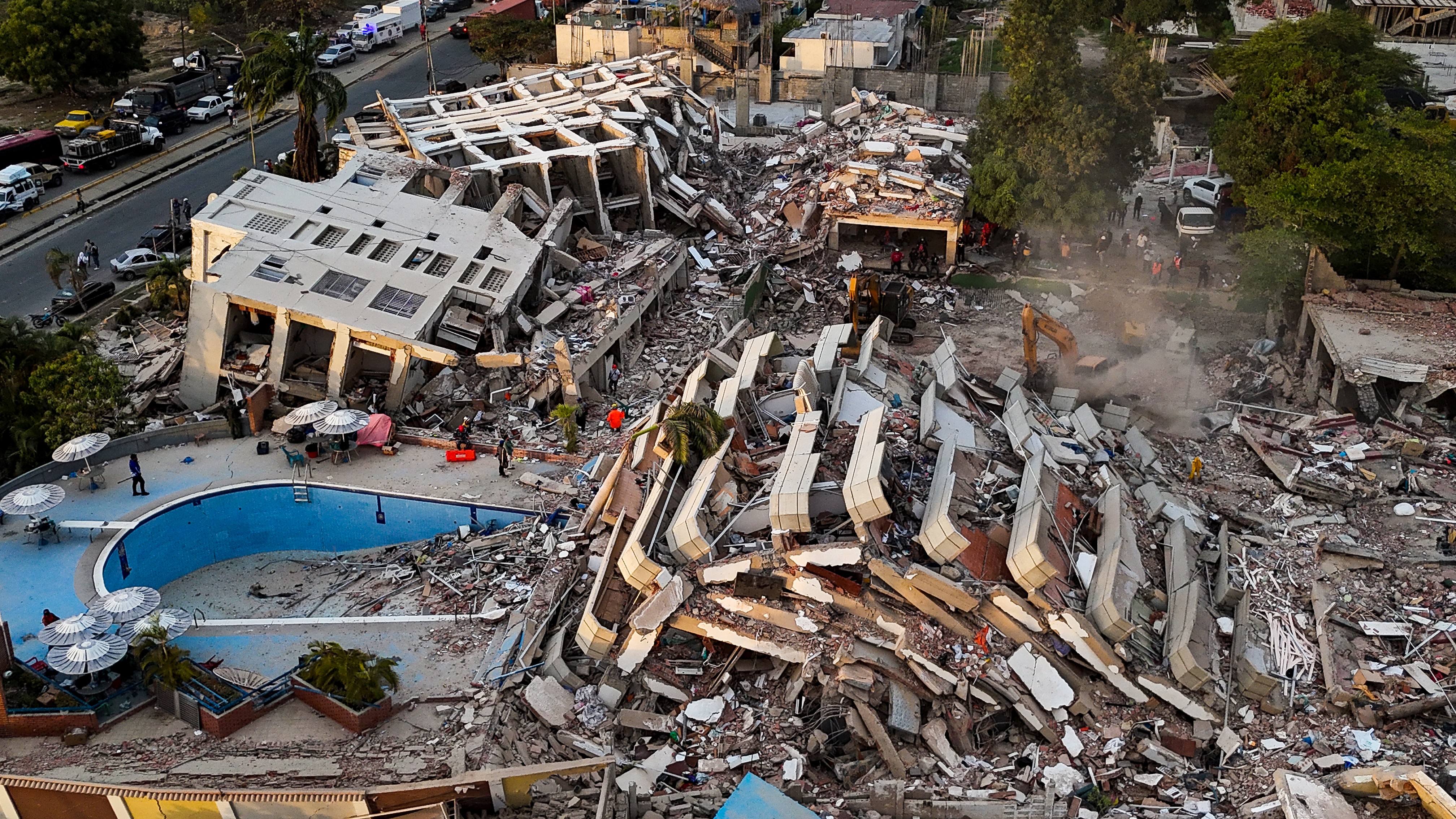
Around 100 Venezuelans deported from the United States are missing after the hotel where they were staying collapsed during the June 24 earthquakes. The building was in La Guaira, the region of Venezuela most affected by the tremors.
✅ Follow the g1 international news channel on WhatsApp
▶ Context: The deportees left the US on a flight that departed from Miami with 146 Venezuelans, including 19 women and seven children. After disembarking at Venezuela's main airport, they were taken to the Hotel Santuario La Llanada.
The hotel, managed by the Venezuelan government, was on the country's coast.
The deportees were sent there to undergo medical examinations and other procedures upon their return to Venezuela.
The expectation was that everyone would be released to return home the following day.
However, a few hours after arrival, the hotel collapsed during the earthquakes.
Relatives of the deportees told Reuters that authorities provided a list of 32 names of survivors. The rest are missing.
While family members demand more information from the government, reports indicate that the Bolivarian National Intelligence Service (Sebin) blocked access to the location. A grandfather who was looking for his grandson told the BBC that an official said there were no survivors among the rubble.
See what is known about the case below:
Why were the deportees staying at the hotel?
How many deportees died?
What are the families' main criticisms?
What do the governments of Venezuela and the United States say?
1. Why were the deportees staying at the hotel?
Earthquake in Venezuela: aerial image shows buildings in Caraballeda, in the state of La Guaira, Venezuela, on July 29, 2026.
Miguel Medina/AP
The Hotel Santuario La Llanada was managed by the Venezuelan government program Great Mission Return to the Homeland, responsible for receiving citizens deported or repatriated to the country.
According to survivors interviewed by Reuters, the deportees had their cell phones and documents temporarily collected during reception procedures. They would only remain there until these steps were completed.
One of the survivors told the BBC that he escaped because he spent a few minutes too long in an annex building trying to make a phone call. When the earthquakes began, he had not yet entered the main building, which ended up collapsing.
2. How many deportees died?
Men searching for survivors are on top of a mountain of rubble three days after two earthquakes hit La Guaira, Venezuela
AP Photo/Matias Delacroix
Venezuelan authorities have not yet released an official toll on how many passengers on the flight died or survived the collapse.
Relatives told Reuters that they received an official list of 32 survivors. Other survivors claim that some people managed to escape on their own shortly after the collapse, but the exact number is still uncertain.
Based on these reports, around 100 deportees remain missing. Many relatives continue to look for family members in hospitals, morgues and in the rubble of the hotel.
3. What are the families' main criticisms?
A man sitting amid the rubble of the earthquake in La Guaira, Venezuela, Monday, June 29, 2026
AP Photo/Matias Delacroix
Family members question why the deportees were kept in the hotel, instead of being released shortly after arriving in Venezuela. Many claim that, if this had happened, the victims would already have been at home when the earthquakes occurred.
Another complaint involves the lack of information. Relatives say that they spent days without knowing the whereabouts of their family members and that the retention of cell phones and documents made it difficult to identify survivors and victims.
Survivors also claim that the initial rescue was carried out mainly by the deportees themselves.
Some told the BBC that first aid took hours to arrive and that Sebin agents prioritized rescuing colleagues.
Relatives of the deportees also say that Sebin agents blocked access to the hotel. Many say they were unable to enter the search area or obtain information about missing relatives.
The restrictions also affected the press. According to the National Union of Press Workers of Venezuela (SNTP), journalists face limitations in accessing search areas, mainly in La Guaira, as well as hospitals that receive earthquake victims.
4. What do the Venezuelan and US governments say?
A helicopter takes off from a US Navy ship docked in the port to support relief efforts for victims of the earthquake in La Guaira, Venezuela
AP Photo/Matias Delacroix
In a post on social media, the Grande Missão Volta a Pátria reported that it has opened service channels for family members and stated that it is providing information directly to people seeking the service.
To Reuters, the program also sent a message of solidarity to the victims of the earthquakes, but did not respond to questions about the case or explain why the deportees were taken to the hotel.
The United States Department of Homeland Security (DHS) informed the BBC that the flight arrived safely in Venezuela and that, after the deportees were handed over to the Venezuelan authorities, they were no longer under the responsibility of the Immigration and Customs Enforcement Service (ICE).
The American government did not comment on the collapse or the situation of the passengers.
VIDEOS: most watched on g1
Source: G1