Middle East maintains oil and gas shipments despite attacks in the Strait of Hormuz in recent days
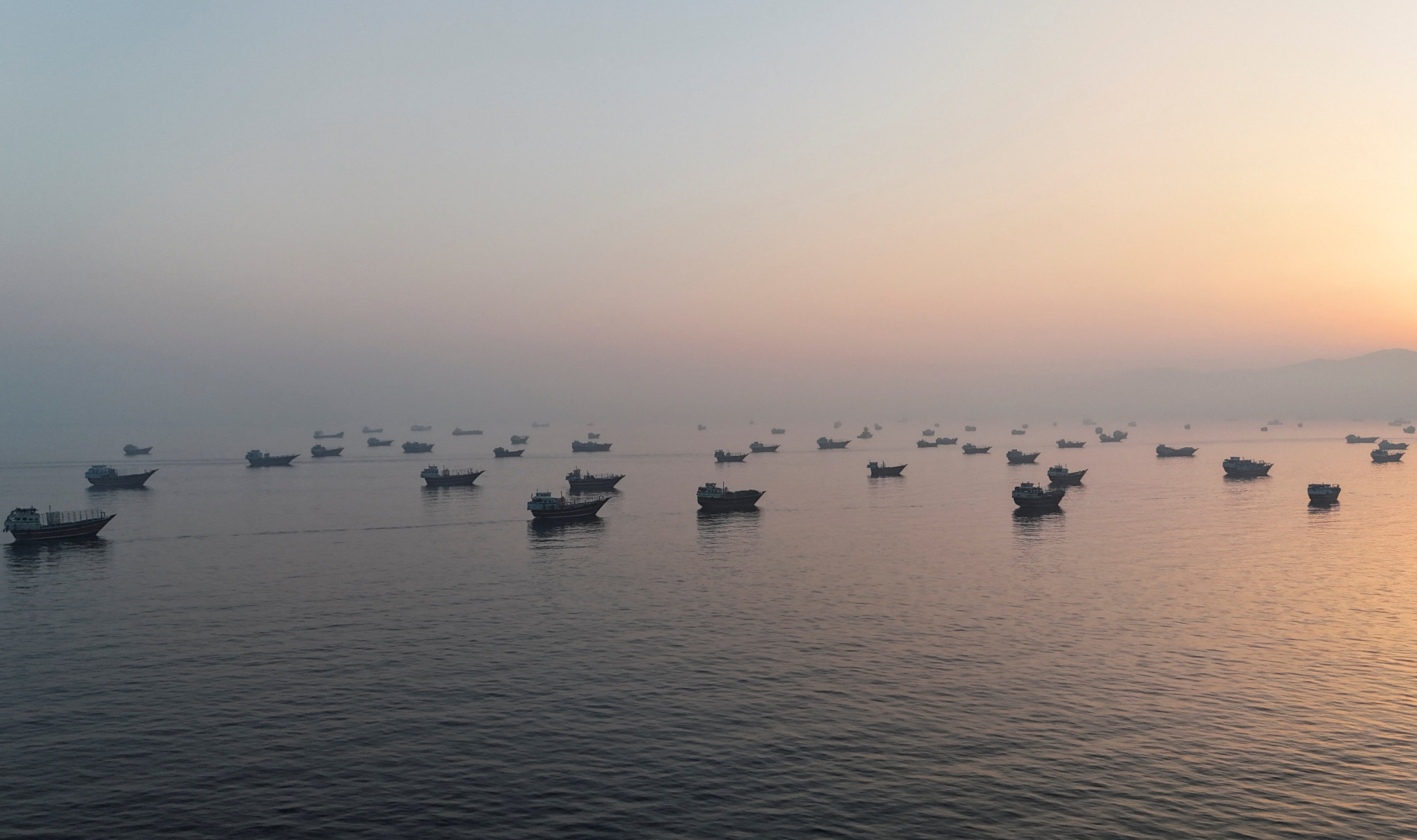
Strait of Hormuz
Reuters/Stringer
Middle Eastern producers continue to ship oil and liquefied natural gas (LNG), even after new attacks on ships in the Strait of Hormuz - the channel through which about a fifth of the oil consumed in the world passes - and the resumption of tensions between the United States and Iran in recent days, according to data from the shipping sector.
The volume of energy transport through the strait fell after attacks on a container ship on Thursday and an oil tanker on Saturday. The episodes provoked new retaliations and put the provisional peace agreement between Washington and Tehran at risk.
Do you have any suggestions for reporting? Send to g1
On Sunday (28), however, a United States official stated that the two countries agreed to stop hostilities and resume negotiations on the route, considered strategic for global trade.
On Monday, a fourth large supertanker (VLCC), with capacity to transport 2 million barrels, was spotted loading oil at the Ras Tanura terminal, in Saudi Arabia, according to data from LSEG, a financial and market information company.
Now on g1
The operation takes place even after the crash, on Sunday (28), of a company helicopter, which left 14 people dead, and the cause of the accident is still unknown.
Another three supertankers loaded oil and went into "hidden mode" after leaving the terminal over the weekend, according to the data. The term refers to ships that turn off their tracking systems to reduce the risk of attack while sailing through the region.
One of these ships reappeared on Monday (29), after leaving the strait, and is now heading towards Japan, according to the data.
Two supertankers entered the strait on Sunday and docked at a terminal in the United Arab Emirates to load crude oil, according to LSEG data.
Saudi Aramco declined to comment.
Abu Dhabi National Oil Company reported that, due to internal policy, it does not disclose details about the location, movements or routes of its vessels.
Iran increases oil exports after sanctions relief
Iran also accelerated oil shipments after the United States lifted sanctions on its exports for 60 days.
Tehran carried out simultaneous loadings at its two export terminals on Kharg Island, Iran's main oil export terminal, on Saturday (27), for the first time in almost a week, according to maritime monitoring company Windward.
Data from Kpler, an oil flow data company, shows that the Iranian-flagged supertankers Dan and Hawk entered the strait on Saturday (27).
At the same time, around 8 million barrels of crude oil from the UAE and Qatar were transported on four ships of the same type over the weekend. Iran's National Oil Company did not respond to requests for comment.
Rising exports from the Gulf - the region responsible for about a third of global supplies - is putting pressure on oil prices. Brent, the main international benchmark for oil prices, fell 10.6% last week, the third consecutive weekly drop, although the weekend attacks caused prices to rise on Monday.
"If the Strait continues to operate unsettled in the coming weeks and months, the price of oil is at a reasonable level and on a downward trend," IG Markets analyst Tony Sycamore told Reuters.
"However, if there is a risk of a broader escalation of the conflict, After these episodes of weekend violence, then oil prices are too low."
Qatar and UAE maintain gas exports despite tension
In the liquefied natural gas (LNG) market, two empty tankers reappeared in tracking data west of the strait on June 26, after having disappeared from systems.
At the same time, two other ships loaded with LNG left the Strait of Hormuz.
The ship Al Kharaitiyat heads towards Kuwait after loading at the Ras Laffan terminal in Qatar. Another QatarEnergy vessel, the Al Kharsaah, is waiting off the country, according to tracking data from Kpler.
The Mraweh vessel, controlled by ADNOC, loaded on the island of Das, in the United Arab Emirates, on June 21, and is expected to deliver the cargo to the Dahej terminal, on the west coast of India, on July 5, according to Kpler. QatarEnergy's Al Hamla is carrying cargo shipped in Ras Laffan on June 18 and is expected to arrive in China on July 3, according to data from LSEG and Kpler.
QatarEnergy did not respond to a request for comment until the last update of this report.
Source: G1