Mathematician 'World Cup guru' was wrong: Brazil eliminates Japan and contradicts 'prediction'
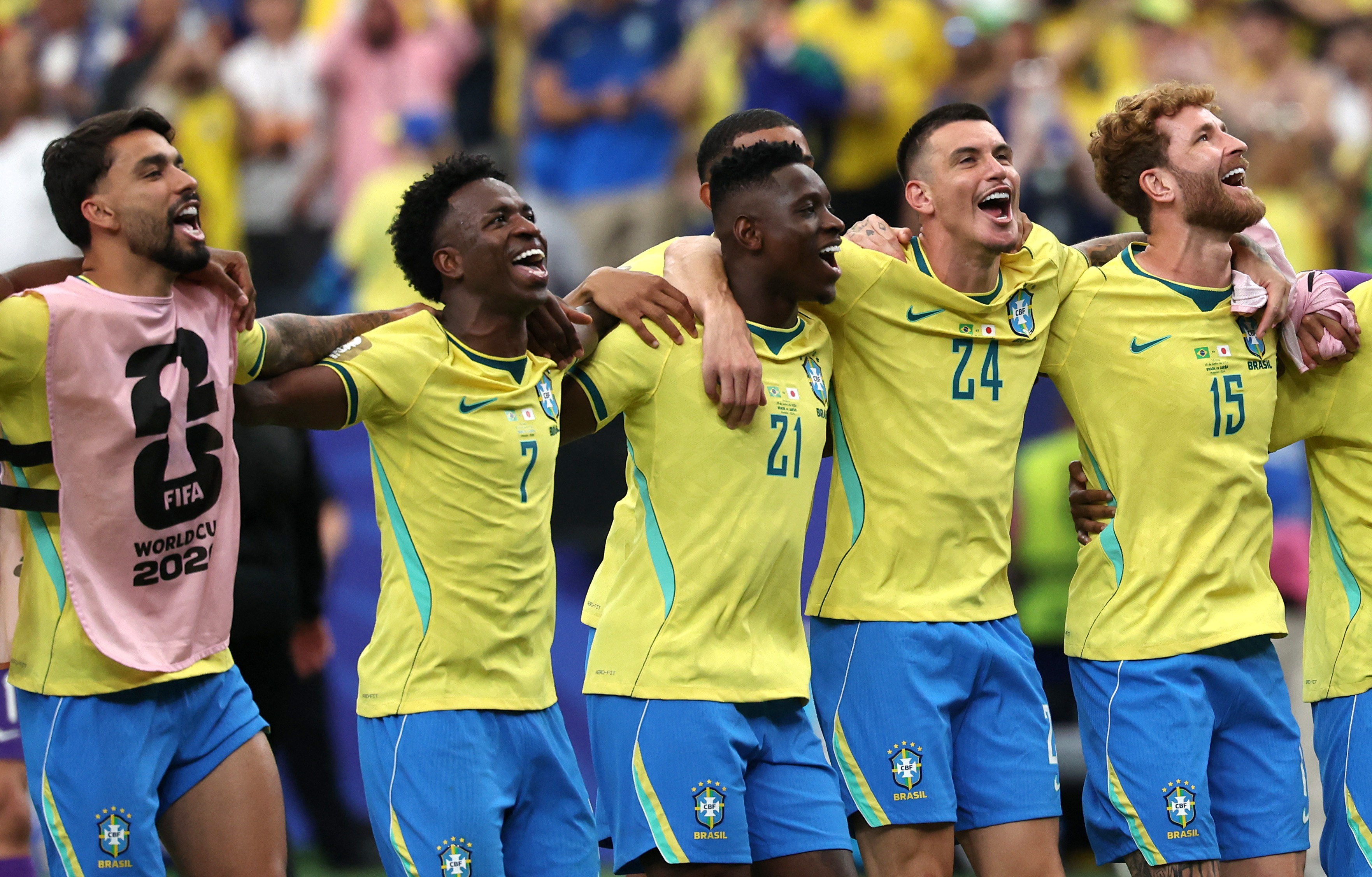
The mathematician 'World Cup guru' who predicted a clash between Brazil and Japan - and bets on the Japanese winning
Getty Images
Economist Achim Klement did not count on Gabriel Martinelli.
The German, who started the World Cup as a "guru" for having guessed the champions of the past three editions, had predicted that Brazil would face Japan in the first knockout game - and was betting on the Japanese winning.
When Japan opened the scoring, it seemed that the German would be right once again. But Casemiro and Gabriel Martinelli decided to intervene, ending the "curse" of the prediction.
But the error in the Brazil game does not erase Klement's truly remarkable success record in other predictions.
The German economist created a complex forecasting model that maintains 100% accuracy in his predictions of the world champion, since the World Cup held in Brazil in 2014.
Now on g1
If Klement's statistical prophecy is confirmed for the fourth time, the Netherlands will lift the champion's trophy at the MetLife Stadium in New Jersey, in the United States, after beating Portugal in the final of the tournament, on July 19th.
In addition to the champions, the economist's model German maps all phases of the tournament and its 48 teams.
According to the model, the Netherlands will face Spain in the semifinals. And, in the other semi-final, England and Portugal will face each other - who will have eliminated Argentina in the quarter-finals.
The economist predicts that Portugal will once again beat the English, as happened in the quarter-finals of the 2006 World Cup, in Germany. The prediction just doesn't detail whether the decision will take place again on penalties.
After correcting all of Germany's results in the 2010 World Cup, the octopus Paul still predicted Spain's victory over the Netherlands, in the final of the tournament held in South Africa
AFP via Getty Images
Klement is a self-confessed "pessimist", who lived in the United Kingdom for 10 years. For him, the research was never intended to prevent anyone's sadness, nor to make money on bets.
In fact, he hoped to reveal the absurdity of trying to predict the results.
"It all started as an exercise to show the world the arrogance of economists, who think they can predict facts about which they have no clue," explains Klement.
"Now, this has become a demonstration of how, if you get lucky enough times, people will think you are a guru."
His first prediction came true. became reality in 2014, when his country, Germany, won the World Cup held in Brazil.
Klement imagined that, by redoing the simulation again in 2018, he could demonstrate that it was a coincidence. But he got his prediction right again with France in 2018 - and then with Argentina in 2022.
"Because I got it right three times in a row, people now think that this model is invincible and that, of course, I will certainly get it right again," he says.
The Netherlands is considered the strongest country in football that has never won a World Cup
Getty Images
It's true that there are known "systemic" factors that determine, in part, the success of each country in the World Cup. They include national population, wealth, climate and FIFA world rankings.
But the popularity of Klement's quadrennial predictions grows with each hit.
And he warns his readers to take his results with caution, as these factors only tell part of the story.
"The other 50% is luck," he says. Klement.
Whenever the World Cup approaches, the forecasting model gives Klement a great diversion from his day job.
"Particularly in 2026, when we have so many crises and wars and things going on, it's something that makes me feel good," he says. "And I hope readers also feel good and have a little distraction from everything bad that is happening in the world."
But, every time the economist gets a prediction right, the weight of expectation grows.
Brazil x Japan
Reuters/Troy Taormina
Source: G1