March for Jesus takes place today (4): understand behind the scenes of the event in SP
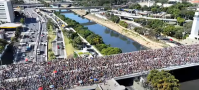
Considered one of the biggest Christian events in the country, the March for Jesus 2026 takes place this Thursday (4), on the Corpus Christi holiday.
The event takes place in the capital of São Paulo and is expected to bring together around three million people between the Estação da Luz region and Praça Herois da FEB (Brazilian Expeditionary Force).
According to the event's production, more than 25 thousand caravans have already been confirmed in the 34th edition of the meeting, which should start at 10 am this Thursday. The show schedule is scheduled to start about an hour later, with the expectation of extending until 10pm.
During the program, some names from the gospel music industry are expected to be present. Among artists such as Aline Barros, Anderson Freire, Gabriela Rocha, Eli Soares and Thalles Roberto, all performances will take place on a large stage set up at the final destination of the route, in the North of the capital.
Also according to the production, the event requires, behind the scenes, complex logistical and infrastructure operations, such as: coordinating suppliers, managing stage megastructure, scenography, sound and lighting, in addition to supervising the flow of public and essential services, such as medical care and the Fire Department.
According to Alexandre Chicarelo, CEO of the production company that coordinates the event, the main operational challenges are divided into two fronts: public safety when transitioning between environments and the artists' air network.
Read also: March for Jesus: see security scheme for event in SP
"The first challenge is to safely move and receive millions of people. The March has two phases: the walk on the street and the arrival point in the square, which in addition to welcoming those who marched, receives an audience that goes solely and exclusively to watch the shows [...] The second challenge is the artistic schedule: there are dozens of singers coming from different states of the country at the same time. This requires rigorous planning of flight schedules, ground logistics, accreditation and routing to the stages with no room for delays", explained Alexandre.
For Chicarelo, the event can also generate a "chain financial movement", being a "driver for tourism and the city's creative economy in the month of June".
"The event intensely moves the hotel, food and transport sectors, from apps like Uber to urban public transport. Although the Christian public does not consume alcoholic beverages, there is a massive consumption of other items", concluded Chicarelo.
Source: CNN