Lula's decree on big tech goes beyond the STF's decision, says expert
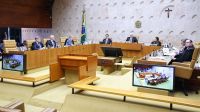
The issue of big tech's responsibility for content published by users, considered by the Federal Supreme Court (STF), is far from being resolved. The assessment is by Carlos Affonso Souza, professor of Law at UERJ (State University of Rio de Janeiro) and ITS (Institute of Technology and Society), to WW.
For Affonso, although the STF's final decision - which judged the so-called embargoes for clarification, requests aimed at clarifying controversies and omissions from the original decision - has been handed down, the regulatory scenario remains uncertain and full of nuances that still need to be faced.
Supreme appealed to the Legislature, but the Executive was the one who responded.
The thesis approved by the STF in a 2025 judgment brought, at the end, an appeal to the legislator to create specific legislation on the topic.
"The Supreme Court's solution was, so to speak, a bridge solution, a provisional solution", explained Affonso.
However, no legislation came from the Legislative Branch. The Executive Branch responded to the call, through a decree that regulates the Civil Rights Framework for the Internet, effectively upholding the decision of the Federal Supreme Court.
"It was as if the Supreme Court had made a call to the Legislature, but the Executive was the one who answered," said the professor.
The STF's final thesis, read in the Plenary, expanded the appeal to both the Legislative and the Executive in their capacity to regulate the topic, which, according to Affonso, demonstrates that the discussion has not yet come to an end.
Decree goes beyond the Supreme Court decision
Although the decree and the STF decision mirror each other in several aspects, Affonso highlighted that there are important differences between the two instruments.
According to him, the decree advances issues that are not covered in the Supreme Court's decision.
An example cited by the professor is the authority granted by the decree to the Federal Attorney General's Office to notify and remove publications considered fraudulent or abusive in communication about public policies.
This prerogative raises concerns about the limits of its application.
"In practice, public policy and government action will not always be right", pondered Affonso. For the professor, even though there is a mirroring between the Supreme Court and the federal government decree, the discussion is far from being resolved.
The texts generated by artificial intelligence on CNN Brasil are made based on video cuts from the newspapers in its programming. All information is investigated and checked by journalists. The final text is also reviewed by the CNN journalism team. Click here to find out more.
Source: CNN