Lula and the new president of Colombia must have a pragmatic relationship, assesses Brazilian diplomacy
Who is Abelardo de la Espriella, president-elect in a preliminary count in Colombia
Brazilian diplomats are betting on a pragmatic relationship between President Luiz Inácio Lula da Silva (PT) and Abelardo de la Espriella, officially declared the new president-elect of Colombia last Thursday (25).
In a publication on social media, Lula congratulated the Colombian people on the election, highlighted the "democratic and sovereign" and stated that the relationship between Brazil and Colombia is "fundamental to overcoming common challenges".
Hours later, Espriella responded to the PT member and wrote that he intends to maintain a cooperative relationship with Brazil.
"Colombia, in freedom and order, under my mandate, will seek a single objective: to fulfill the alliance with the people who, as I stated during the campaign, is not one of ideologies, but of extreme coherence, and this includes our neighbors in Brazil, led by their president, Lula", he stated.
The Brazilian government assesses that the relationship between the two countries must remain constructive and will not depend of ideological alignment.
For interlocutors in the international area of the Lula government, Colombia, like other South American countries, should remain interested in getting closer to Brazil mainly in:
infrastructure;
energy;
fighting organized crime; and
monitoring, prevention and mitigation of natural disasters.
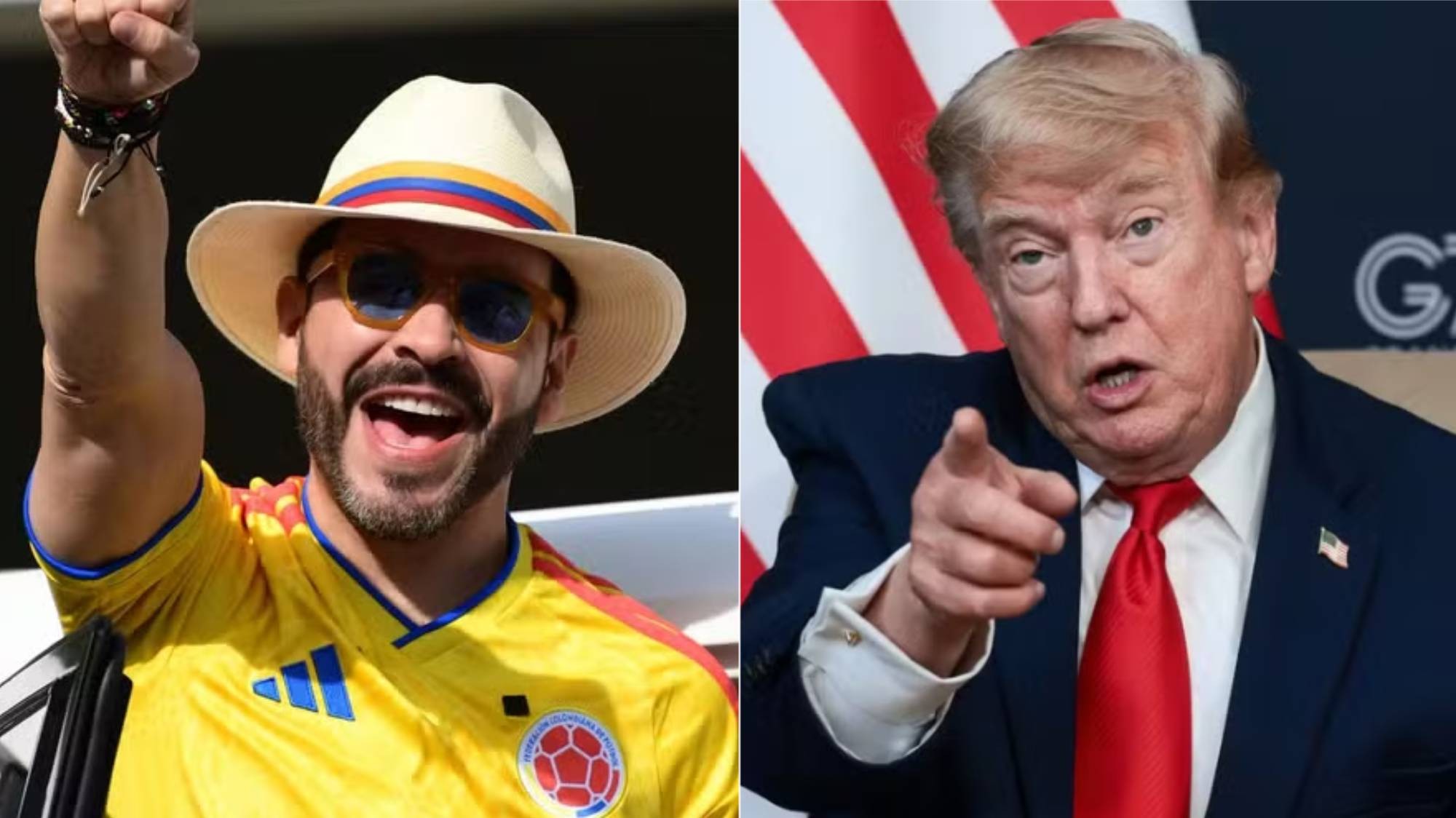
Abelardo de la Espriella (left), candidate elected for president of Colombia in preliminary counting, and Donald Trump, president of the USA
Jaime Saldarriaga/AFP/Evelyn Hockstein/REUTERS
Right in South America
The victory of the right-wing candidate in Colombia reinforces the tendency for conservative and far-right forces to advance in South America - and consequently of approach to the President of the United States, Donald Trump.
The defeated candidate was the government leader Iván Cepeda, an ally of President Gustavo Petro, a left-wing politician. The result left Lula as one of the few left-wing leaders of the main South American economies on the eve of the 2026 electoral dispute.
With the result of the Colombian elections, the majority of South American nations will have right-wing governments. Of the 12 countries on the continent, five are under left or center-left governments.
See the map:
Map shows the arrangement between countries governed by the left and the right in Latin America after the election in Colombia in June 2026.
Bruna Azevedo/g1
President Lula's aides claim that the new political configuration in the region will expand the influence of the United States and increase pressure on Lula on the issue of combating organized crime.
Brazil and Colombia, under the government of Gustavo Petro, were the only ones that did not join the Shield of the Americas, a military coalition against drug cartels.
Brazilian diplomacy believes that, with the new government, Colombia should join the group as soon as possible. Brazil, in turn, should get closer to countries like Mexico, Guyana and Suriname.
The Shield of the Americas alliance brings together around half of the countries in Latin America and the Caribbean, at Trump's invitation, taking advantage of the conservative turn in the region, led by countries like Argentina, Chile, El Salvador and Ecuador.
Lula's aides say that the Brazilian president should not adopt a warlike stance towards Abelardo and expect the Colombian to act in the same way. The Brazilian government hopes to repeat the stance it has with other countries in which the right wing won, such as Bolivia and Chile - a good neighbor policy.
What does regional integration look like?
Although there is consensus between countries on issues such as trade and infrastructure, the change in the governments' political profile will make it difficult to coordinate regional forums such as Celac and Unasur, defended by Lula.
Mercosur must maintain its importance in the region. The bloc brings together a consolidated commercial structure, with a strong flow of goods between member countries, in addition to joint infrastructure and logistics projects.
Diplomats assess that economic integration makes Mercosur less influenced by changes in government.
Right-wing South American governments propose greater economic openness, unlike what is happening in the United States and parts of Europe, where right-wing parties have adopted more protectionist discourses.
USA wants to increase its presence in the region
The United States wants to expand its military presence and influence in Latin America. The US also focuses on containing China's advance and protecting its trade. Trump focuses on combating illegal immigration and drug trafficking
To this end, he proposes reviving the foreign policy of former president James Monroe (1758-1831): "America for Americans". With the Monroe Doctrine, the United States declared, in 1823, its intention to protect the region against the advance of powers from other continents.
In the assessment of Brazilian diplomats, what is seen in practice is that the strategy sets a negative agenda for the region without concrete proposals and without a right-wing integration project for the region.
For Lula's interlocutors, the US is not making moves to offer investment or trade in Latin America, on the contrary. In recent months, Donald Trump's government has been intensifying attacks on countries with new commercial taxes, including Brazil.
Source: G1