Lourival: Terrorism and drug trafficking do different things; understand
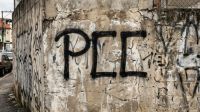
The US State Department announced, on Thursday (28), the classification of the CV (Red Command) and the PCC (First Capital Command) as "Specially Designated Global Terrorists".
The decision generated reactions from the Brazilian government and opened a debate about the conceptual and practical differences between terrorism and organized crime. CNN Brasil's international analyst, Lourival Sant'Anna, assessed the political repercussion of the measure in Brazil.
According to him, the discourse adopted by the government to contest the American classification could be politically disadvantageous.
"You say that our organized crime is not terrorist, it really seems like he is defending organized crime", said Lourival.
He also highlighted that "ordinary people confuse feeling terrified with terrorism", although the two phenomena are distinct in nature.
Terrorism and drug trafficking: different activities
Lourival highlighted that he has field experience both in communities dominated by drug trafficking in Brazil and in areas where groups such as Hezbollah, Hamas, Islamic Jihad, Islamic State, Al-Qaeda, Taleban and FARC operate.
Based on this experience, he claimed to know "the difference between these two groups of activity". For the analyst, organized crime and terrorism operate with completely different logics, and treating them in the same way can compromise the effectiveness of combat actions.
Lourival also warned of the risks of adopting a military doctrine when combating drug trafficking. According to him, "the military is not trained to investigate, infiltrate criminal organizations, gather evidence, create a police investigation."
In addition, the analyst pointed out that corruption in the Armed Forces tends to have more serious consequences than among police officers, as soldiers act as a collective body.
"When a soldier is corrupted, he also takes this corruption to an entire unit of the Armed Forces," he said, citing examples from Latin American countries such as Venezuela, Peru and Paraguay.
Risks to communities and criminal investigation
The analyst warned that the use of military tactics in densely populated communities could result in the deaths of vulnerable civilians.
"If you come, open fire on a street like that, in a place that is very populated, many civilians will die, children, and then things won't get better", said Lourival.
He added that the designation of criminal groups as terrorists can, paradoxically, benefit organized crime itself, by removing the police from their investigative activities and replacing them with an ineffective militarized approach.
For Lourival, the effective fight against drug trafficking requires detailed police work, capable of understanding the entire chain of crime - "from planting to distribution, going through all the logistics".
He recognized that Brazil faces serious problems, such as territories where the police are unable to operate, traders subjected to extortion and the infiltration of organized crime in politics.
"All of this is unacceptable. Really, corrupt judges, corrupt police officers, the infiltration of organized crime into politics, councilors who work for organized crime, lawyers, deputies and so on. All of this needs to be cleaned up", he concluded.
PCC and CV terrorists: What are the consequences of the US classification?
The texts generated by artificial intelligence on CNN Brasil are made based on video cuts from the newspapers in its programming. All information is investigated and checked by journalists. The final text is also reviewed by the CNN journalism team. Click here to find out more.
Source: CNN