Lessons for the next auctions in the electricity sector
Hiring was necessary. The Brazilian electrical system faces a challenge that goes beyond energy generation: ensuring available power at times when demand peaks and when production from renewable sources is reduced. With the accelerated expansion of non-controllable sources, energy resources that can be activated when necessary by the ONS (National Electric System Operator) become increasingly relevant to ensure consumption is met.
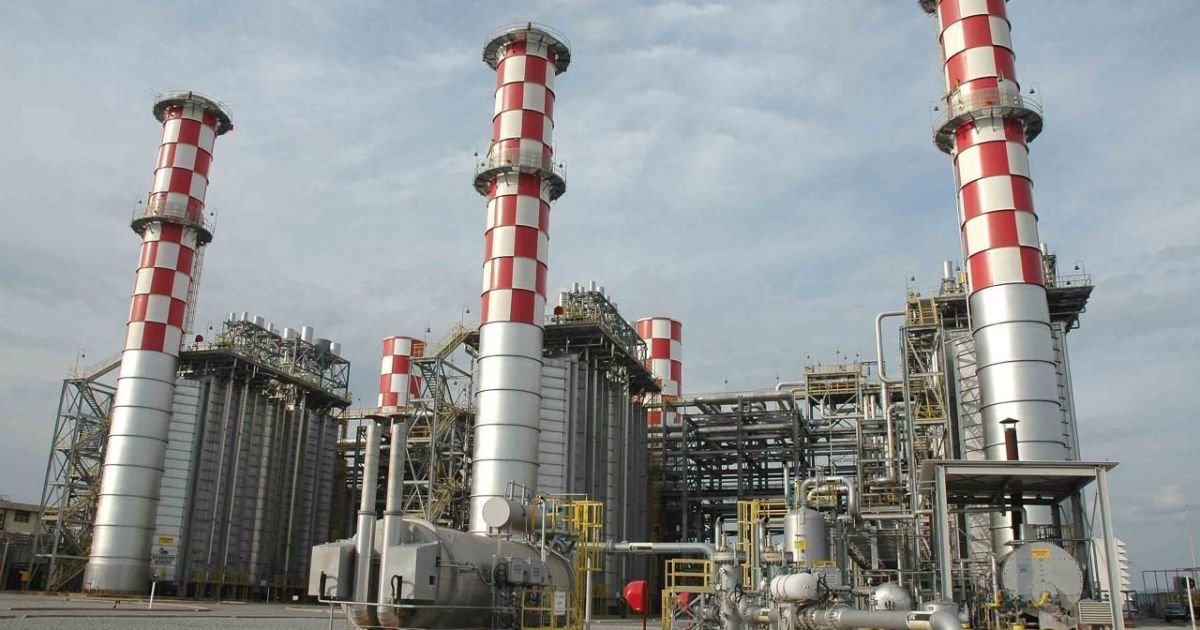
It was to fill this gap that the government held, on March 18 and 20, the Capacity Reserve Auction in the Form of Power (LRCAP), contracting almost 19 GW of power from 100 projects.
The need was undeniable. In the conclusions of PEN 2025, the ONS is explicit: "In order to seek structural balance in terms of meeting power requirements, it is urgent to hold annual capacity reserve auctions in the form of power, since PEN 2024 studies have already indicated a violation of the criteria for guaranteeing power supply in 2025, and the results of PEN 2025 show a deepening of violations over the years evaluated."
There was urgency, and urgency has a price.
Public policy needs to be made clear
Holding the auction was the correct decision. But the lack of clarity about the criteria that guided their structural choices is a distinct problem that can be avoided in the future if the energy policy maker - the Ministry of Mines and Energy (MME) - devotes more attention to this process.
The MME has the prerogative to define how much to contract for each type of plant, over what period and under what conditions. This discretion is provided for in the demand parameters of Ordinance MME 118/2025 and is a legitimate public policy choice. What remains is to explain the reasoning adopted: How was the division between products made? What criteria guided the proportion between sources and technologies? What explains the sudden and drastic revision of ceiling prices? Was there an assessment of competitive conditions to regulate the prices of each product?
Without these answers, understandable questions arise about the event. Investors are left without a reference to plan future ventures. Consumers can dispute whether the energy policy that guided the auction actually meets their short and long-term interests and balances security of supply with reasonable tariffs.
This lack of clarity could compromise competition in future competitions and make energy more expensive for consumers. Along with the guidelines and auction system, the MME should explain its objectives and justifications for the criteria adopted.
In the United Kingdom, for example, there is scrutiny from an independent panel of experts (Panel of Technical Experts - PTE) that technically evaluates the energy policy decisions of the Department of Energy Security and Zero Carbon (DESNZ) that guide capacity auctions. This process is documented and the July 2025 review is available at www.gov.uk/government/publications/neso-electricity-capacity-report-2025-findings-of-the-panel-of-technical-experts.
The accumulated delay forced the government to contract a significant volume at a time of high global demand for thermoelectric turbines, with a direct impact on prices. A relevant part of the cost of the event originates from this history, and not just from the auction design.
The results require context
Official CCEE data reveal very different dynamics between the products auctioned. In the auction on March 18, which involved hydroelectric, gas-fired and coal-fired thermoelectric plants, the general discount was 5.52%, but the eight products recorded individual discounts that ranged from 0.01% (POTT-2027) to 13.57% (POTT-2031). In the auction on March 20, aimed at oil and biodiesel plants, the discount reached 50.14%.
Treating any aggregate indicator as a uniform measure of performance obscures more than it clarifies. Rigorous analysis requires disaggregating the data and reading each result in light of the conditions that produced it: structure of the notice, demand to be met, intensity of competition for the product and conditions of global supply chains. This is the only way to identify what needs to be corrected and what has already worked.
Legal security above any revisionism
After the auction, the debate went beyond the regulatory field and entered the legal field. One of the competitors asked for the cancellation or renegotiation of rounds or the entire process due to specific dissatisfactions, and members of Congress requested clarifications from the MME and contacted several authorities: Public Ministry, TCU and Cade.
Regarding the request from one of the competitors, the economic literature is clear about the harmful effects of ex-post renegotiations. Bajari, Houghton and Tadelis (2014) show that the expectation of a later review distorts the behavior of agents already in the bidding phase, who adopt an initial aggressive pricing to ensure selection in the tender with the expectation of negotiating later concessions. Guasch (2004), in a study on concessions in Latin America, documents how the recurrence of renegotiations erodes the credibility of processes and increases the cost of capital in subsequent competitions.
And with regard to the involvement of the authorities, the lessons learned from March must be converted into concrete improvements, including: (a) defining energy policy with clear and well-founded objectives that even allow for an ex-post understanding of the dosimetry of the contracted quantities of each product/auction source; and (b) avoid abrupt changes on the eve of the auction.
Improvements must be made, but questioning contracts already signed, with a horizon of 10 to 15 years, does not correct the past and only compromises the future. Revisionism needs to be avoided because the quality of the regulatory and legal environments is built auction by auction, with technical coherence, procedural predictability and legal certainty.
* Eduardo Müller Monteiro and Richard Hochstetler are executive director and regulatory director of Instituto Acende Brasil
The articles published by CNN Infra seek to stimulate debate, reflection and shed light on views on the main challenges, problems and solutions faced by Brazil and other countries around the world. The texts published in this space do not necessarily reflect the opinion of CNN Brasil.
Source: CNN