Left x right: see what the map of South America looks like after the presidential election in Colombia
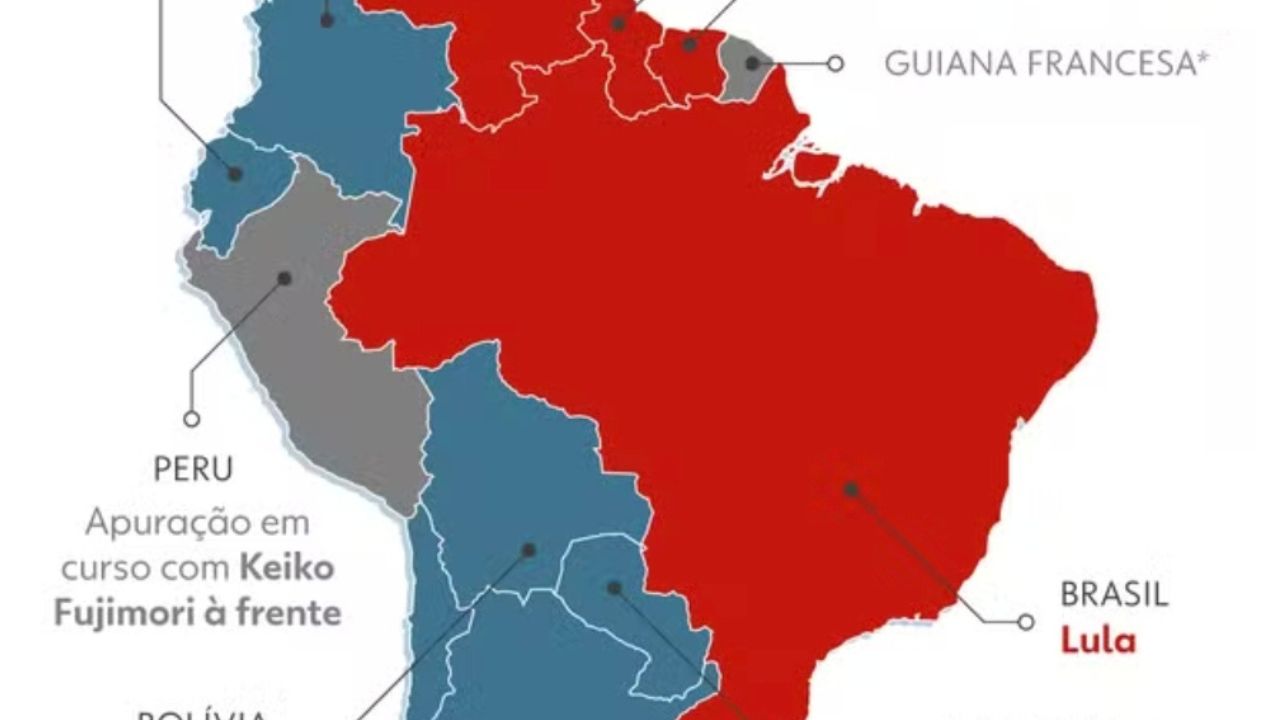
The right-wing victory in Colombia's presidential election was interpreted by analysts and supporters of the conservative camp as yet another sign of wear and tear on left-wing governments in several Latin American countries.
For this group, the Colombian result reflects a growing dissatisfaction on the part of the electorate with policies associated with the left, especially on issues such as the economy, public security and job creation. The assessment is that many citizens began to look for political alternatives after years of economic and social challenges faced by several countries in the region.
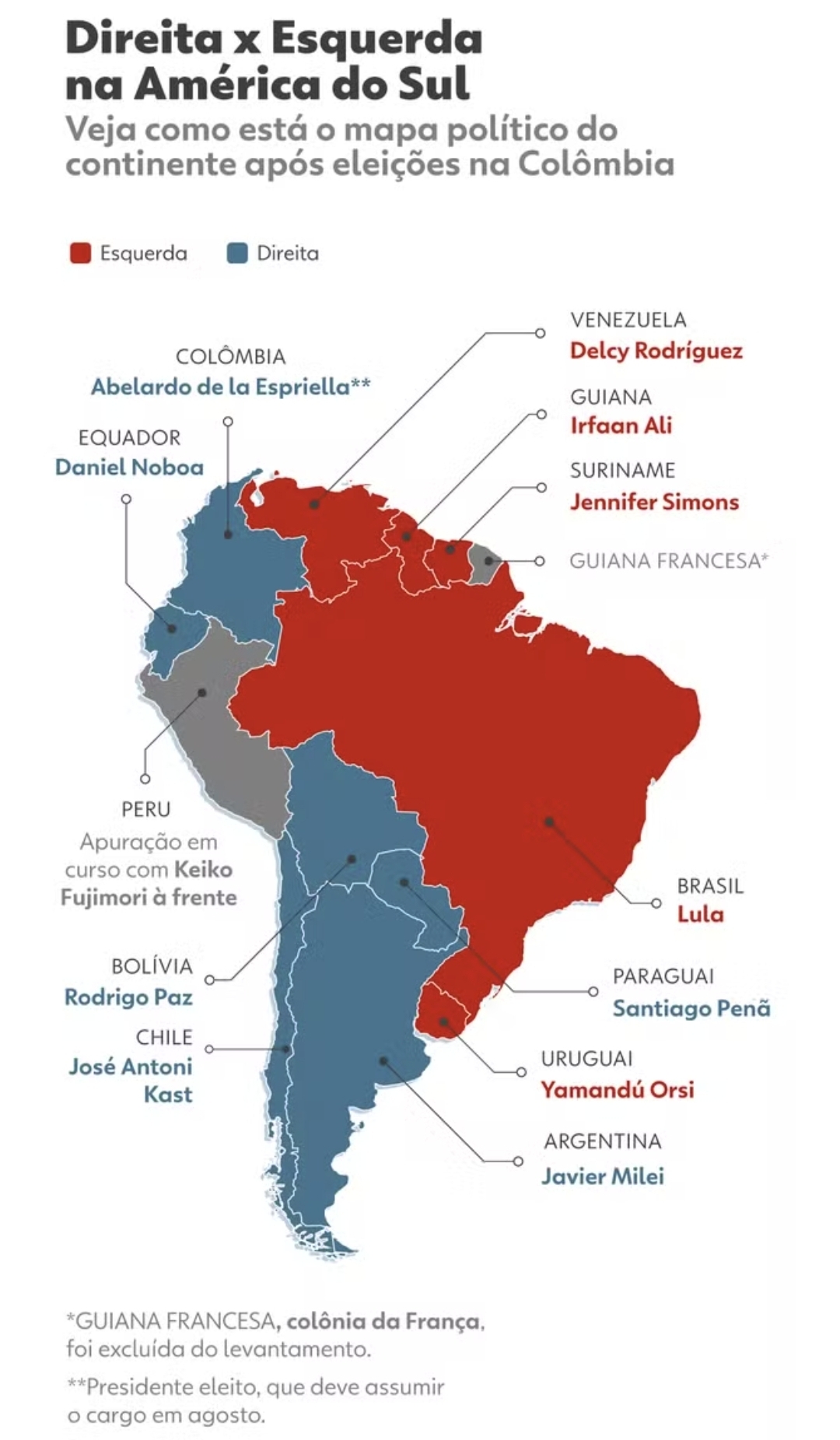 This movement would not be restricted to Colombia. In recent years, countries such as Argentina and Ecuador have also recorded victories by candidates identified with the right or center-right, fueling the debate about a possible change in the political cycle on the continent.
Defenders of this view claim that the population is showing less tolerance for governments that, in their assessment, have failed to deliver consistent economic growth, inflation control and improvements in quality of life. As a consequence, support for proposals aimed at reducing the size of the State, encouraging the private sector and stricter security policies is growing.
On the other hand, sectors linked to the left argue that the challenges faced by Latin American countries are the result of complex factors, including global crises, historical inequality and international economic instability, and argue that social policies continue to be fundamental to reducing poverty and expanding opportunities.
Regardless of the interpretation, the Colombian election reinforces the perception that Latin America is experiencing a moment of strong ideological dispute. The alternation between left-wing and right-wing governments continues to be a striking feature of the region, reflecting the demands and expectations of a population seeking answers to increasingly urgent economic and social problems.
This movement would not be restricted to Colombia. In recent years, countries such as Argentina and Ecuador have also recorded victories by candidates identified with the right or center-right, fueling the debate about a possible change in the political cycle on the continent.
Defenders of this view claim that the population is showing less tolerance for governments that, in their assessment, have failed to deliver consistent economic growth, inflation control and improvements in quality of life. As a consequence, support for proposals aimed at reducing the size of the State, encouraging the private sector and stricter security policies is growing.
On the other hand, sectors linked to the left argue that the challenges faced by Latin American countries are the result of complex factors, including global crises, historical inequality and international economic instability, and argue that social policies continue to be fundamental to reducing poverty and expanding opportunities.
Regardless of the interpretation, the Colombian election reinforces the perception that Latin America is experiencing a moment of strong ideological dispute. The alternation between left-wing and right-wing governments continues to be a striking feature of the region, reflecting the demands and expectations of a population seeking answers to increasingly urgent economic and social problems.
This movement would not be restricted to Colombia. In recent years, countries such as Argentina and Ecuador have also recorded victories by candidates identified with the right or center-right, fueling the debate about a possible change in the political cycle on the continent.
Defenders of this view claim that the population is showing less tolerance for governments that, in their assessment, have failed to deliver consistent economic growth, inflation control and improvements in quality of life. As a consequence, support for proposals aimed at reducing the size of the State, encouraging the private sector and stricter security policies is growing.
On the other hand, sectors linked to the left argue that the challenges faced by Latin American countries are the result of complex factors, including global crises, historical inequality and international economic instability, and argue that social policies continue to be fundamental to reducing poverty and expanding opportunities.
Regardless of the interpretation, the Colombian election reinforces the perception that Latin America is experiencing a moment of strong ideological dispute. The alternation between left-wing and right-wing governments continues to be a striking feature of the region, reflecting the demands and expectations of a population seeking answers to increasingly urgent economic and social problems.