Iranian-Americans display protest flags during Iran's World Cup debut
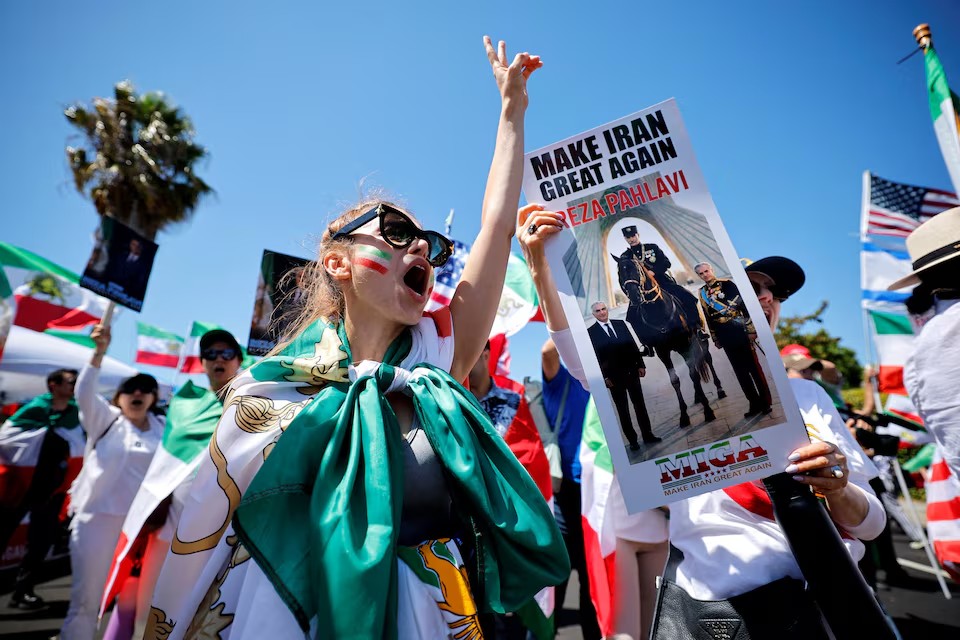
2026 FIFA World Cup - Group G - Iran x New Zealand - Los Angeles Stadium, Inglewood, California, USA - June 15, 2026. Protesters with Iranian flags and posters of Iranian political activist Reza Pahlavi outside the stadium
REUTERS/Mike Blake
Iran's debut in the World Cup, this Monday, in Los Angeles, was marked not only by the 2-2 draw with New Zealand, but also by political demonstrations inside and outside the stadium. Iranian-American fans displayed symbols of opposition to the government in Tehran and turned the match into a reflection of the divisions experienced by the Iranian diaspora in the United States.
The game took place just one day after the announcement of a peace agreement to end the conflict that began in February, when the United States and Israel launched attacks against Iran. The Iranian team arrived in Los Angeles on Sunday from its training base in Tijuana, Mexico, just as news of the agreement broke. published.
The city is home to the largest Iranian community outside of Iran. Among local residents, the moment was marked by contradictory feelings: the joy of seeing the team compete in the main world football tournament, indignation with the repression promoted by the Iranian government and concern about the consequences of the war.
According to reports, between 300 and 500 demonstrators gathered around the stadium to protest against the Iranian regime. Many carried posters and flags and stated that they chose not to watch the match to avoid any association with the Tehran government.
Others decided to enter the stadium carrying opposition symbols, including the pre-Islamic Revolution flag of 1979. The model maintains the colors green, white and red, but replaces the current emblem of the Islamic Republic with the traditional symbol of the lion and the sun.
The presence of these flags raised questions about possible restrictions imposed by FIFA. The entity claims to prohibit demonstrations of a political nature in its competitions, but had not previously clarified whether the pre-revolutionary flag would be covered by this rule.
Despite threats made by Iranian authorities to suspend the team's participation if unofficial flags were displayed or slogans were chanted, the match took place normally. Several fans passed through security carrying t-shirts and flags with the lion and sun symbol without being stopped.
In the stands, the division was evident. Some fans booed the Iranian anthem and celebrated New Zealand's first goal. Others, however, wore the team's official colors and advocated that football be separated from politics.
"I'm here to support Iran. We are very proud of our country," said Mehdi Jafari, 57, upon entering the stadium.
Farhad Jafargad, who wore a t-shirt with the pre-revolutionary symbol, said he would support New Zealand. "This team is not the team of the people of Iran," he declared.
Even in the face of the demonstrations, the majority of the public supported Team Melli, as the Iranian team is known. The Asian team's draw was celebrated by most of those present.
Iran's participation in this World Cup has been surrounded by controversy since the beginning of the tournament. In recent weeks, the federation transferred its base from the United States to Mexico and complained about difficulties in obtaining visas for members of the delegation, as well as problems related to the distribution of tickets to Iranian fans.
Now on g1
Source: G1