Iran will hold ceremony for family members of supreme leader killed in attacks
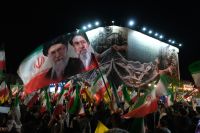
Iran is preparing to hold a ceremony in memory of the wife and family of supreme leader Mojtaba Khamenei, who were killed in airstrikes at the start of the war, according to state media.
The ceremony should take place between Thursday (28) and Friday (29) at the Shah Abdol-Azim Hasani Shrine in Tehran, reported Nour News.
Mojtaba Khamenei's wife, Zahra Haddad Adel, as well as his sister, brother-in-law and niece, were killed in the same February attacks that targeted and killed his father, then-Supreme Leader Ayatollah Ali Khamenei, and several other senior regime figures.
Ali Khamenei ruled Iran with an iron fist for almost four decades. His son was chosen to succeed him, but Mojtaba Khamenei has not been seen in public since the start of the war, choosing to release only written messages.
The new supreme leader was injured in the February 28 air strikes on his father's residence in Tehran, and his isolation has sparked speculation about the severity of his injuries.
This week, Iran's Health Ministry said Mojtaba Khamenei suffered only "superficial injuries" to his face, head and legs, disputing Western media reports that one of his limbs had been amputated.
Since the start of the war, Iranian officials have insisted that Khamenei is in good health and is overseeing negotiations with the United States to end the conflict, blaming Iran's enemies for spreading rumors about his health.
Remember how the war in Iran began
On February 28, United States President Donald Trump announced a "large-scale" attack on Iran, stating that the country's main objective was to "defend the American people by eliminating imminent threats from the Iranian regime."
These threats, he said, included Tehran's nuclear program - a recurring point of friction that has also hampered more recent negotiations to end the fighting.
The joint attacks by the US and Israel against Iran - which resulted in the death of the then supreme leader, Ayatollah Ali Khamenei - caused thousands of deaths across the country and damage to dozens of museums, historic buildings and cultural sites, according to Iranian media outlets and authorities.
In response, Iran launched a series of retaliatory attacks across the Middle East and effectively closed the Strait of Hormuz, a strategic waterway through which about 20% of the world's oil passes.
Weeks before the start of the war, the Trump administration carried out the largest military buildup in the Middle East since the 2003 invasion of Iraq, triggering warnings about escalating regional violence if a conflict erupted.
At the same time, US envoys held regular talks with Iran about a possible new nuclear deal. But those negotiations were unable to avert military action, with Trump accusing Iran at the time of rejecting "all opportunities to renounce its nuclear ambitions."
The outbreak of war in February also followed mass anti-regime protests in Iran the previous month, fueled by economic discontent amid skyrocketing costs.
Who is Mojtaba Khamenei, the new supreme leader of Iran
Source: CNN