Iran says Ali Khamenei's funeral will begin on July 4
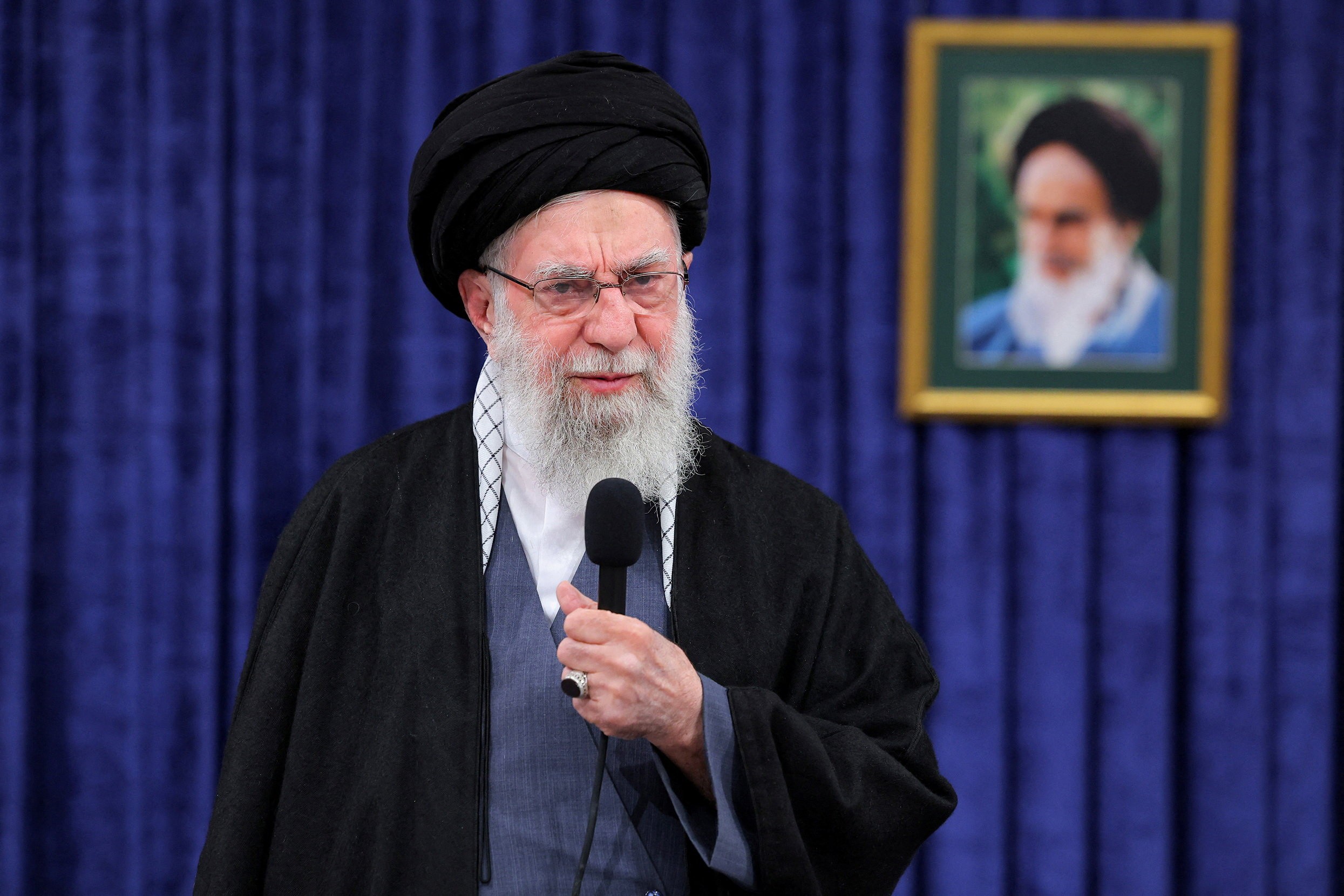
File photo: Iran's Supreme Leader Ayatollah Ali Khamenei speaks on February 9, 2026
WANA via Reuters
The funeral of Ali Khamenei, Iran's supreme leader who was killed in February, will begin in Tehran on July 4 and conclude with his burial in the northeastern city of Mashhad on July 9, Iranian state media reported on Saturday (13).
Khamenei was killed during the Israeli and American attacks on Iran. His death marked the end of more than three decades at the head of the Islamic Republic.
He was replaced by his son, also Ayatollah Mojtaba Khamenei, who has not yet made public appearances, and whose health status is a mystery.
Supreme leader
Ali Khamenei was on the front line of the Islamic Revolution, in 1979, alongside Ayatollah Ruhollah Khomeini, leader of the movement who became the supreme leader until his death in 1989.
Born in 1939 in the city of Mashhad, in eastern Iran, Khamenei had his years of religious and political formation in the 60s, involved in movements that questioned the regime of the then Shah Mohammad Reza Pahlevi.
he became close to Khomeini's movement during his studies in Qom, and was soon helping to organize it and carrying out missions on Iranian territory.
In June 1981, Khamenei suffered a bomb attack that left his right arm permanently paralyzed. Four months later, he was elected president of Iran, with 95% of the votes.
He remained president until Khomeini's death, when the Assembly of Experts chose him as the new supreme leader.
Experts attributed to Khamenei a strategy of building and strengthening parallel structures within the State that mirrored some of its institutions, such as the Army and intelligence agencies, in order to better control them. This is the case of the Iranian Revolutionary Guard (IRGC), for example, a force parallel to the traditional military.
Over the years, it became capable of increasingly influencing the formulation and execution of policies in the country, and fostered the cult of its personality.
In 2018, an investigative report by the news agency Reuters stated that Khamenei controlled a powerful financial empire worth at the time 95 billion dollars, based on the confiscation of properties that they belonged to normal Iranians, including minorities. The investigation found no evidence that he used his fortune for personal luxuries, but rather to finance his political actions - the investigation was at the time classified as incorrect by his office.
In more than three decades in power, Khamenei faced several waves of protests, all violently repressed, while maintaining a hard-line policy regarding customs. His government was accused of killing exiled opponents, and repressed journalists and intellectuals not aligned with the regime.
With information from Reuters and AFP.
Source: G1