Interior of Rio Grande do Sul bets on innovation to modernize sanitation
The interior of Rio Grande do Sul is innovating and modernizing the sanitation sector through the use of new systems and technologies for continuous digital monitoring and high-precision equipment, in addition to preparing for extreme weather events.
The tools are used in small municipalities, with just over 40 thousand inhabitants, such as Panambi and Cruz Alta, both in the northwest of the state, and in the midst of the largest cycle of investments in sanitation in the state's history.
With this, the result is a rare inversion in the map of Brazilian infrastructure: small cities have become technological "showcases" of a new model in sanitation.
After the privatization of the former state-owned company Corsan, Aegea, the company's controller, states that by 2033, the last year to achieve the goals set in the Legal Framework, R$15 billion will be invested in expansion and operational modernization projects in the 317 municipalities in Rio Grande do Sul operated by the company.
Despite the state being fifth in the country's wealth generation ranking, Rio Grande do Sul collects only 34.7% of its sewage and treats around 25.4% of the volume generated.
Faced with low coverage, the company is seeking to triple its current coverage to meet the universalization targets set out in the Sanitation Legal Framework, in a process that requires investments estimated at around R$21 billion.
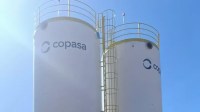
Image shows Aegea Water Treatment Plant in RS - Disclosure/Aegea
According to Instituto Trata Brasil, the investments will have an immediate impact on the state's GDP, as the universalization of sanitation can generate up to R$40.7 billion in socioeconomic gains in the state, with reduced health spending and increased productivity.
For comparison, the average national sewage collection rate is 56%.
However, the challenge is huge for a state whose public budget foresees around R$5 billion in investments this year for all areas, including the reconstruction of the state.
To CNN, Leandro Marin, regional vice-president of Aegea, stated that the company's biggest challenge is to expand the network by almost 20 thousand kilometers.
"At the same time, we need to recover and maintain the infrastructure that already exists and which, for a long time, did not receive adequate attention and lost almost 50% of the treated water on the route between the station and the properties served. In addition, the Company prepared a robust resilience plan against floods in view of the major climate event of 2024 already under discussion with regulatory agencies", he said.
In Panambi, technologies such as integrated automation, monitoring and real-time digital operational control are used by teams operating at the Water Treatment Station (ETE) installed in the city.
"We went from a completely manual operation to a station powered by technology and automation, where each step of the process is precisely monitored, ensuring greater agility, safety and precision in decision-making", stated Lohane Alves Coelho, Quality Coordinator at Corsan.
Image shows operator monitoring the unit's visual and control center, responsible for monitoring the stages of the water treatment and distribution process - Disclosure/Aegea
In Cruz Alta, new wells and reservoirs increased the system's autonomy in critical periods.
For Corsan's CEO, Samanta Takimi, the new investments represent a "structural change" in Rio Grande do Sul's sanitation.
"Municipalities that historically operated at the limit now have operational intelligence, permanent monitoring and much faster response capacity, including in the face of climate crises", he stated.
Source: CNN