If Brazil reaches the World Cup final, it will play in four working days; Will there be breaks? How are salaries? Ask questions
Will there be a day off for the Brazil games? What the labor law says
With the first place in Group C of the 2026 World Cup, the Brazilian team advances to the knockout stage and this is already starting to affect the routine of those who work during business hours.
If they reach the final, the team led by Carlo Ancelotti will play five games until the title is decided. Of these, four are scheduled for weekdays.
⚽ See below Brazil's path to the final:
16th finals: June 29th (Monday), at 2pm
Round of 16: July 5th (Sunday), at 5pm
Quarter-finals: July 11th (Saturday), at 6pm
Semifinal: July 15th (Wednesday), at 4pm
Final: July 19th (Saturday), at 6pm
Saturday is considered a working day both by the Consolidation of Labor Laws (CLT), of 1943, and by the Federal Constitution of 1988.
The debut in the eliminatory phase takes place this Monday (29), at 2pm. And this rekindles a well-known scenario in Brazil during the World Cup: companies that reorganize schedules, adjust working hours and, in many cases, release employees to attend the games.
Although flexible working hours are common during the World Cup, companies are not required by law to release employees on game days.
For this reason, many workers are in doubt about how to act and fear being surprised by salary discounts, the need to compensate hours or punishments.
➡ To help with planning, g1 spoke with labor lawyers, who explain how the legislation deals with situations of release, agreements and absences related to the World Cup.
Off day off or not?
The starting point is straightforward: the national team's game day is not a holiday. The legislation does not provide for any specific exception for the World Cup, and regular working hours continue to apply.
In other words, by law, working hours continue normally, regardless of the game, time or phase of the competition.
The release of employees, when it occurs, depends exclusively on the company's decision.
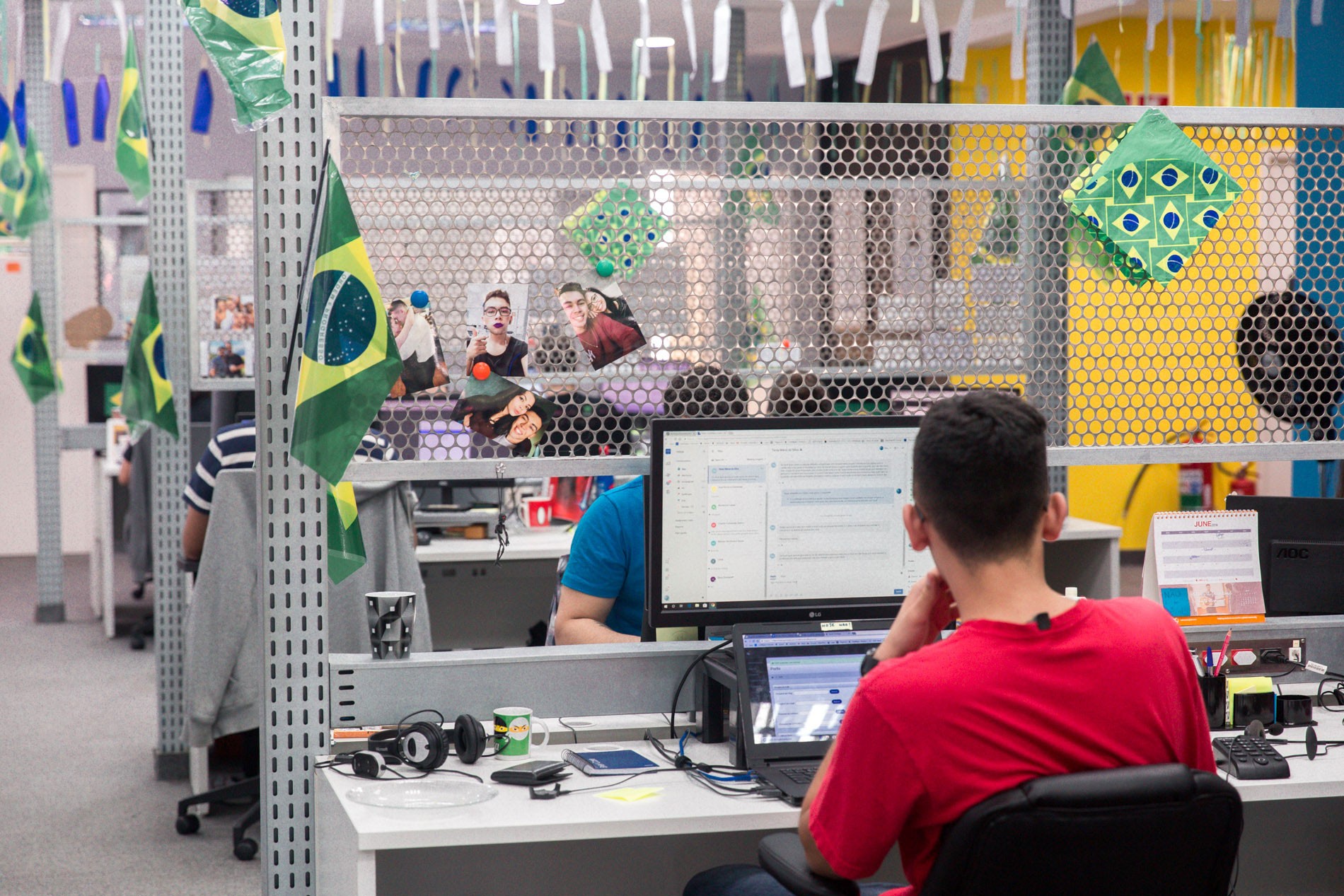
Companies like the startup GetNinjas, in São Paulo, decorated the workplace for the World Cup and will allow employees to watch the games at home or in their own office
Marcelo Brandt/G1
Many employers have the habit of releasing their team during the games, reducing the working hours or allowing employees to watch the match in their own workplace. Other companies maintain normal operations and treat gambling like any other activity outside of working hours.
When the company decides to release employees without discount, the time off is considered paid. This is a common practice in World Cup years and can be adopted without the need for a collective agreement, as long as the employer makes the rule clear.
In many cases, working hours are suspended for a few hours and resume after departure, which requires internal organization to avoid losses in service or workflow.
Lawyer Marcel Zangiácomo, partner at the firm Galvão Villani, Navarro, Zangiácomo e Bardella Advogados, explains that compensation may be required when the company opts for partial or total release during office hours.
Compensation needs to be agreed and respect the daily working hours limits. This means that the employee cannot be forced to work beyond what is permitted by law, even if the replacement is a consequence of the World Cup games.
Zangiácomo reinforces that the compensation "cannot exceed two overtime hours per day" and that the agreement "needs to be clear to prevent the worker from being surprised later".
According to him, it is possible to compensate in up to one year, as long as the correct type of agreement is made - individual verbal, individual written or collective, respectively.
Unjustified absence on game days continues to be considered a common absence. The worker may suffer a reduction in hours and lose paid weekly rest.
Warnings or suspensions may occur in the event of a repeat offense, but experts reinforce that missing just to watch a match, without prior notice or negotiation, does not constitute a reason for just cause.
Argentinean Gustavo Gagliano, 19 years old, works as a barber in Copacabana
Marcos Serra Lima/g1
For those who work on a shift basis or work in essential sectors - such as health, transport, security and customer service - the scheme is even more rigid.
According to Zangiácomo, sectors with uninterrupted operation face even more limits, because "the company cannot compromise essential activities because of the World Cup", which requires prior planning and dialogue to minimize impacts.
In these situations, individual agreements are more common. Supervisors evaluate operational conditions and decide on a case-by-case basis, which makes it essential for workers to anticipate and talk in advance.
Zangiácomo also warns that watching the game without authorization, even within the workplace, can be interpreted as indiscipline.
"If the company has determined that there will be no break, the employee needs to comply with the guidance. Otherwise, they may face a warning and even suspension," he states.
The lawyers also highlight that, in any scenario, dialogue is the best strategy. The lack of a single rule forces companies and employees to negotiate practical solutions, avoiding surprises and conflicts. Documenting these decisions helps ensure security for both parties.
Brazilian team wins friendly against Senegal
Isabel Infantes/Reuters
Source: G1