'I spent up to 2pm a day on my cell phone. I'm going to therapy to combat my addiction'
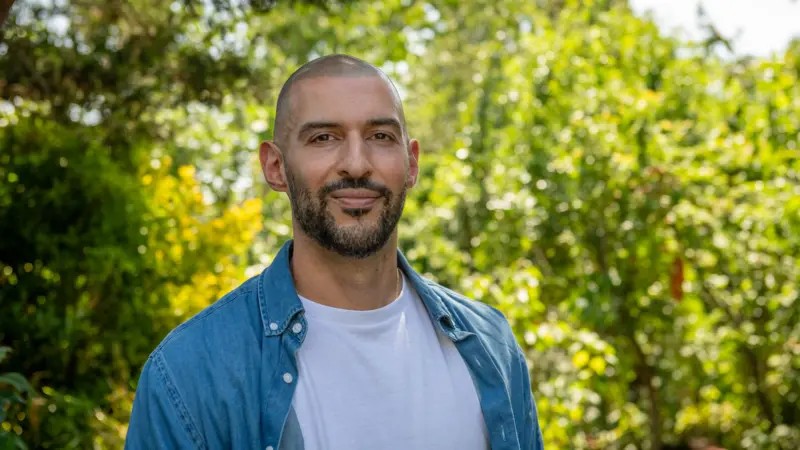
Marios can spend 14 hours a day on the phone - he says it's like a drug in his pocket
BBC/Emma Lynch
Marios' phone beeps and lights up. He just received a WhatsApp message from me asking for an interview for this story.
Do you have any suggestions for a story? Send it to g1
He wants to respond immediately. The urge, he tells me later, is overwhelming.
Yet he is in the middle of a therapy session about his cell phone addiction. He can't answer now.
He controls himself. But as soon as the meeting is over, he gets back on the phone, and an hour later we speak via video call.
Now on g1
"I'm sorry," I say. "The last thing I wanted to do was interrupt your session."
"Don't worry," Marios sighs. "That's the feeling I've had for many years: this uncontrollable need to use my phone."
"It's like carrying your own drug dealer. My drug is always in my pocket, blinking and beeping and reminding me to take a dose."
On a bad day, Marios, who is a personal trainer in London, would spend more than 14 hours staring at his screen (Instagram, he says, is the main problem). But now he's taking a 12-session course of private therapy to try and curb this compulsion, which he believes is driven by loneliness. A look at my phone's screen time statistics tells me I checked my device 116 times yesterday. I also spent more than three hours looking at it.
Is Marios addicted? Am I addicted?
It's hard to know.
Marios says his phone helps ease the loneliness he sometimes feels
BBC/Emma Lynch
Phone addiction doesn't yet exist as an official health problem, but in a recent survey of 1,000 adults by Deloitte, 70% of respondents said they spend too much time on their phones. As a growing number of academics warn that smartphones are changing our brain chemistry, addiction experts tell me they are seeing more clients completely dependent on their devices.
Last year, one in three clients treated for drug addiction by the UK Addiction Treatment Centers (UKAT), which serve 3,500 people a year, also had a secondary phone addiction. In 2019, it was just one in ten.
Some clients even drop out of treatment for their main addiction because they refuse to hand over their devices when they enter the clinic, says UKAT.
But when does someone stop being just a texter and start needing professional help?
As I walk up the tree-lined walkway leading to Rainford Hall, I'm greeted by huge stained glass windows dating back to the Jacobean era, overlooking well-lit gardens. care.
It's an unlikely place to treat people with a digital addiction.
Rainford Hall treats people with different addictions, but sees a growing number of people who need help with their phone dependency.
BBC
Here, in St Helens, in the north of England, is the Steps Together rehabilitation center, which also takes in people struggling with other addictions (including drugs, alcohol and gambling).
Therapists say they are seeing a growing number of people who are unable to disconnect from your devices.
"It can affect anyone, from any background," explains lead therapist Kelly Watson. "We all have phones, we all have similar brain circuits, and many of us can become addicted."
Part of our brain works with a reward system, she says. We receive a message, a like on social media, or even read some new information on a website, and then dopamine (a chemical messenger in the brain that regulates pleasure and motivation) is released.
Eventually, for some of us, the need for this stimulation becomes excessive.
It can take over, causing hours - or even days - of our lives to disappear into the online world, she explains.
James, who is being treated at another Steps Together center in Leicester, knows what this is all about.
The 48-year-old initially sought help for alcohol addiction, but it soon became clear that his digital addiction was also out of control.
After losing his job, his day became consumed by scrolling social media, checking news sites and pinning on what was happening in different parts of the world.
If he posted something on social media, he would stay up in the middle of the night checking likes and comments. He tells me that it felt like the digital world was holding him hostage.
But any pleasure in using the phone was gone. "I was scared," recalls James. "It felt like a piece of my soul had been sucked out, but I couldn't stop."
Seven in 10 respondents to a recent survey said they would prefer to spend less time on their phones
BBC/Emma Lynch
Watson says that when customers arrive at Rainford Hall, they are worried, confused and don't want to give up their phones.
"They say, 'But I need it for work, I need it to keep in touch with family.' I can hear the fear in their voices. It's their safe haven."
Many spend at least 28 days at the residential center, receiving group and individual therapy for the issues that drive their addiction, while being helped to gradually reduce their dependence.
Watson works with them to slowly decrease their screen time and discover what thoughts and feelings come up when they don't have their device.
"That's often the problem - life can be too hard, and by scrolling through their phone they can dissociate themselves from the real world."
Far from the luxury of Rainford Hall, people around the world are coming together to support each other in the fight against digital addiction.
People addicted to the phone can benefit from group therapy to help them reconnect with others
Getty Images / BBC
In 2017, a number of people concerned about their use of technology and the internet came together to create Internet and Technology Addicts Anonymous (ITAA), a global association inspired by Alcoholics Anonymous (AA).
Jenny is one of its members. At the height of her phone addiction, she wouldn't sleep for days. She barely ate or drank, her addiction was so strong.
"I was missing out on parts of my life," explains the 30-year-old, who doesn't want the BBC to use her real name.
She didn't care what was on screen - a film, a series, a short video - as long as she was watching something.
"I didn't realize how addicted I was until I was in withdrawal and had to ask friends and family to keep my devices locked," she recalls Jenny.
"It was so bad I thought I would die if I didn't watch something."
If she relapsed, she would resort to taking or "borrowing" a laptop or smartphone from her family.
But then the guilt and shame would set in, and she wanted to consume even more content to block out those feelings.
After years of "seeking help," she found ITAA and followed the 12-step addiction program. She is now in recovery and has not watched or streamed content in five years.
Jenny says she is comfortable having a basic phone and using the internet for work. "I'm in charge now," he says.
Another ITAA member, Tom, says his addiction has taken him to dark places. He could waste entire months of his life with his phone and other screens.
"I would spend 10 hours straight consuming content - I could be listening to music, watching something on YouTube, browsing social media and playing video games - all at the same time."
"Then I would walk for two hours and go back to consuming.
This could go on for months."
Tom's addiction was so overwhelming that it caused him to lose his business and his sense of purpose in life.
"I became suicidal," he says. "I'm starting to feel real joy in life again. I play a lot of pickleball, get outdoors and go to the gym."
By reducing screen time, Marios says he is starting to find joy in everyday life
BBC/Emma Lynch
Hilda Burke, a psychotherapist accredited by the British Association of Counseling and Psychotherapy (BACP), recently wrote a supportive book called Phone Addiction Workbook, after seeing a growing number of clients seeking help for digital addiction.
If you are worried about the time you spend at screen, she recommends analyzing your own behavior and reflecting on what might be behind it.
"Ask yourself questions like, 'What was going on that day? Was I waiting for someone to respond to a message?'"
Often, it's the wait for a response to a message that causes our initial discomfort, explains Burke. This then leads us to use our phone as a distraction.
"Instead of going online, maybe do something else to distract yourself. Grab a friend, go for a run, read a book.
"And try not to feel guilt or shame - instead, think about how you could deal with it next time."
Phone companies have also introduced features that help people monitor their screen time and restrict access to certain apps, in a bid to combat the addictive cycle many of us fall into.
Back in north London, Marios is hopeful that his course of therapy can help him to Overcome your phone dependence. He's also on his way to becoming fluent in Spanish - thanks to several apps on his phone.
"It's not all bad," he says.
But a second later, he picks up his phone on impulse. As soon as he touches it, he seems to remember his determination. He presses the device firmly.
"Every day, I set the intention not to use it as much and it's making a difference," says Marios. "And every day, I'm slowly starting to enjoy things again. It's possible, I'm sure."
We used artificial intelligence to translate this report, originally written in English. The text was reviewed by a BBC journalist before publication. Find out more here about how the BBC is using artificial intelligence (link to English text).
Source: G1