Hyper-realistic Chinese robot promises to keep those who feel alone company
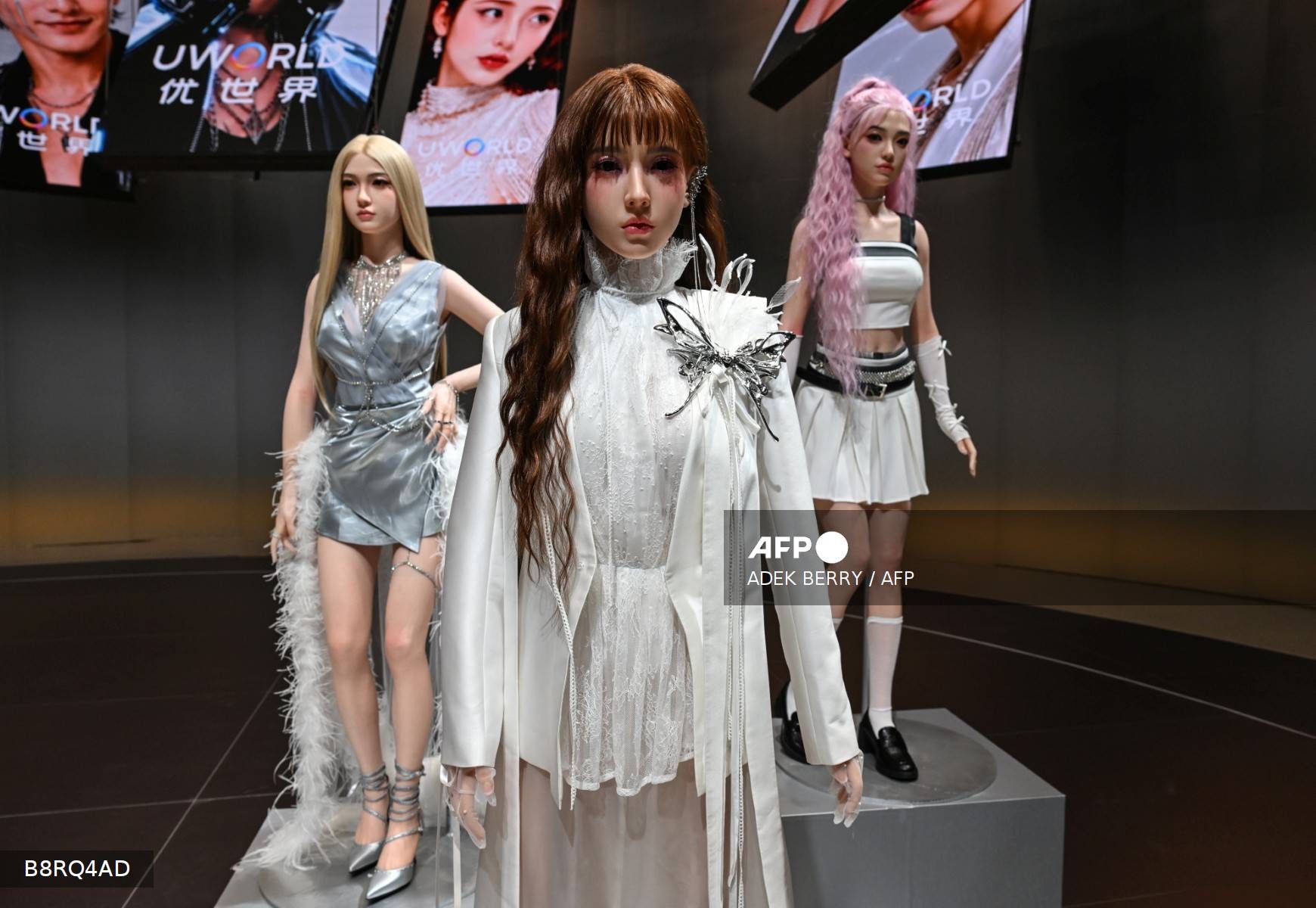
Humanoid robots are displayed during the launch of the U1 humanoid robot, produced by UWORLD, a brand of UBTECH Robotics, in Shenzhen, Guangdong province, China
ADEK BERRY / AFP
Chinese company UBTech has unveiled new androids with a hyper-realistic appearance, with soft skin and a soothing voice, designed to help combat loneliness.
The company offers "emotional companions" from 119,800 yuan (R$91 thousand), equipped with artificial intelligence and capable of remaining in the living room listening to users' problems 24 hours a day.
Do you have any suggestions for a report? Send it to g1
According to the company, U1 is "the world's first life-size humanoid robot with an ultra-realistic appearance".
The presentation, held in Shenzhen, in southern China, had a science fiction atmosphere and featured the participation of Norwegian DJ Alan Walker.
Now on g1
The humanoid promises "eternal love", Michael Tam, general director of UWorld, the UBTech brand responsible for the project.
The robot is aimed mainly at single people - around 120 million in China - and people over 60, a group that numbers 320 million, according to Tam.
With autonomy of up to four hours, the U1 offers words of comfort when it detects signs of fatigue or stress and, over time, learns more about the user.
The robot can also identify health problems, remember medication times and give advice on clothing.
Versions for all likes
Silicone skin, soft voice: the Chinese company UBTech revealed hyper-realistic androids with human appearance
ADEK BERRY / AFP
The robot can move its head, eyes and mouth, but it cannot clean the house, cook or iron clothes. Its capabilities also do not extend to the bedroom.
According to UBTech, it was not designed, "for now", to offer intimate relationships.
There are female (1.68 meter) and male (1.83 meter) versions, with different visual styles. The humanoid can also be customized to look like a loved one, a celebrity or a fictional character.
Prices start at 119,800 yuan (R$91,000) and can reach 990,000 yuan (R$753,000) for the most sophisticated version.
This type of product is criticized for stimulating emotional dependence and raising concerns about privacy. UBTech, however, states that the data is encrypted and will not be used to train AI models.
In China, robots are present both in factories and in public spaces and have broad social acceptance, in contrast to the greater skepticism observed in the West.
According to Barclays bank, China leads the development of humanoid robots and accounted for 85% of the equipment installed in the world in 2025.
Last year alone, more than 140 Chinese companies have launched more than 330 models of humanoid robots, according to the Ministry of Industry and Information Technology.
Robotics is a strategic priority for Beijing in its five-year plan from 2026 to 2030.
According to a study by Morgan Stanley, the Chinese market for humanoid robots could reach US$2 billion (R$10.4 billion) this year and US$15 billion (R$77.6 billion) in 2030.
Founded in 2012, UBTech also develops industrial robots and, with the U1, seeks to gain space in the humanoid market aimed at the general public, a segment that, until now, has proven to be unprofitable.
Humanoid robots are displayed during the launch of the U1, produced by UWorld, a brand of UBTech Robotics, in China.
ADEK BERRY/AFP
Source: G1