Human Evolution's Most Controversial Fossils Turn Enigmatic
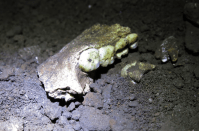
Fossils with human characteristics have emerged from the deep, winding caverns of South Africa's Rising Star cave system over the past decade - and what they revealed has shaken the field of human origins. Now, new discoveries about the sex of the individuals whose remains were found there are giving researchers a new but intriguing perspective on this peculiar human relative.
In 2015, scientists described for the first time a tiny, intriguing hominid species found in an exceptionally rich assemblage of fossils at a site known as the Dinaledi Chamber, within the cave system.
Despite having a brain not much larger than that of a chimpanzee, researchers hypothesized that Homo naledi, the name given to the species, deliberately buried its dead in the confines of the cave. This act represented a sophisticated practice previously considered exclusively human. Members of the species may even have carved symbols into the rock walls, researchers reported.
Pterosaur fossil is repatriated and will remain in a Rio museum | LIVE CNN
The latest research adds another layer of mystery: Scientists have recovered ancient proteins from the teeth of 20 individuals found at the site and determined that all of the teeth belonged to women.
"When these results came out, a lot of scientists were pretty nervous. It wasn't what we expected," said Lee Berger, a paleoanthropologist and National Geographic Explorer-in-Residence who led excavations at the site and co-authored the most recent research.
"Two laboratories analyzed this data," Berger said. "We re-analyzed it twice because we didn't want it to be an internal error," he added.
Molecular scientist Palesa Madupe led the research while working at the University of Copenhagen's Globe Institute, pioneering the field of ancient protein research known as paleoproteomics.
Paleoanthropologist Lee Berger makes the difficult climb through Rising Star Cave's main passage. The labyrinthine system stretches more than 4 kilometers (2.5 miles) and has a vertical depth of 100 meters (328 feet) - Robbie Shone/National Geographic
Madupe, who now works as a postdoctoral researcher at the Max Planck Institute for Evolutionary Anthropology in Germany, investigated 23 samples of tooth enamel. Two of the teeth did not provide useful information and two belonged to the same individual, resulting in a sample size of 20, according to the study.
To determine the sex of the remains, Madupe evaluated the samples for the male version of the protein amelogenin - the gene for which is only found on the male Y chromosome - but the biological marker was completely absent in all samples.
Among hominins and other mammals, females typically have two X chromosomes, while males have one The technique, although relatively new, has been widely used on ancient remains, including 2-million-year-old fossils belonging to even older species of human relatives. The remains of Homo naledi date back to 335,000 to 241,000 years ago.
In hindsight, Berger said he should have realized sooner that the fossils appeared to be females. The adult fossils found in the Dinaledi Chamber showed little variation in size, shape, and other physical characteristics. Typically, some variation between males and females is expected, a phenomenon known as sexual dimorphism.
"When we described these hominins in 2015, we said they are the ancient hominid species with the lowest sexual dimorphism ever found," Berger said.
"That's one of the great scientific lessons we can take from this," he added.
Homo naledi's brain size was about a third the size of a modern human's brain - Rising Star Program/National Geographic
'Why only women?'
Why would only individuals of one sex be found at the site? Berger argues that this is an example of gender bias in funeral practices. Homo naledi "buried their loved ones through rituals that separated them at death by sex and gender," he said.
However, the study, published in the scientific journal Cell on Wednesday, noted that the absence of male markers in the remains analyzed could be explained by an amelogenin-Y gene that may have mutated or been deleted over time.
Enrico Cappellini, one of the lead authors of the new study and professor of paleoproteomics at the Globe Institute at the University of Copenhagen, said that the deletion of the entire gene had already been observed in some living men and even in the DNA of a Neanderthal man.
He noted in a press release, however, that it would be very unlikely that the gene had been deleted "in even half of the 20 individuals we studied or in an entire population."
"Both scenarios, namely the absence of Homo naledi males in the Rising Star cave system or a systematic deletion of its AMELY gene, are fascinating and would have profound implications for better understanding the biology and evolution of this species," he added.
Ryan McRae, a paleoanthropologist at the Smithsonian National Museum of Natural History who was not involved in the study, said the Rising Star archaeological site and Homo naledi are so "interesting and anomalous" that they will always arouse both scientific and popular curiosity and fascination.
Even if this is a single-sex accumulation, as the authors suggest, this raises more questions than it answers: Why only female individuals?
"We know where the bodies of Homo naledi individuals ended up, but we don't know how they got there, nor where or how they lived."
Michael Petraglia, professor at Griffith University in Brisbane, Australia, and director of the ARC Center of Excellence for Transforming Human Origins Research, has long argued that there is insufficient evidence to support the idea that Homo naledi intentionally buried their dead and produced rock art. Both behaviors suggest advanced cognitive abilities.
The idea that this was the first known example of a sex-specific burial site was "more of an exaggeration", he said. However, he had no reason to question the female sex determination, noting that the University of Copenhagen authors "do scientifically rigorous work in proteomics."
"Regarding their interpretation that prejudice against women supports their interpretation of burial, all I would say is: not so fast," he said via email.
"It is entirely possible that Homo naledi, being a small-brained hominid similar to non-human primates, had groups with high proportions of females to males, seeking food in specific locations on the landscape."
For example, he stated that all-female foraging groups occur among chimpanzees, and primatologists have noted that small groups, including females with young, sometimes use rock shelters or cave entrances for shade, refuge from heat, or protection from rain.
Berger argues, however, that if Homo naledi led sex-segregated adult lives, he would expect to find male babies at the site, which did not occur, although several children have been unearthed.
"I think even our most detailed critic will have to stop and think about this for a while, because the chance of it being a natural phenomenon is one in a million," Berger said.
Source: CNN