Huawei proposes new path to develop chips amid US sanctions
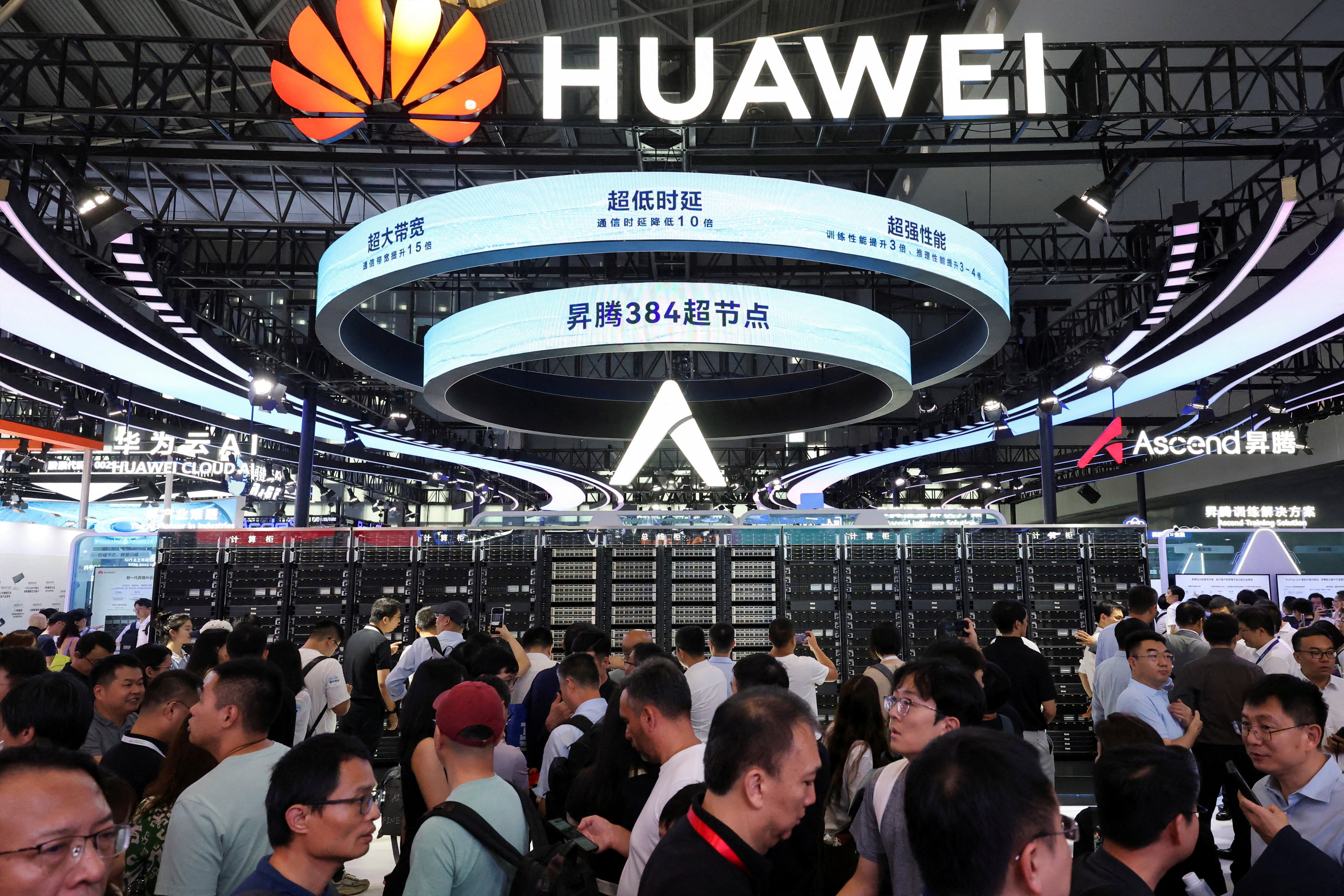
Huawei stand at the World Artificial Intelligence Conference in Shanghai, China, in July 2025
REUTERS/Go Nakamura
The Chinese company Huawei said this Sunday (24, already Monday, 25, in Shanghai) that it hopes to design cutting-edge chips by 2031 with transistor density equivalent to 1.4 nanometer processes, despite United States sanctions. Sanctions make it difficult for China to obtain the equipment needed to manufacture these chips.
The projection was made in Huawei's presentation on what it calls the "Tau Scaling Law," a new principle proposed to improve chips at a time when the industry can no longer rely primarily on reducing the size of transistors. end of this decade.
Huawei has been subject to United States sanctions since 2019. At the time, the American government said there was a risk that the company would engage in virtual espionage to favor the Chinese government. In the same year, Google suspended its main agreements with Huawei.
The company ended up developing its own technology to circumvent the sanctions - such as an operating system for the brand's cell phones.
Now on g1
According to the company's latest earnings release, Huawei Technologies grew 2.2% in revenue in 2025. The advance was mainly driven by the areas of network infrastructure and consumer devices, while the cloud computing business saw a drop in revenue.
The company, which is based in Shenzhen, achieved revenue of US$ 127.5 billion in 2025. The result shows a significant slowdown compared to the 22.4% growth recorded in 2024.
The 2025 performance represents Huawei's second highest annual revenue, below only the record US$128.9 billion obtained in 2020. Net profit grew 8.6%, reaching US$9.8 billion.
(Reporting by Che Pan, Eduardo Baptista and Casey Hall; edited by Muralikumar Anantharaman)
Source: G1