How the British royal family is financed and what it invests its resources in
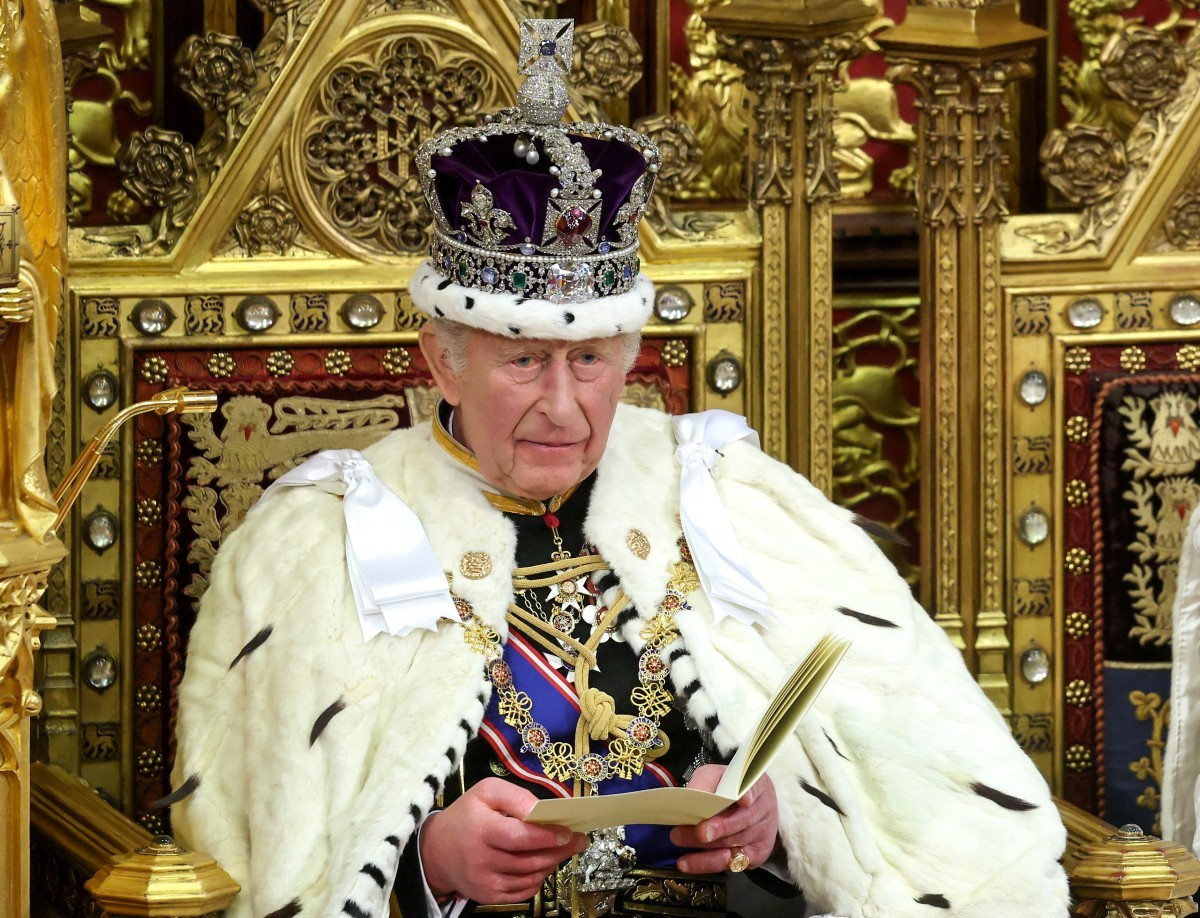
King Charles III, wearing the Imperial State Crown and State Robe, sits on the Sovereign's Throne while speaking in the House of Lords of Great Britain, wearing the Imperial State Crown and State Robe, sits on the Sovereign's Throne while speaking in the House of Lords
CHRIS JACKSON / POOL / AFP
King Charles III became the first British monarch to publicly disclose how much he paid in taxes. Since taking the throne in September 2022, he has disbursed around 30 million pounds (approximately R$207.5 million), from his private income.
The data is part of a set of information that helps to understand how the British royal family finances itself: a combination of public resources, income from historic properties and personal fortunes.
Annual allocation
The Sovereign Grant is the main public fund allocated to the king to fund their official functions.
It covers:
maintenance of royal residences
staff salaries
official trips of the monarch and members of the royal family on behalf of the Crown
Between 2025 and 2026, the value was around US$174.5 million (approximately R$905.4 million). For 2026-2027, the forecast rose to US$182 million (around R$944.3 million), driven mainly by the renovation work at Buckingham Palace. For 2027-2028, the allocation should fall to US$132 million (approximately R$685 million).
In the same period, personnel costs increased by around US$44.5 million (approximately R$230.9 million).
Among the most expensive recent trips are:
Prince William's three-day visit to Saudi Arabia
King Charles III and the Queen's four-day trip Camilla to Italy
Security costs, however, are not included in the Sovereign Grant and are paid separately by the government.
Allocation calculation
The Sovereign Grant is linked to the financial performance of the Crown Estate, the Crown's real estate holdings.
The amount currently corresponds to 12% of the profits generated two years previously, a percentage that can be revised over time.
In recent years, the increase in the endowment has been driven by extraordinary revenues, especially with the leasing of offshore areas for wind farms.
Crown Estate: the Crown's estate
The Crown Estate is an independent public company that manages the monarchy's vast real estate portfolio.
It includes:
property in prime areas of London
rural land
coastal areas
Windsor Castle
rights to the seabed in England, Wales and Northern Ireland
The estate is estimated at around US$ 22 billion (approximately R$114.1 billion).
Although associated with the Crown, the Crown Estate does not belong to the monarch as private property. It also cannot be sold or managed directly by the royal family.
In the year ending March 2026, the fund recorded a net profit of US$643 million (about R$3.3 billion), a drop compared to the previous year.
In Scotland, assets are managed separately by Crown Estate Scotland, with revenues going to the Scottish government.
Income from dukedoms
In addition to public resources, the royal family receives private income from so-called duchies:
Duchy of Lancaster: earned the king around US$33.3 million (R$172.7 million)
Duchy of Cornwall: earned Prince William around US$28.5 million (R$147.8 million)
These historic heritage sites generate income mainly through the rental of agricultural land and commercial and residential properties.
Although they do not directly manage the assets on a day-to-day basis, the king and the heir define guidelines and approve strategic decisions.
Ducats also cannot be sold.
Vice-Admiral Sir Tony Johnstone-Burt, Master of the Sovereign's Household, holds a small battery-powered fan for King Charles III of Great Britain during a London Climate Week reception
CHRIS JACKSON / POOL / AFP
Taxes paid by the King
Since 1993, the British monarch has voluntarily paid taxes on private income, a practice that began under Elizabeth's reign II.
Although there is no legal obligation, the gesture is considered a form of transparency.
Since the death of Queen Elizabeth II, Charles III and Prince William declared that they had paid, together, around US$66 million (approximately R$342.5 million) in taxes.
The disclosure comes amid greater public scrutiny over the monarchy's finances, especially after debates about spending on palace renovations.- Personal wealth -
Members of the royal family also have assets personal. The king owns the Balmoral and Sandringham estates, inherited from his mother.
Assets passed directly from a monarch to his successor are exempt from inheritance tax.
Now on g1
Personal wealth
In addition to institutional resources, members of the royal family own private assets.
King Charles III, for example, owns the Balmoral and Sandringham estates, inherited from Queen Elizabeth II.
These assets, when transferred between monarchs, they are exempt from inheritance tax.
British royal family on their way to the Christmas ceremony at St. Mary Magdalene Church in Sandringham
AP Photo/Jon Super
Source: G1