How much did things cost in 2002? Remember the prices and what the economy was like in the penta year
Ronaldo 2002 World Cup final
Agência AP
In 2002, Brazil celebrated one of the most memorable moments in its sporting history: winning the fifth world football championship, with the victory over Germany and two goals from Ronaldo in the World Cup final.
But, while the team was celebrating in Japan, Brazilians were living with a challenging economic scenario.
Do you have any suggestions for a report? Send to g1
It was a period of high inflation, a soaring dollar, high interest rates and a lot of uncertainty due to the presidential elections that would take Luiz Inácio Lula da Silva (PT) to the Planalto Palace for the first time.
Still, anyone who lived at that time probably remembers the feeling of going into a bakery, filling up the car or buying a movie ticket paying prices that seem unreal today.
That's why g1 gathered some curiosities about 2002 to remember what Brazil was like in the year of the penta and understand why comparing prices in the past with those of today requires also looking at inflation and the economic context.
Lower prices do not mean purchasing power
At first glance, the values charged more than two decades ago attract attention.
A liter of gasoline, for example, cost an average of R$1.77. Ethanol cost around R$0.94 and diesel for R$1.07, according to data from the National Petroleum, Natural Gas and Biofuels Agency (ANP).
The cheapest new car in the country was the three-door Fiat Uno Mille, sold for R$13,577. (see what the car market was like in 2002)
Several versions of the Fiat Mille were marked by low prices in the 1990s and early 2000s
Disclosure / Stellantis
Advertisement shows the price of a Peugeot 206 in 2002
Disclosure
Report from January 2002 shows the increase in gasoline prices in country
Collection/TV Globo
Other everyday items also had prices quite different from the current ones:
Average price of a basic food basket in 2002
Collection/TV Globo
Tariff increase in Greater São Paulo and ABC Paulista, in December 2002
Collection/TV Globo
Example of the price of a wireless telephone in 2002
Disclosure
Price of a cinema ticket at Cine Bijou, the first cinema in the city of São Paulo
Acerto/TV Globo
Advertisement shows cell phone prices in 2002
Reproduction
GM advertisement in 2002
Disclosure
Although the numbers seem low today, the money also yielded less for many families. Salaries had less purchasing power in an environment of accelerated inflation and high interest rates.
Inflation changed the value of money
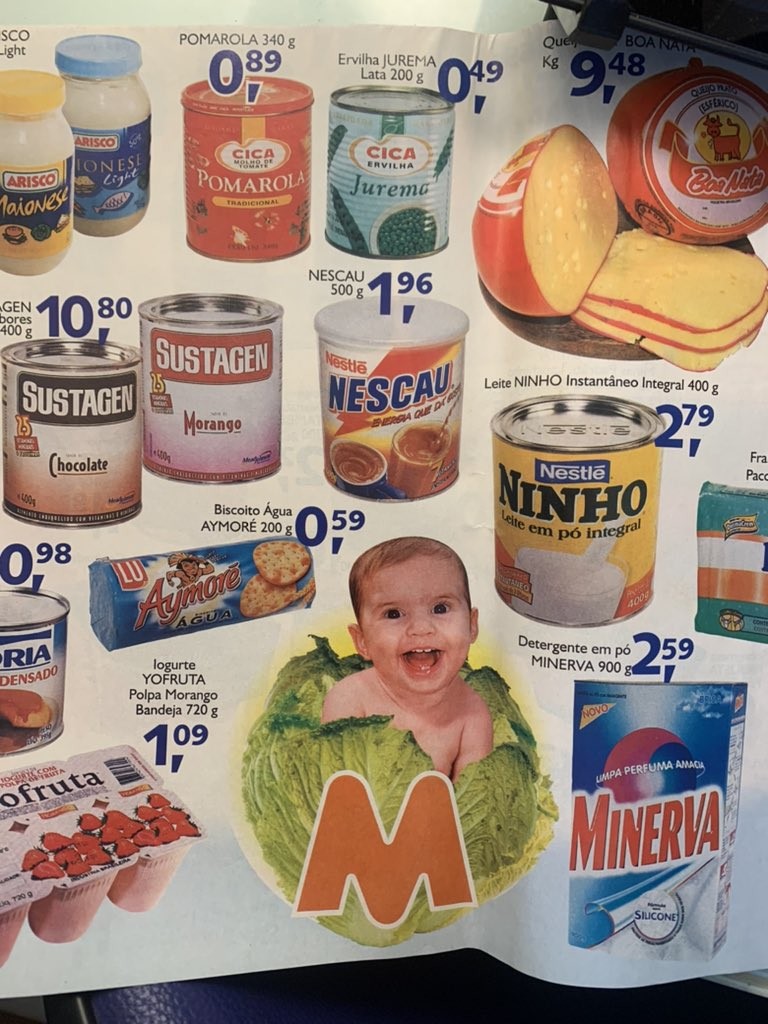
Supermarket flyer in the early 2000s
Reproduction/internet
It is common to hear nostalgic reports about the cost of living in the early 2000s. The comparison, however, can be misleading when it only considers the nominal price of products and ignores income and inflation of the period.
Nominal value is the recorded price at the moment, without adjustments, while the real value takes inflation into account and shows the purchasing power of that money over time.
For economist and finance professor at Fundação Vanzolini Marcos Crivelaro, the correct reading depends on purchasing power, and not just on the values displayed on the label.
The main error in nostalgic comparisons, according to the expert, is separating the price from the income context of the time. In 2002, the minimum wage was around R$200. Today, it is R$1,621.00 per month.
"Inflation impacts the real value of money, causing it to lose value over time, which means that the same monetary unit (such as R$1.00) will not be able to buy the same things in 2026 that it bought in 2002", explains Crivelaro.
"However, focusing only on price increases is an 'illusion', as price is just a number, while purchasing power tells the complete story."
In his opinion, economic analysis should answer not how much a product cost, but how many goods fit into the salary. When the relationship between prices and income is considered, the scenario changes in relation to the common perception of the past.
The economist highlights that even consumption habits have changed.
"In 2002, getting together with friends to see Brazil and Germany, you could consume almost half of the minimum wage on a barbecue. Today the barbecue costs more, but proportionally weighs less on the household budget. You can even eat more than you did before", he says.
In addition to inflation, the beginning of the 2000s was marked by a more difficult economic environment. The country had very high interest rates, scarce credit, lower average income and greater exchange rate instability. (see below)
"Many products seemed cheaper, but were more difficult to buy. Access to consumption was more restricted", he says.
For Crivelaro, direct comparison between prices from different times tends to distort reality by ignoring factors such as income and credit. "Nostalgia is not a reliable economic indicator," he says.
Offer flyer for the Guanabara supermarket, in Rio de Janeiro, in December 2002
Reproduction
A year of high dollars and high interest rates
The year of penta was marked by a turbulent economic scenario in Brazil. The Gross Domestic Product (GDP) grew just 1.5% compared to the previous year, while the unemployment rate reached 11.7%, according to the old IBGE Monthly Employment Survey.
In the domestic scenario, the proximity of the presidential elections scared investors and caused strong volatility in the financial market.
The dollar reached close to R$4 during the election period, reaching approximately R$3.95 in October, and ended the year at around R$3.55. Remembering that it is necessary to consider inflation: R$4 at the time would be the equivalent of R$15 today.
The devaluation of the real put pressure on inflation, which reached 12.53% in the year and reduced the population's purchasing power.
To contain this movement and stabilize the exchange rate, the Central Bank raised the Selic rate to around 25% per year. High interest rates made loans and financing more expensive, restricting consumption and investments.
The country was still feeling the effects of the 2001 energy crisis, which had caused electricity rationing, while the international scenario was marked by tensions in the Middle East and the risk of war in Iraq - factors that boosted the price of oil and increased global aversion to risk.
As a result, investors withdrew resources from emerging markets, putting even more pressure on the Brazilian exchange rate. Despite the difficulties, the devaluation of the real favored exports and allowed the country to end the year with a significant trade surplus.
For Marcos Crivelaro, this context helps to explain why the perception that "everything was cheaper" can be misleading.
"Brazil in 2002 was very different. The dollar was under pressure, interest rates were very high, credit was scarce and the average income of the population was lower. Many products seemed cheap, but were also more difficult to buy", he says.
Between the penta festival and political changes
While millions of Brazilians celebrated penta, the country was experiencing a period of economic uncertainty and political transition. In that year's elections, Lula beat José Serra (PSDB) and was elected president.
The government that took office in 2003 would inherit a series of challenges, such as controlling rising prices, regaining investor confidence, stimulating economic activity, managing the increase in public debt and the reduction in the flow of foreign capital.
Even before the election, however, the administration of Fernando Henrique Cardoso (PSDB) had to once again turn to the International Monetary Fund (IMF) to face the financial turbulence.
In August 2002, Brazil negotiated an aid package of US$30.4 billion - the largest ever approved by the institution until then - with the aim of reinforcing international reserves and ensuring that the country could meet its financial commitments.
At that time, Brazil had around US$37.8 billion in international reserves and an external debt of approximately US$165 billion.
The agreement with the IMF was accompanied by commitments to maintain fiscal discipline and control inflation, in addition to restoring market confidence amid exchange rate volatility and the uncertainties of the electoral period.
* With collaboration from Jeferson Alves Ferreira, Angela Celeste, Giulia Tartari/Acervo TV Globo
Source: G1