How does cancer happen? Experts explain to Dr. Kalil what is known
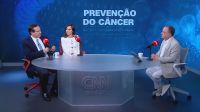
Cancer is not a single disease, but a set of more than 100 distinct conditions, all caused by changes in the genetic code of cells. When these changes accumulate and the body is unable to eliminate them, cells begin to multiply without control, giving rise to tumors. This is the understanding consolidated by science in recent decades, as experts explained on the CNN Vital Signs program.
Check out Dr. Roberto Kalil's conversation on CNN Sinais Vitais live on CNN Brasil, this Saturday (23), at 7:30 pm, with experts Paulo Hoff, professor of Oncology at FMUSP and director of ICESP, and Maria Ignez Braghiroli, clinical oncologist at ICESP, to discuss cancer prevention.
Paulo Hoff detailed the biological process behind the emergence of the disease. "We know today that cancer is not a disease. It is a set of diseases that have very similar characteristics, and their origin lies in an alteration of the genetic code", he stated.
According to him, it usually takes four to seven accumulated mutations for a tumor to form.
When these mutations reactivate the so-called proto-oncogenes - used in the formation of the body - or turn off tumor suppressor genes, the organism loses its natural ability to correct.
What determines the aggressiveness of a tumor
ICESP clinical oncologist Maria Ignez Braghiroli explained that the aggressiveness of a cancer is directly related to the type of molecular changes accumulated by the cells.
"The aggressiveness comes from the changes these cells have accumulated. And therefore, the same tumor can be more aggressive or less aggressive, depending on what molecular changes it has", said Braghiroli.
These characteristics also directly influence the response or not to the treatments implemented.
Paulo Hoff complemented the explanation, highlighting that all human beings develop cells with mutations almost daily, but that the healthy organism is capable of eliminating them.
The problem occurs when this defense mechanism fails.
"A person discovers cancer and quickly has an unfavorable evolution, while other people have cancer that drags on for years and years. The reason for this difference is that modification exactly happened inside the cells", he explained.
The future: agnostic and personalized treatments
Experts pointed out that oncology is moving rapidly towards an increasingly individualized approach.
Maria Ignez Braghiroli highlighted that many of the medications currently used are no longer directed at the organ of origin of the tumor, but rather at the molecular changes present in it.
"This is what is called agnostic approvals. They depend more on the change than on where that disease originated", explained the oncologist.
Paulo Hoff went further and projected a profound transformation in the way oncology medicine will be practiced in the future.
"You're not going to treat lung cancer or stomach cancer or breast cancer. You're going to treat a cancer that arose due to a certain molecular change and you're going to focus on that aspect of the treatment," said Hoff.
According to him, this model is already underway to a certain degree and is likely to become increasingly common, making the current model based solely on the location of the tumor unsustainable in the long term.
The texts generated by artificial intelligence on CNN Brasil are made based on video cuts from the newspapers in its programming. All information is investigated and checked by journalists. The final text is also reviewed by the CNN journalism team. Click here to find out more.
Source: CNN