Highways have 13 thousand risk points for child sexual exploitation in Brazil
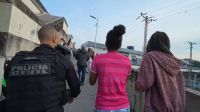
A survey shows that federal highways in Brazil have more than 13 thousand risk points for sexual exploitation of children and adolescents. The research also shows the most critical states among the mapped locations.
The information is from the Mapear 2025/2026 Project booklet, prepared by the PRF (Federal Highway Police) and the NGO Childhood Brasil, released this Wednesday (10). In total, 13,758 vulnerable points were identified that could present risks to minors.
The number represents a drop of 22.2% compared to the previous biennium (2023/2024). According to the organizations, the index reflects a more refined form of investigation, the result of methodological improvements and the use of precision georeferencing, which allows for an increasingly rigorous diagnosis of this reality.
The statistics mainly include commercial establishments, hotels, motels and gas stations on the banks of federal highways among the mapped points. The booklet brings together four levels of risk for the Sexual Exploitation of Children and Adolescents (ESCA): low, medium, high and critical, in addition to pointing out a drop in the criticality of the locations evaluated.
Critical points fell from 4.56% (807) to 3.29% (452) of the total, and high-risk points fell from 14.51% (2,566) to 13.50% (1,858) of the total. The classification does not mean proven occurrence of the crime, but the presence of associated risk factors.
According to the survey, among the causes for the reduction in rates compared to the previous two years is digital expansion. Social networks and applications facilitate the grooming and consumption of sexual content under supposed anonymity, changing the traditional dynamics on highways.
Although the explicit presence of victims on the side of highways has reduced, the exploitation of minors has become more complex and fluid. The persistence of 452 critical points confirms that physical vulnerability remains a real challenge, requiring the PRF to maintain a constant presence and increasingly sophisticated intelligence strategies.
Ranking of regions and states
In 2025, in absolute numbers, the Northeast region concentrates the largest volume of risk points (5,944), followed by the Southeast (3,393), South (1,822), North (1,455) and Central-West (1,144).
Among the states, Piauí (2,533), Minas Gerais (2,170) and Santa Catarina (928) stand out in total volume. Regarding the distribution by zones along the road network, 8,973 points were mapped in the Urban Area (65.2%) and 4,785 points in the Rural Area (34.8%).
The booklet also identifies, in total numbers, the federation units that stand out in terms of criticality of the mapped locations. Considering the critical and high-risk points, Minas Gerais occupies first place in the ranking of the most vulnerable states.
- Minas Gerais: 283
- Santa Catarina: 215
- Bahia: 192
- Rio de Janeiro: 156
- São Paulo: 136
Operation arrests more than 1,600 targets for sexual abuse of minors in Brazil | CNN NEW DAY
Mapear Project
The Mapear 2025/2026 Project also highlights intelligence work as a strategic axis of mapping, with a focus on "raising to prevent and confront", transforming raw data into knowledge, which supports repressive and preventive actions with greater assertiveness.
The PRF has been using Mapear since 2003 to define guidelines and actions to combat sexual crimes against minors. The institution works on prevention, through educational and awareness campaigns in mapped locations, and repression, with the identification of suspects and specific operations.
In the years 2024 and 2025, the PRF carried out 86 editions of Operation Domiduca across the country. Actions to combat the sexual exploitation of children and adolescents in vulnerable situations inspected 16,592 points and enabled the rescue of 111 children and adolescents. Last year, around 90,000 people were reached in preventive and educational actions, work that may have contributed to reducing immediate vulnerability and, possibly, influenced the reduction of incidents and incidents at inspected points.
Source: CNN