'He couldn't sing because he was so drunk': how excessive alcohol on stage and backstage affects artists' routines
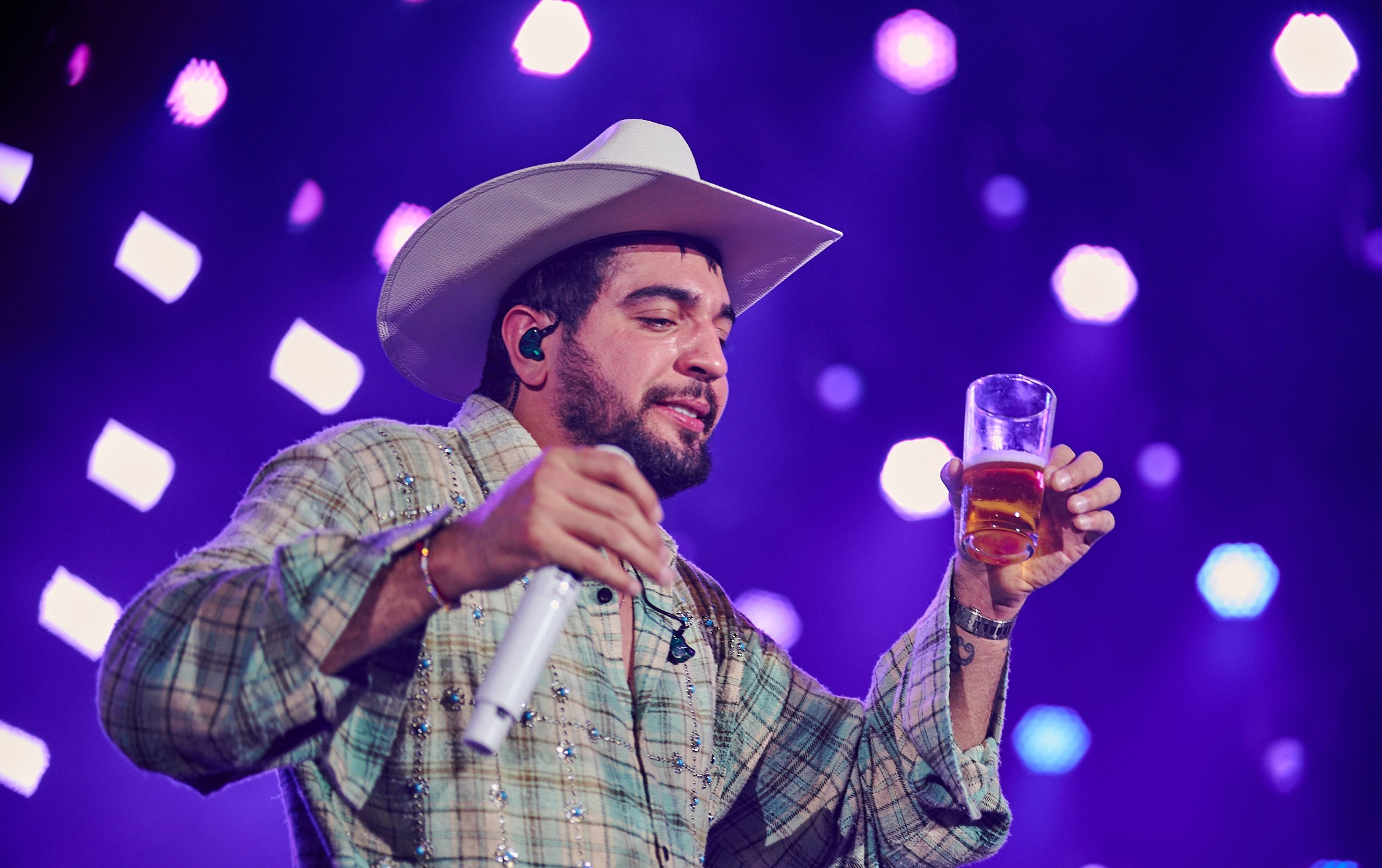
Between dances and "gelas", Nattan performed an almost two-hour show at Ribeirão Rodeo Music 2026
Érico Andrade/g1
Nattan's self-criticism after a show in Maracanaú, Ceará, last weekend, reignited an old discussion behind the scenes of music: the impact of alcohol consumption on the performance routine.
The singer admitted that the enthusiasm and the drink consumed in the dressing room compromised his performance, to the point of repeating at least one of the songs several times during the show. He did not mention whether he will abandon alcohol consumption, but promised to deliver to the public a "new presentation with the quality standard that his audience knows" on a later date.
Weeks earlier, Murilo Huff had said in an interview with presenter Renato Sertanejeiro that he drastically reduced his alcohol consumption at shows after a conversation with Luan Santana in 2022.
Last year, João Gomes revealed that he had moderated his drinking for health reasons. Diagnosed with fatty liver, the artist commented that it was difficult to abandon the habit of taking two doses of cachaça per show.
Added to these testimonies is a new report by Zé Neto, Cristiano's duo. In an interview with Luciano Huck last month, he reported that he entered a dangerous and abusive cycle of medication, drinking and smoking to cope with his show routine before accepting the diagnosis of the disease. In 2024, the duo announced a career break for Zé to treat depression. Before his departure from the stage and artistic life, the singer used drinking as a mechanism to cope with bouts of depression and panic syndrome.
Among artists from different musical genres, drinking alcohol before or during performances has always been part of the behind-the-scenes of shows. But these recent reports show that the practice can directly impact the quality of presentations. And bring short- to long-term issues for the artists' voice, image, health and career.
From connecting with the public to alerting the production
In conversation with g1, a production professional from the country music universe who preferred not to be identified stated that, currently, there is a "generation of singers who 'push the envelope' [with drinking on stage] to want to generate connection [with the public]. 'Ah, I also like to drink, I'm like you'. Then, an hour goes by. One day, you lose track", she says.
She further states that, as alcohol is part of the culture of shows by artists from the most popular musical genres, such as country music and forró, production only becomes aware of the issue when consumption becomes something serious, triggering an alert. "When production identifies it as a problem, everyone gets scared."
A recent and emblematic example was that of Zé Neto. Because it became a big problem for the singer, all drinks were removed from the duo's dressing room.
Turning of a key
Murilo Huff excites and enchants the audience on the first night of the Festa Junina show in Votorantim (SP)
Marcel Scinocca/g1
In May, Murilo Huff recalled that a meeting with Luan Santana made him change his view on alcohol consumption before and during performances.
Murilo had been invited to perform at the first edition of "Luan City", in Goiânia, in 2022. "I was excited and joined the band. I did a great show. But at Luan's show, he asked me to sing with him. I came to him all excited and said: 'come on, dear, let's have a drink. What are you drinking there?'."
Murilo says that Luan replied that he was just drinking water.
"Boy, I said: 'Wow, I'm shit. The guy is Luan Santana, brother, the guy has been successful for how many thousand years?'. From that day on I stopped drinking at shows. I didn't cut back. But I reduced a lot." Murilo said that, before this episode, he would drink a bottle of gin or vodka at his shows.
"Alcohol gives a feeling of freedom, it relaxes. But for the artist, we need to remember that it's his job.
It is being heavily evaluated at that moment and it is expected that, just like in any other job, the person is not drunk", says psychologist Juliana Chiavassa.
"And, especially alcohol affects our cognition, our memory. He may forget words, he may be off key, he may say something that he wouldn't have the courage to say sober. And the visibility that an artist has is much greater than that of an ordinary person who is at a table with friends. So, in the long term, this can also be very damaging to one's own image", adds the psychologist.
Performance impairment
Nattan's case exemplifies such performance impairment. In the performance that generated the controversy, the artist would have sung the song "Na Casa da Vizinha" dozens of times. On social media, there are reports that he was "not able to sing because he was so drunk". And there are also testimonials from fans saying that this is already common behavior for the singer on stage.
"We have to remember that the singer is there as a professional. The audience is the one having fun. And sometimes, it gets a little mixed up. The singer understands that this is a moment of celebration, of entertainment, including for him. And it isn't. That's his professional environment", says Thays Vaiano, speech therapist specializing in voice.
"However, we know that in the past there was this myth of 'oh, I'll take a sip of brandy and my voice will improve, I'll be better on stage'. This is untrue, drinking any type of alcoholic beverage does not improve your voice. On the contrary, it makes it worse."
"But alcohol inhibits your perception a little and makes people feel looser, less inhibited. So, this sometimes makes them feel more comfortable performing that role", adds the singer.
Loss of inhibition... and voice control
Zé Neto and Cristiano; Bruno César and Rodrigo
Disclosure
The use of alcohol can bring about disinhibition, but along with it, loss of voice control. Thays Vaiano explains at least four ways in which alcohol can interfere with an artist's performance:
Dehydration: as alcohol has a diuretic effect, it removes hydration from the vocal cord area and suffers from loss of lubrication. As a result:
vocal fatigue;
In the long term, it can cause damage to the vocal fold.
Loss of motor coordination: this also includes all the muscles involved in singing. rhythm.
Lower perception of effort: the singer loses awareness of the volume of his voice. And the result:
he strains his voice more, generating greater wear on the structures involved in speech and voice production and singing;
he does not reach the desired notes;
increases the risk of injuries. result:
irritation of the vocal folds;
worsening performance.
An additional topic here is that, in many cases, the artist's schedule does not leave enough time for him to recover from these small injuries caused in everyday life. But prolonged use of a voice that is not very good, with some type of injury for a long period of time exerting effort, causes the vocal fold to suffer a lot. And in some cases, this means they have to undergo some type of rehabilitation", explains Thays Vaiano.
Speech therapist Leny Kyrillos also adds that there is a difference in the consumption of fermented alcohol and distilled alcohol. Both cause dehydration and trigger the issues already mentioned.
But the distillate still "causes an effect of pseudoanesthesia: the person forces themselves to sing, they don't feel it, and when the effect wears off, the damage has been done."
Far beyond the problem with the voice
Fan drinks from the boot served by Nattan on the stage of Ribeirão Rodeo Music 2025 in Ribeirão Preto, SP
Érico Andrade/g1
In addition to vocal problems, it is always worth remembering that the habit can become dependence.
"If he needs alcohol to sing, to carry out that profession, he has a problem that needs medical help. Because him needing alcohol to carry out that profession already constitutes alcoholism", warns speech therapist Thays Vaiano.
"Do you only go on stage if you have been drinking? 'Ah, no, but I only drink one can.' Okay, but otherwise you won't be able to do the show? Do you think the show is bad? This is already a dependency. A person doesn't necessarily have to drink two bottles of wine to appear addicted. That's how much alcohol takes up space in this artist's life", explains psychologist Juliana Chiavassa.
The psychologist also warns of the fact that some artists feel the need to consume alcohol to carry out professional activities beyond the show, such as participating in a photo shoot, recording or composing. "Artistically, what do you do with your career without drinking? That's the main point."
Is the new generation changing?
João Gomes in Derradeiro de Maio
Joana Lima
It's not new that artists consume alcohol on stage and backstage. Bruno, Marrone's duo, Leonardo and Zeca Pagodinho are some emblematic examples.
But recent statements from these younger artists citing their impact on stage could mean a change in pattern. Or just a reflection of the phase in which celebrities show a little more of their "real life". They share their pains, weaknesses and mental health struggles.
"People today are more enlightened, and most of them already understand the need to take care of themselves. The voice is multifactorial, it is impacted by everything that affects our body, for better or for worse", says speech therapist Leny Kyrillos.
Source: G1