Government will end fuel subsidies if oil stabilizes close to US$80, says Ceron
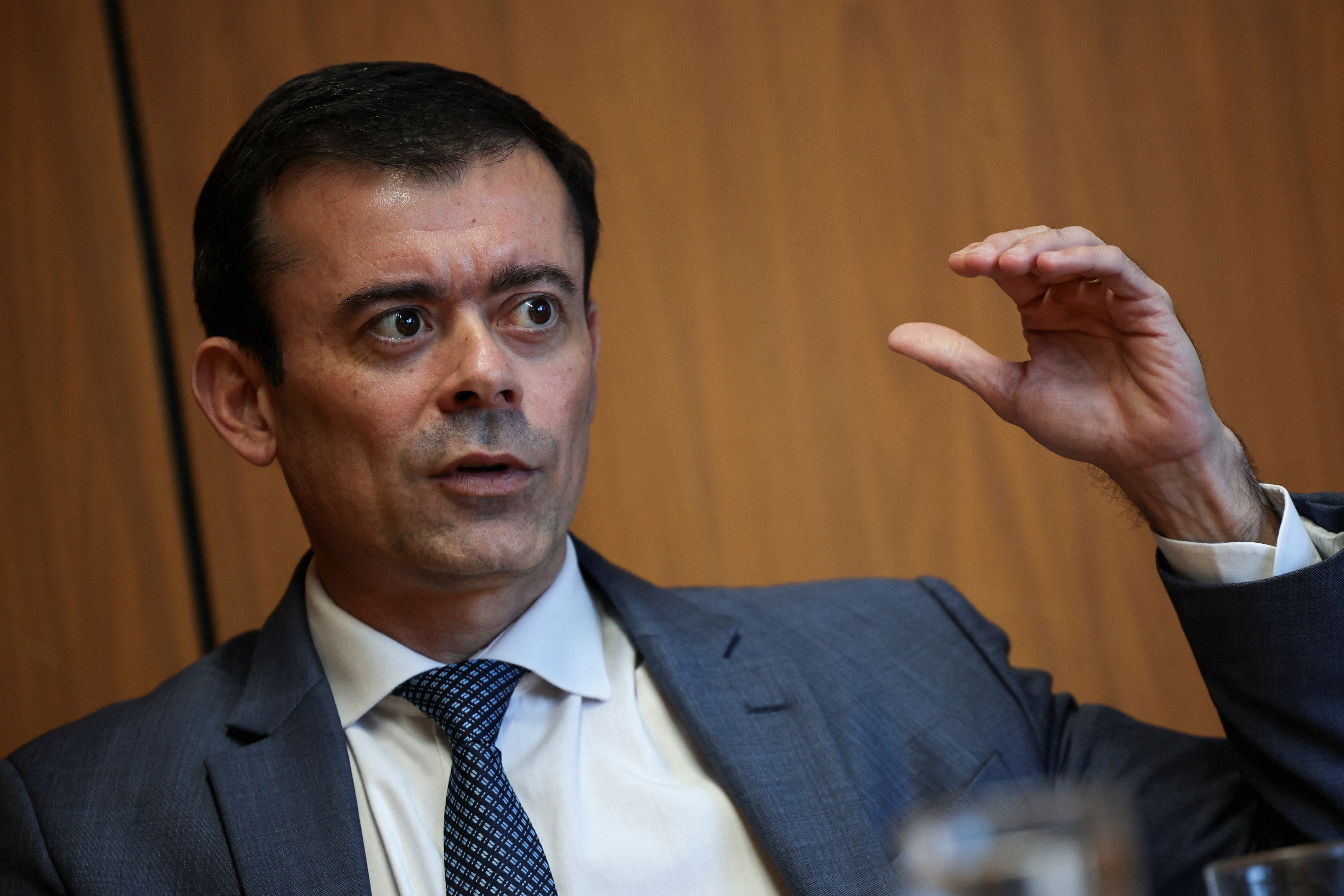
Executive Secretary of the Ministry of Finance, Rogério Ceron.
Adriano Machado/Reuters
Brazil should end subsidy measures on fuel prices, including diesel and gasoline, if oil prices stabilize at around US$80 per barrel, in the wake of an agreement signaled by the United States with Iran to end the conflict in the Middle East, the executive secretary of the Ministry of Finance, Rogério Ceron, told Reuters.
In an interview with the news agency, Ceron stated that the end of the war also tends to improve inflation projections and reduce pressure on future interest rates - in other words, reduce the projection of rising rates in the future.
This scenario, said the executive secretary of Finance, would open space for the Central Bank to cut interest rates even further, in addition to reducing the costs of public debt.
The secretary said that the next 30 days will be an observation period to assess the consolidation of this scenario, highlighting the need for caution in the face of a war that has caused fluctuations not only in the price of oil, but also in indicators such as interest and exchange rates.
Now on g1
"If the price stabilizes [around US$ 80 per barrel], there is really no need to continue the measures. We will withdraw out of prudence, for sure", he said.
Since the beginning of the war promoted by the United States and Israel against Iran, at the end of February, the government announced a series of emergency measures to contain the effects of the rise in oil prices, with tax reductions and subsidies on diesel, gasoline, aviation kerosene and cooking gas.
In general, the measures were adopted with a validity period of two months, and some have already been implemented. extended. Most of the initiatives are valid until July, a period that Ceron considers sufficient to assess the effects of the expected end of the war.
"There are two scenarios: trying to bring forward the end of the measures or letting them expire within their expiration dates", he said.
The secretary highlighted that, although the level of US$ 80 per barrel represents an increase in relation to the Brent oil price of US$ 70 at the beginning of the year, the real appreciated in the period, with the dollar rising from R$5.20 to around R$5.00, which helps offset some of the pressure on inflation caused by more expensive oil.
Brent crude futures fell 5.1% on Tuesday to close at US$78.96 a barrel, as details emerged of a provisional agreement to end the war and reopen the Strait of Hormuz.
Stimulus measures
Economists have significantly reduced their estimates for cutting interest rates this year, amid the most challenging scenario for inflation.
According to Ceron, projections for the IPCA (the country's official inflation) were mainly affected by the war in Iran, refuting that the stimulus measures implemented by the government of President Luiz Inácio Lula da Silva (PT) were decisive in this sense.
"If you exclude the impact of the war, you do not have a scenario of relevant inflationary stress", he said.
With the expected stabilization of the oil price, the expectation is for a rapid reversal of market projections for the inflation, which had distanced itself from the 3% target, even in the long term, which should allow monetary policy to gain more space to act, added Ceron.
Since the beginning of the month, banks have been estimating the joint impact of the new stimulus measures announced by the government, amid President Lula's strategy for re-election in October.
Projections point to a boost of more than R$200 billion this year, mainly through subsidies, guarantees and contributions outside the primary result, which it could put pressure on the already high public debt.
"If it were true that there was a stimulus of 2% of GDP... that would put economic activity close to (an increase of) 3%", he said.
"There is no type of stimulus of this magnitude", he added, without specifying a number, but highlighting that recent economic indicators, such as retail sales, have shown a "significant slowdown" in activity.
The Treasury projects GDP growth of 2.3% this year, within a range of 2.0% to 2.5% which, according to Ceron, should not generate pressure on inflation. The market has been revising its estimates upward for a month and now projects an increase of 1.96%, according to the Central Bank's most recent Focus bulletin.
According to Ceron, part of the market has treated different measures as the same, by mixing fiscally neutral actions, such as the expansion of Income Tax exemption, with others that stimulate activity, albeit in a limited way and without necessarily putting pressure on inflation.
He cited as an example the subsidized credit lines for the purchase of trucks and for drivers and app couriers purchase vehicles, highlighting that, in these cases, automakers have committed to offering discounts.
Tax
Ceron acknowledged the country's challenges in the fiscal area and stated that it is necessary to discuss the growth of mandatory expenses, but said that there is no scope to propose measures on the eve of an electoral campaign.
The secretary stated that, in the government's view, the high level of interest in Brazil, which puts pressure on the public debt, cannot be explained only by the fiscal situation, being also influenced by factors such as the low level of savings in the country.
"I'm not denying the importance, we have to move forward in fiscal terms, but it's not the only agenda", he said.
In relation to the recent increase in projections of future interest rates in Brazil, Ceron stated that the movement was mainly driven by data that showed the strength of the United States economy, which led to an adjustment in asset prices around the world.
If the scenario of peace in the Middle East continues, the trend is for interest rates to fall in the United States, with Brazil following this movement, he stated, reiterating that the difference between Brazilian and American interest rates "is not that far from history".
The secretary also stated that he sees greater pessimism in the local market in relation to Brazil, while, abroad, the country is evaluated in a more comparative way with similar economies and with more caution.
He also stated that the country should carry out a new issuance of sustainable bonds in the second half of the year and highlighted, without giving details, the possibility of new announcements during the visit of the Minister of Finance, Dario Durigan, to China this month.
According to Reuters, the minister is expected to announce on the trip that Brazil intends to issue its first debt securities in yuan, known as "panda bonds".
Source: G1