Governance and predictability drive Brazilian mining
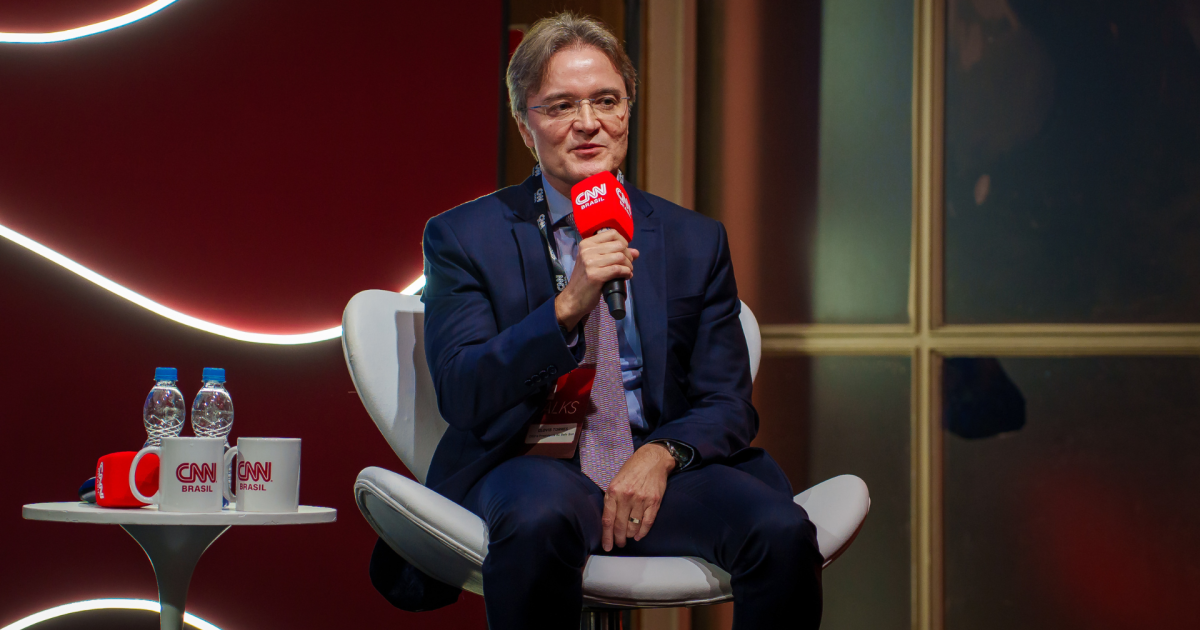
The growing demand for critical minerals, driven by the energy transition and the advancement of low-carbon technologies, was at the center of CNN Talks | New Era of Mining, carried out by CNN Brasil on June 30th.
Opened by the Minister of Mines and Energy, Alexandre Silveira, the meeting brought together authorities, parliamentarians, executives, experts and representatives of the Justice system to discuss topics such as legal security, environmental licensing, investment attraction and regional development, considered strategic to increase the competitiveness of Brazilian mining.
Among the program's debates, the panel "Minerals: license to operate and territories to transform" brought together federal deputy Arnaldo Jardim, president of the Parliamentary Front for Sustainable Mining, and Clóvis Torres, CEO and president of Belo Sun. Mediated by Daniel Rittner, director of Journalism at CNN Brasil in Brasília and editor-in-chief of CNN Infra.
Responsible for the Volta Grande do Xingu Project, a gold mining venture located between the municipalities of Altamira and Senador José Porfírio (PA), Belo Sun participates in one of the most closely followed licensing processes in the Brazilian mineral sector. During the panel, Torres stated that Brazil has the conditions to expand its participation in the production of strategic minerals, but highlighted that regulatory predictability will be decisive in attracting new investments.
"Brazil has enormous mineral potential and has institutions capable of conducting complex licensing processes. The challenge is to make these processes increasingly predictable for investors, communities and society itself."
Environmental authorization and development of territories
In the executive's assessment, obtaining environmental authorizations continues to be one of the main challenges for new projects, as it involves different public bodies and successive stages of analysis.
When commenting on the Volta Grande do Xingu Project, Torres stated that the attention dedicated to the initiative is also related to the region's recent history after the construction of the Belo Monte Hydroelectric Plant.
" The region has a recent history that, naturally, increases the level of attention dedicated to any new venture. Therefore, we understand that each project must be evaluated according to its own characteristics and within the foreseen institutional processes."
Torres recalled that he presided over Furnas, then the main shareholder of Norte Energia, during the implementation of Belo Monte, an experience that allowed him to closely monitor the development of the plant. According to him, a gold mining project presents very different characteristics from large iron ore, copper or nickel operations, both in scale and logistics.
The executive also defended that mining, environmental preservation and economic development should not be treated as incompatible objectives.
"I do not consider that there is an inevitable conflict between mining, environmental preservation and social development, when there are strong institutions, planning, dialogue and compliance with environmental conditions. It is possible to develop projects with permanent dialogue with communities, structured programs and respect for environmental requirements."
He also said that projects of this size can only move forward when there is trust in institutions, transparency in the licensing process and permanent dialogue between companies, communities and public bodies.
Governance and supervision
When talking about operational responsibility, Torres stated that Belo Sun adopts compliance standards compatible with publicly traded companies and highlighted that projects submitted for environmental licensing are monitored by the competent bodies.
In the executive's assessment, this model differentiates regular mining from illegal activities still present in part of the Amazon.
"We are a company listed on the Canadian stock exchange, accountable to Brazilian bodies and investors and subject to strict control and inspection standards.
Jobs and prospects for the region
In the final part of the panel, Daniel Rittner questioned what impacts the Volta Grande do Xingu Project could generate for Altamira and the surrounding municipalities. When responding, Torres highlighted the creation of jobs as one of the first expected effects of implementing the project.
According to the executive, two weeks after the resumption of the installation license, in February this year, around 12 thousand people had registered on the company's website in search of job opportunities. The company intends to prioritize residents of the municipality itself, requiring a minimum residence period of two years to avoid predatory migration processes. The estimate is for around a thousand direct jobs during implementation. Considering the effects on the supply and service chain, the impact could reach approximately ten thousand jobs.
When talking about the legacy of the project, Torres stated that the economic development of the region needs to continue after the end of mining activity.
"Mining is a finite activity. When the deposit is exhausted, the company cannot simply walk away. It is necessary to create conditions so that other economic activities are strengthened during the life of the enterprise and continue after mining, leaving a legacy for the region."
Source: CNN