Glue, suction and cages: how carnivorous plants capture their prey
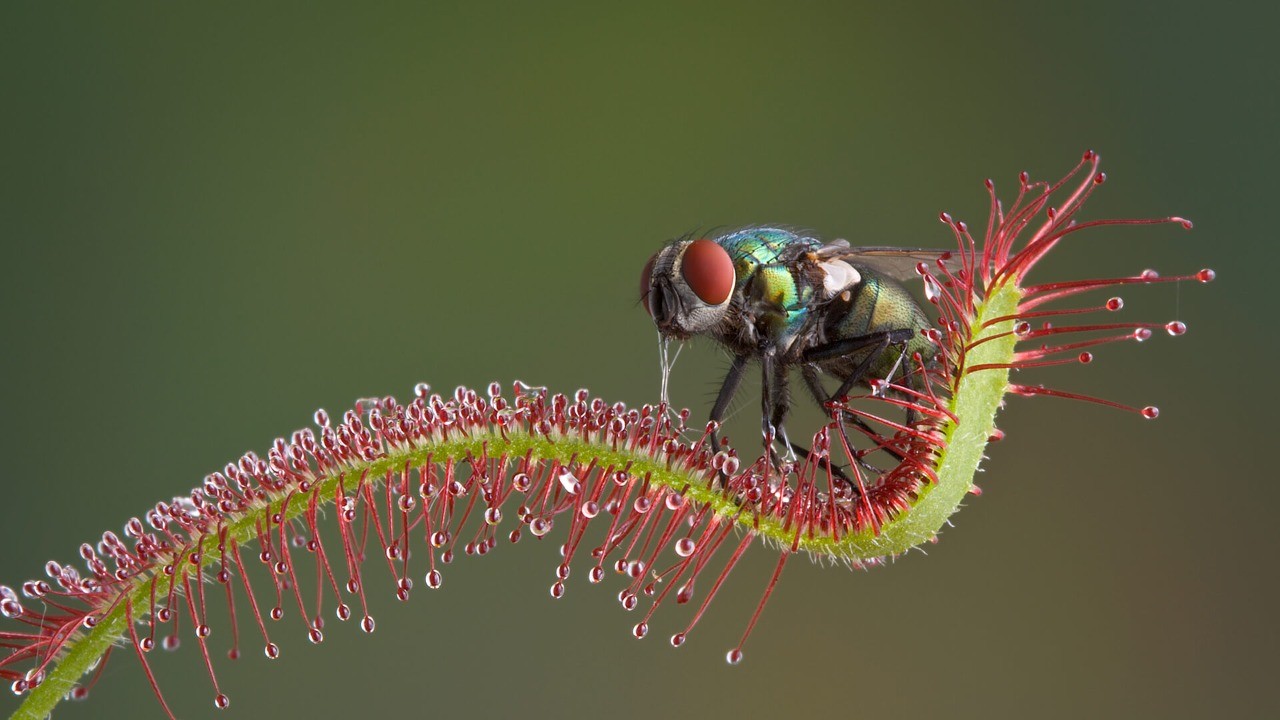
The sundew captures its prey by sight. Its sticky drops resemble dew. It is the genus with the largest number of plants, alongside the utricularias.
Julio Santiago Archive - UFMG
The traps of carnivorous plants are not always obvious and visible like the mouth of a Nephentes or the cage claws of the famous dionaea or flycatcher, one of the best-known species in Brazil.
Their antics can also appear in the form of a 'beautiful dew' - which, in fact, is a glue - or even a 'shelter' under the ground or water, which can suddenly suck in prey.
The catches of carnivorous plants also go far beyond insects: some can eat larvae, worms, protozoa, frogs and even more distracted rodents or birds. See below an infographic about each type of trap.
Carnivorous plants
Art g1/ Luisa Blanco
In this report, you can also check out:
Why do carnivorous plants eat insects?
Can they capture larger animals?
Which is the biggest in the world?
Are carnivorous plants poisonous? Can they 'bite' your finger?
How many species exist and which are threatened with extinction in Brazil?
Why do carnivorous plants need to eat insects?
Dionaea capturing insects; The plant uses the cage trap.
Personal archive/Julio Santiago - UGMG
Carnivorous syndrome developed as a survival mechanism for plants located in environments with low fertile soil, explains Julio Santiago, master's student in Ecology, Conservation and Wildlife Management at the Federal University of Minas Gerais (UFMG).
Insects, however, are a complementary source of nutrients, not the main one.
"The main source of energy for Carnivorous plants are still the sun, because, like most plants, they carry out photosynthesis", highlights professor Paulo Gonella, from the Federal University of São João del-Rei (UFSJ).
Insects actually serve to supplement nutrients that exist in little quantity in the soil where carnivorous plants live, such as nitrogen and phosphorus.
The fly larva that manages to steal food from carnivorous plants
Can they capture larger animals, such as rats and birds?
Yes, but accidentally and not all species can capture this. The Nephentes, for example, have structures to capture slightly larger animals due to their shape similar to a pitcher.
"Insects are the main prey of carnivorous plants. Small birds or rodents are occasional prey, which can fall into the trap, attracted by the captured insects themselves or by the sugar that the plant releases", says Gonella.
Depending on the size of the animal, the plants can even rot due to the difficulty in digesting a very high amount of nutrients.
Nephentes can accidentally capture slightly larger animals, but its main prey is the insect.
Julio Santiago Archive - UFMG
Which is the largest in the world?
There are two species that are, to date, among the largest in the world, and which can reach up to 1.5 meters in height: Drosera magnifica and Nephentes rajah, says Santiago.
Drosera magnifica originates from the state of Minas Gerais, while Nephentes rajah, from the Island of Borneo, in Southeast Asia.
See also: discover the caviar lemon, which costs almost R$800 per kilo
How an insect factory works
Are carnivorous plants poisonous? Can they 'bite' your finger?
No known carnivorous plant is poisonous or toxic, nor is it interested in human flesh.
"[If you put your finger in], it can even stimulate [the plant], but not enough to trap it.
In many cases, it won't even stimulate, because the chemical signaling [that encourages capture] is related to chitin, a protein present in the exoskeleton of insects", explains Santiago.
When the insect lands on a carnivorous plant, there is a chemical signaling of the presence of chitin that makes the plant recognize the presence of a promising food.
Where does the tangerine come from
Species around the world and threat of extinction
In the world, there are around 860 species of known carnivorous plants, most of which are from the genera Drosera, Utricularia and Nephentes.
The data are from the study "Conservation of carnivorous plants in the Age of Extinction", published in 2020 by Gonella and other authors, in the scientific journal Global Ecology and Conservation.
Brazil is the second country with the largest number of species (around 130), second only to Australia, which has approximately 250.
When it comes to those threatened with extinction, there are, today, around 193, which represents 20% of the total species.
Of these, 28 are in Brazil, of which 13 are classified as "critically endangered". carnivorous species of the philcoxia genus only exists in Brazil and is critically endangered. Its traps are underground.
Disclosure/PNAS
The genus Philcoxia, which only exists in Brazil - more specifically in the Cerrado and Caatinga biomes - is the most worrying, as 100% of it is threatened, says the UFSJ professor.
These plants grow in very white sand and produce lilac-colored flowers. small worms that live in the soil, from sticky traps on leaves that are underground.
Another genus at risk in Brazil is the Drosera, with 40% of plants threatened.
"Brazil has a very big responsibility in the conservation of its carnivorous species. One of the main factors that is causing this [the threat of extinction] is the destruction of habitats for conversion to agriculture", says Gonella.
"The use of fertilizers and pesticides in agriculture makes the soil richer than it originally is, causing other species to invade these places and end up competing for the habitats of carnivorous plants", he adds.
On the right, the top part of an utricularia and, on the left, its part underwater.
Leonhard Lenz/Miguel Porto
Where the sparkling wine comes from
Discover the exotic lemon that costs almost R$800 per kilo
Source: G1