From underdog to African power: understand the evolution of football in Morocco
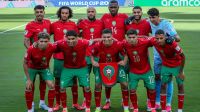
The good performance in the draw against Brazil in the opening match of the World Cup proved that Morocco came to upset the football giants in the competition.
Experiencing the best moment in its history, the team led by full-back Hakimi has achieved great results in recent years, with the African Cup of Nations title, in addition to fourth place in the last edition of the World Cup.
But the evolution in Moroccan football did not happen overnight. With large recent investments, the African team went from underdogs to contenders in title disputes.
In 2010, after missing out on three consecutive World Cups, Morocco began the process of developing football in the country. King Mohamed VI opened an academy with a research center to reveal new talents in the country.
With six main fields and a 9,000 m² structure, the space with a sports and educational area changed Moroccan history in the sport.
Academy in Morocco revealed great players - Photo: Disclosure
Investment in education
The academy accepts children from the age of 12 who continue studying. The site offers a computer laboratory and 10 classrooms. Plus, teenagers learn languages.
In the secret of Moroccan success, sport and education go hand in hand.
Young talents still have at their disposal: cafeterias, dormitories, medical center with clinics, physiotherapist and balneotherapy (baths in thermal or mineral waters).
Attracting "international" talent
The academy built by King Mohamed VI still does the work of attracting young Moroccans who were born in other countries, convincing them to defend Morocco.
This process resulted in important players for Morocco in the World Cup, such as Hakimi, Brahím Díaz, and more recently Ayyoub Bouaddi, who played for France until the under-21 category.
In his debut against Brazil, the 18-year-old dominated the midfield and was one of the best athletes in the match.
Ayyoub Bouaddi, from Morocco, in action in the match against Brazil, valid for the first round of the World Cup - Jose Breton/Pics Action/NurPhoto via Getty Images
Of the 26 athletes called up for this year's World Cup, 19 were not born on Moroccan soil, migrating from France, Spain, Belgium, the Netherlands and Canada.
Morocco reaps the rewards
After years of investment, the results began to appear. In 2022, at the World Cup in Qatar, Morocco surprised by finishing the competition in 4th place, having the best campaign in its history in the tournament.
The main team also won the African Cup of Nations in 2026, after a controversial final against Senegal.
Senegal is stripped of its title, and Morocco is declared champion of the African Cup of Nations - Torbjorn Tande/DeFodi Images/DeFodi via Getty Images)
The country's youth categories also reflect the success in training young people. In the last edition of the U17 World Cup, the Moroccans reached the quarterfinals.
In the U-20 World Cup, held in 2025, the Moroccans won the unprecedented title by beating Argentina in the final.
Morocco players celebrating the victory against Brazil, in the U20 World Cup - Reproduction/X/@EnMaroc
At the Paris Olympics in 2024, the U23 team won bronze in the competition, corroborating the success of the academy set up by King Mohamed VI.
In all recent achievements, athletes trained locally participated in the victorious campaigns.
Morocco's highlights from the World Cup
One of Morocco's stars starts in goal. Yassine Bounou was playing for Sevilla when he closed the team's goal in Qatar. Bono currently plays for Al-Hilal, from Saudi Arabia, and was at the 2025 Club World Cup in the United States.
Goalkeeper Bounou, known as Bono, is one of Morocco's leaders in the World Cup - Photo: Disclosure/Al-Hilal
Achraf Hakimi can be considered the best-known name of the current Moroccan generation. The full-back is one of Paris Saint-Germain's highlights, having won the last two Champions Leagues.
Another name that plays for a big club in world football is Brahim Díaz. The Spaniard of Moroccan descent plays for Real Madrid, and has already worn the colors of Manchester City.
The 26-year-old striker was the top scorer at this year's African Cup of Nations, but wasted a decisive penalty in the final against Senegal and was widely criticized for his dig on the beat.
In addition to those mentioned above, other Moroccan names also stand out, such as young Ayyoub Bouaddi, from Lille and young Ismael Saibari, recently signed by Bayern Munich.
With the best squad in history, Morocco wants to surprise giants in the 2026 World Cup.
See countries that once competed in the World Cup and no longer exist
Source: CNN