From the Bleachers to the Skinhead Movement: How British Football Helped Shape One of the Most Controversial Subcultures in History
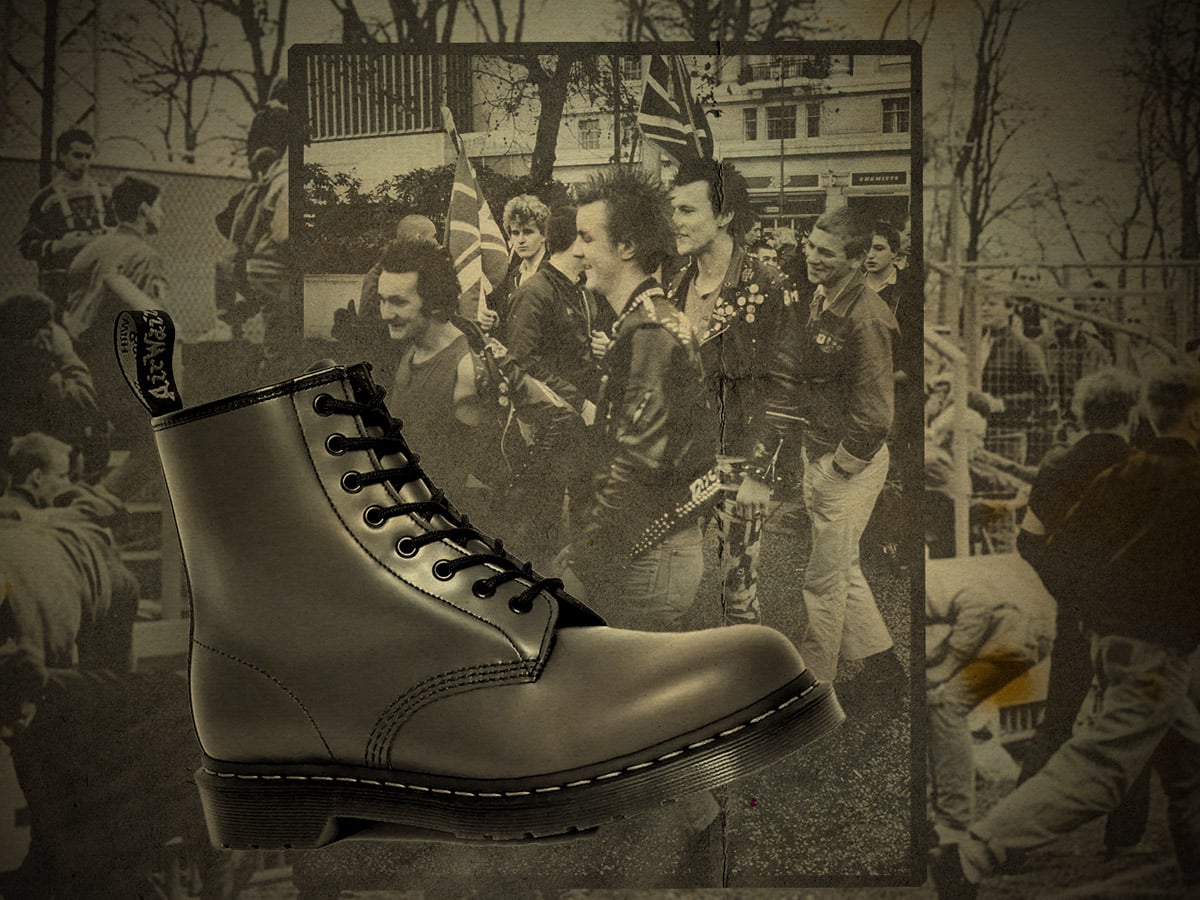
Few subcultures arouse as many divergent opinions as the skinhead movement. Often associated with violence, political extremism and hooliganism, the group has a much more complex history than many imagine. And a fundamental part of this trajectory passes directly through the football stadiums in England.
The emergence of skinhead culture dates back to the late 1960s, when young British workers began to develop their own visual and cultural identity. With shaved hair, heavy boots and simple clothes, they represented a generation that sought pride in its working-class origins.
Contrary to what many currently believe, the first skinheads were not born linked to extremist movements. On the contrary, the culture was strongly influenced by the coexistence between young white British people and Jamaican immigrants. Reggae, ska and rocksteady music were part of these groups' daily lives, creating a unique cultural mix on the English streets.
Over the years, however, football began to play an increasingly important role in this identity. During the 1970s and 1980s, English stadiums became true meeting centers for young workers, many of them linked to the skinhead movement.
The stands were more than places to watch matches. They functioned as spaces for socialization, affirmation of identity and demonstration of loyalty to the clubs. In many cases, the passion for football helped to strengthen ties between groups that shared similar lifestyles.
In this environment, some of the first organized manifestations of hooliganism also emerged. Rival fans began to engage in violent clashes, a phenomenon that gained enormous repercussion in the British and international media. The image of skinheads ended up being strongly linked to these episodes.
At the same time, skinhead culture began to fragment politically. Some groups were attracted to nationalist and far-right movements, while others remained tied to the multicultural roots of the original movement. This division contributed to the confusion surrounding the true meaning of the subculture.
Press coverage also played a decisive role in building the public image of skinheads. Many media outlets began to portray all members of the movement as extremists, ignoring the diversity that exists within the community.
Today, historians and cultural researchers point out that reducing skinhead history to just violence or politics is an oversimplification. The movement had a significant influence on fashion, music, urban culture and even the way fans began to organize themselves in British stadiums.
The link between football and social identity continues to be one of the most fascinating aspects of this trajectory. The stands not only reflected the transformations of British society, but also helped shape one of the most discussed and misunderstood subcultures in modern history.