From Shakira to Marina Sena: how belly dancing and tribal fusion regained pop
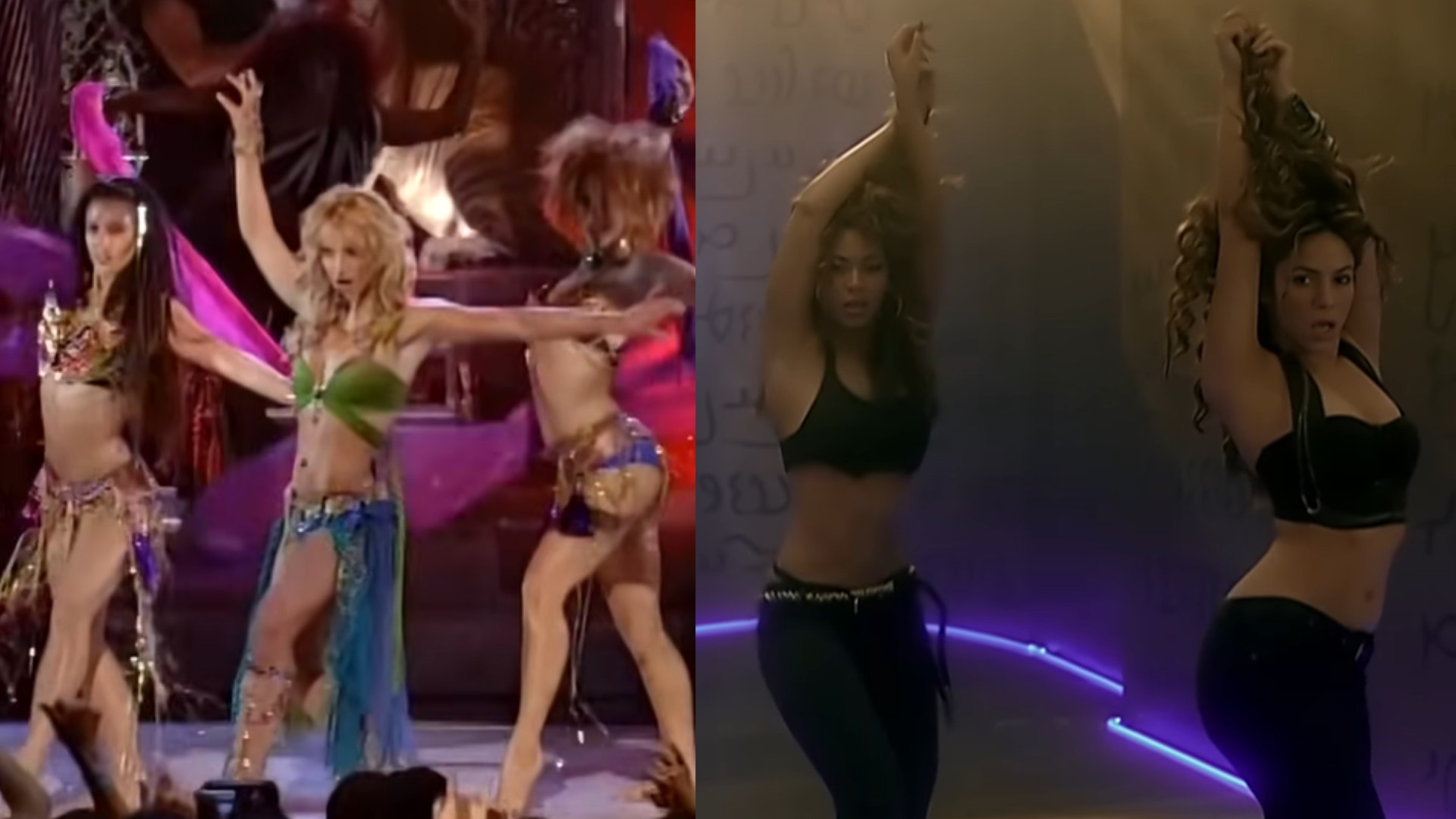
From Shakira to Marina Sena: why did belly dancing and its aspects return to the stage?
From "Hips Don't Lie", by Shakira, to Jade, from "O Clone" (including É o Tchan), belly dancing was very present in pop culture in the 90s and 2000s. And in the same way that it dominated the media, the style and its aesthetics began to disappear in the 2010s.
But in pop culture, everything that goes around ends up coming back. In recent years, new national and international names are incorporating elements of choreography, aesthetics and belly dance costumes (and its aspects, such as tribal fusion).
g1 listened to teachers and choreographers to understand why the style is once again in evidence. Understand why (and how) belly dancing is returning to the stage:
First of all... Shakira
It's impossible to talk about this subject without mentioning Shakira. For teachers and choreographers Mariana Quadros and Júlia Oliveira, the Colombian was instrumental in putting belly dancing on the radar of Western pop culture.
Shakira in 'Ojos Así'
Reproduction/TV Globo
Shakira is seen as the main name to bring this language to pop music - an "ambassador", in Júlia's words. She mixed "traditional" elements of Arabic belly dancing with street dance, reaffirming herself as an artist not only Latin, but also global.
"I think the first one was Shakira, who brought this oriental dance thing with more weight in a very prominent way. Her aesthetic construction is linked to traditional, more classic belly dancing", says Mariana.
Of course, Shakira did it in a more recognizable way and took it to Beyoncé with "Beautiful Liar", for example. But in general, pop music drank a lot from Arab culture - both in sound, choreography and aesthetics.
Just review the pop classics of the 2000s. Songs like "Naughty Girl", by Beyoncé, and "Buttons", by Pussycat Dolls, flirt with elements of oriental music; Britney Spears brought the language of belly dancing to "I'm a Slave 4 U", including her unforgettable VMA performance in 2001.
Britney performing 'I'm a Slave 4 U' (left) and Beyoncé and Shakira in the video for 'Beautiful Liar' (right)
Reproduction/YouTube
Today's belly dancing (and tribal fusion)
In Brazil, the style appears in the works of Marina Sena and Nanda Tsunami. Out there, in addition to Shakira (who is still in full swing), it is worth looking at the work of the Palestinian-Chilean Elyanna, who is featured in one of the songs for the 2026 World Cup; In addition to her, Doja Cat and Addison Rae have also brought some of this influence.
To g1, Mariana Quadros said that she started working with Marina Sena after the video for "Numa Ilha". They have continued the work since then, leading choreographies from a side of belly dancing, called tribal fusion.
According to the teachers, tribal is a fusion of belly dancing with elements of flamenco, Indian dance and contemporary dances. The language suited Marina.
"My body movement has always naturally gone to this more languid place, this more spiritual dance... and tribal fusion embraces exactly this place. After a long time researching various dance styles, we found in tribal fusion a dance that fit exactly my body", Marina Sena told g1.
The style complements the aesthetics of the album "Coisas Naturais", which plays with nature and mystique. But in addition to Marina, tribal fusion has even appeared in the work of rappers, as is the case of Nanda Tsunami.
The Palestinian-Chilean Ellyana and the Brazilians Marina Sena and Nanda Tsunami are among artists who bring oriental dance to their work
Reproduction
Júlia Oliveira, who works with Nanda, told g1 that this relationship has everything to do with it, as the style also draws from hip-hop.
"In tribal, we use a lot of the bases of popping, locking, hip hop movements. The songs are more current, they use more electronic music.
It makes a lot of sense to see tribal within rap, because it already has a greater openness."
"Tribal fusion has the characteristic of being a more intense dance, which brings magnetism, a more mesmerizing thing. Anitta drank a little from this source on this last album... especially in the video she makes with Marina Sena ["Mandinga"], the costume features are tribal fusion."
Why did it come back?
In addition to nostalgia, many trends from the 2000s have returned to the surface for a simple reason: today's artists grew up with the repertoire of that time.
In other words: many of today's pop singers saw Britney, Shakira, Beyoncé... and, therefore, they discovered American pop that brought this oriental influence. And today, they end up bringing these references to the stage in their own work.
Initial plugin text
Brazilians, then, don't even talk about it: they grew up at the height of "O Clone" and saw Jade as one of the biggest "it girls" of the 2000s. And they may not have experienced É o Tchan's "Dance of Egypt" at the time it was released, but they undoubtedly had access to it at some point. they are always references that the artists cite directly. But they may, deep down, have influenced the way they learned the art of performance.
"Of course, there are a million references: Shakira, 'The Clone'... but the moment it came into my language, it came because my body naturally already did that. Obviously, 'naturally' has its trajectory, of life and things that I have consumed my entire life... but it came a lot because my body was already dancing tribal fusion before I danced tribal fusion", reveals Marina Sena.
In Brazil, a country where the culture of belly dancing is very strong, the "odalisca" is already part of our cultural imagination. It is at the same time mysterious, sensual and performative, perfectly matching the figure of the pop diva.
"There is a lot of something about the mystery, of sensuality based on sensation and not performance, which is a different construction. It comes from this more internalized place because they are dances - both tribal fusion and belly dance, oriental dance - they are dances that are born from the center, from the body, from the axis. So, I think we end up entering a place where we get very in touch with ourselves, with our body, with our individual essences", says Mariana.
Giovanna Antonelli (Jade) in 'O Clone'
Reproduction/TV Globo
Júlia says that these styles speak to artists who bring female empowerment at the center of their work.
"There has been a very strong movement about this recovery of this feminine, an ancestral feminine. These dances remind us of this more instinctive, more natural aspect... it will bring, for example, your sensuality, but it comes from something much deeper", she argues.
For her, this dance has everything to do with artists who talk about empowerment, like Nanda Tsunami herself. "[Songs that come] to remind you of your power, to remind you of your autonomy... and that goes very well with this style of dance."
Source: G1