From 'Chavista architecture' to economic collapse: Why Venezuela's earthquakes were so devastating
Slow response to earthquake wears down Venezuelan government
The two earthquakes that hit Venezuela on June 24 left a trail of destruction in the country. As of this Saturday (4), the government had recorded almost 3,000 deaths and more than 16,000 injuries.
✅ Follow the g1 international news channel on WhatsApp
The tremors also left more than 15,000 families homeless. According to UN estimates, up to 6.7 million people may have been affected by the tragedy.
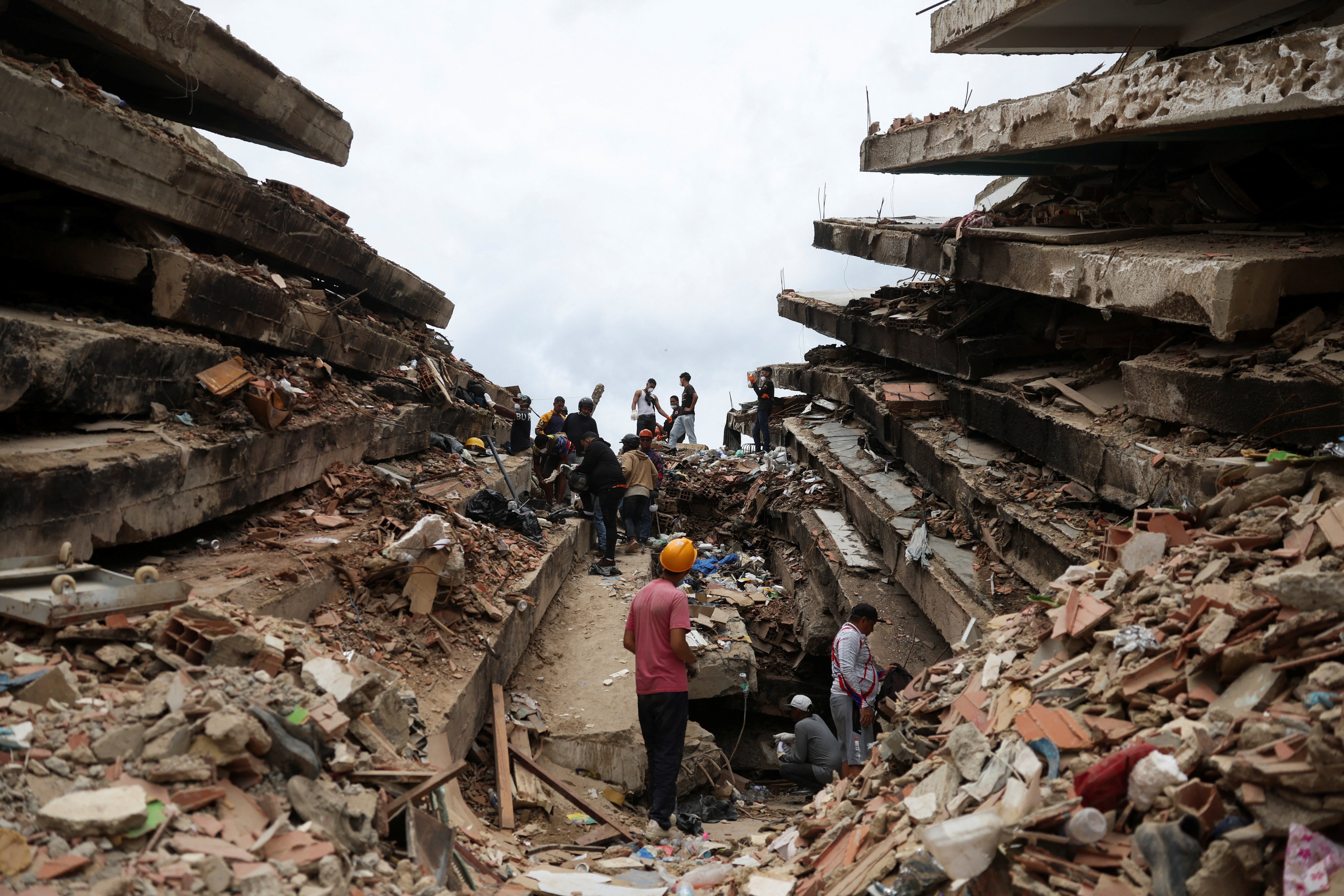
In addition to the victims, the earthquakes caused damage to hospitals, schools, residential buildings, commercial establishments and other structures.
According to the government, 189 buildings collapsed and another 885 suffered some type of damage.
A preliminary assessment by the United Nations Development Program (UNDP) estimates losses of R$34.6 billion, without considering the costs of reconstruction.
The search for survivors continues with the help of Venezuelan teams and rescuers sent by several countries. According to the government, more than 30,000 workers are participating in rescue operations.
But why was the earthquake in Venezuela so devastating? Some factors may explain it:
the country was hit by a double earthquake;
part of the buildings were more vulnerable to tremors;
the crisis faced by Venezuela made the response to the disaster difficult.
See below for details on each of these factors.
The double earthquake
Rescue teams work at the site of a complex of buildings that collapsed after the earthquakes of June 24, in La Guaira, Venezuela
REUTERS/Ricardo Arduengo
The earthquakes that hit Venezuela had magnitudes of 7.2 and 7.5 and occurred less than a minute apart. For seismologists, they form what is known as a double earthquake.
In this type of event, two main earthquakes happen in sequence, with similar magnitudes and close epicenters.
Unlike a common sequence, in which a large earthquake is followed by smaller aftershocks, the two tremors release comparable amounts of energy.
According to analyzes by the United States Geological Survey (USGS), although they occurred close to each other, the earthquakes originated on different geological faults. This means that both should be considered major events.
The difference of just 0.3 points on the magnitude scale may seem small, but the scale is logarithmic. According to the USGS, the 7.5 magnitude earthquake released about three times more energy than the 7.2.
In practice, the first tremor had already damaged buildings and other structures.
When the second earthquake hit the region a few moments later, buildings that had been weakened suffered new impacts, increasing the risk of collapse.
Other natural factors also contributed to increasing the destruction. The two earthquakes occurred at shallow depths, which makes the energy reach the surface more intensely.
Understand earthquake in Venezuela
Arte/g1
Click here to return to the beginning.
'Chavista' architecture
The strength of earthquakes explains part of the tragedy. But experts say that the conditions of the buildings also contributed to the high number of buildings destroyed.
Part of the most affected region has geological characteristics that make it difficult to construct resistant buildings. The soil is made up of sediments that can intensify the vibration caused by earthquakes.
In addition, government-built housing complexes and other buildings built under limited supervision may also have amplified the tragedy.
Experts say that many projects were built quickly during the expansion of housing programs, with little transparency and limited oversight.
According to these experts, years of negligence and non-compliance with construction standards may have worsened the damage.
They also point out that the economic crisis faced by the country has reduced the technical capacity available to monitor and maintain these structures over the years.
Among the most affected locations is the Urbanismo Hugo Chávez complex, in Catia La Mar. The project was built within the housing program created during the government of Hugo Chávez and expanded by Nicolás Maduro. Much of it collapsed after the earthquakes.
Studies and reports indicate that many residential complexes made by the government were built without adequate supervision and inspection. Some constructions were also carried out without following the appropriate legislation for risky areas.
Click here to return to the beginning.
Internal crisis
A helicopter takes off from a US Navy ship docked in the port to support relief efforts for victims of the earthquake in La Guaira, Venezuela
AP Photo/Matias Delacroix
The earthquakes hit a Venezuela that had already been facing an economic, social and infrastructure crisis for years.
In the first days after the tremors, residents reported difficulties in locating missing family members and complained about the lack of rescuers. In many places, the residents themselves began the rescues before the arrival of specialized teams.
Experts say that problems accumulated over the last few years have compromised the State's ability to respond.
Hospitals were already facing a lack of equipment, medicines and professionals before the tragedy.
The deterioration of infrastructure also made emergency work difficult. Frequent blackouts, interruptions in water supply and limitations in public services affected assistance to victims and the organization of rescue operations.
In this scenario, international aid gained an important role. Search and rescue teams from several countries were sent to Venezuela, accompanied by sniffer dogs, equipment and tons of medicines and other supplies.
Click here to return to the beginning.
VIDEOS: most watched on g1
Source: G1