From amateurism to world title: Japan has a plan to win the World Cup by 2050
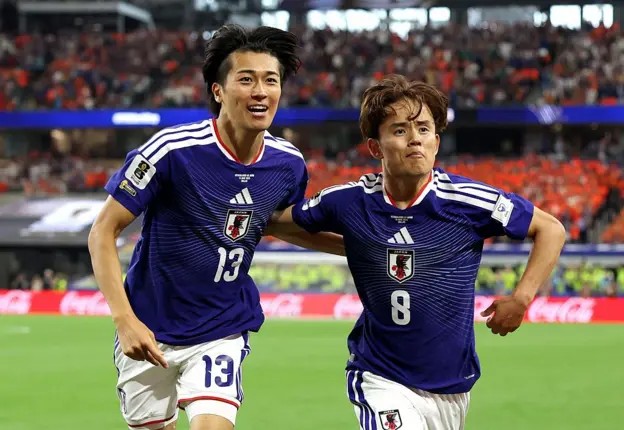
Japan drew their opening game against the Netherlands and beat Tunisia 2-0. They are in second place in group F
Getty Images
Opponents in this Monday's game (29), the Japanese and Brazilian teams have a very different story when it comes to football. While Brazil already had three World Cup titles, Japan still did not have a professional league in the sport.
Favorite g1 on Google and follow the main news of the day
In fact, it was just before our fourth year that the country created the J.League (professional league) and, already during its creation, it began to think about the biggest possible prize: winning a World Cup.
To this end, the country drew up, at the time, a 100-year plan, called "Hundred Year Vision", which would make them champions by 2092.
In 2005, however, the vision changed. As in a short time they managed to qualify for two World Cups, the deadline for the objective was reduced by 42 years and the goal, now, is to be champion by 2050.
⚽➡Japan and Brazil face each other in the first stage of the knockout stages of the 2026 World Cup this Monday at 2pm.
Selection's opponent: Japan draws with Sweden and faces Brazil in the second phase
Follow the World Cup on ge:
World Cup 2026 simulator
World Cup 2026 calendar: see dates and times of all games
RESULTS: check the World Cup table
Creation of the J. League
The first edition of the championship was played in 1993, with ten clubs. But, even before the ball rolled, a central figure in the development and popularization of the sport had already arrived in Japan: Zico.
Hired by Kashima Antlers in 1991, the former number 10 symbolized the ambition of the Japanese project: to create a competitive league and accelerate the development of the sport. At the club, he helped to form a professional culture that transformed him into one of the most important figures in the history of the J.League.
Other Brazilians, such as Leonardo, Dunga, Bismarck and Ramon Menezes, also played in the league in the early years. The foreign presence was part of a broader plan, which combined clubs linked to communities, structured youth categories and investment in training - bases that would help Japan reach its first World Cup, in 1998.
Change in route
Part of the plan was implemented a few years later. In 1998, the team played in the first World Cup. Since then, the country has never been left out of a tournament.
With this in mind, in 2005, the country revisited the 100-year plan and reduced the deadline. Now, the goal is to win a World Cup by 2050.
In addition, the plan includes hosting the tournament in 2050. To achieve this, the entity established objectives that went beyond the main team. The plan envisaged involving 10 million people with football, expanding the training of players and coaches, strengthening the youth teams and consolidating a national game identity.
For now, Japan faces the challenge of advancing past the round of 16 of the competition, something unprecedented for the team.
"In the 2005 JFA Declaration, we set the goal of winning the World Cup by 2050," coach Hajime Moriyasu told Japanese website Nippon.com. "Considering our best result to date was the round of 16, reaching the quarterfinals in 2026 would seem a realistic goal. But we can't expect growth if that's all we want."
Source: G1