Fiscal cannot oppose growth, says coordinator of Lula's plan
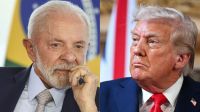
The coordinator of President Luiz Inácio Lula da Silva's (PT) pre-campaign government program, Sergio Gabrielli, argued in an interview with CNN Brasil that the country's fiscal rule cannot oppose economic activity and stated that the plan seeks to combine balance of accounts and growth.
Lula's government program - a sort of presentation letter for his proposals for a fourth term - is already being prepared. The PT (Workers' Party) will deliver the document to the president and the coalition by July 15th, who will be responsible for finalizing the final version of the text by the start of the campaign.
"It is the program of a government that in the last three and a half years has been fiscally responsible. We do not want to waste public resources. We need to seek stability of the public debt, but without stopping it from growing. One thing cannot be opposed to the other. We need to combine these objectives", he said.
Gabrielli defended the role of the fiscal framework during the Lula 3 government, but said that "there are other instruments to balance the books".
According to CNN Brasil, the Lula government's economic team defends that a hypothetical new mandate continues adopting as its mantra "an adjustment that does not penalize the poorest".
The government understands that a cut in expenses "in the flesh" could weaken activity in the country. A less heated economy would mean a decline in revenues and have a negative impact on public accounts, they argue. Furthermore, debt is calculated in relation to GDP.
In the interview with CNN Brasil, Gabrielli, who was president of Petrobras under PT governments (2005 to 2012), indicates how Lula's program should address economic issues, public security, national sovereignty, among other topics.
Check out the interview
CNN Brazil: Amid the increase in prices caused by the war in the Middle East, the discussion about Petrobras returning to the distribution market was resumed. Can the plan propose this measure?
Sergio Gabrielli: Of course we are concerned about fuel prices. An exogenous phenomenon, such as this war, cannot pass on all the variation in international prices to domestic prices. But the government plan cannot and will not say what Petrobras has to do. Petrobras is a public company and has its own governance.
CNN Brasil: Still in the economic field, can the plan propose any changes to the country's fiscal rules?
Sergio Gabrielli: It is the program of a government that in the last three and a half years has been fiscally responsible. We don't want to waste public resources. We need to seek stability in public debt, but without stopping it from growing. One thing cannot be opposed to another. We need to combine these objectives. So far [the fiscal rule] has been sufficient, but there are other instruments to balance the books.
CNN Brazil: PT wings defend an increase in military investments, aimed at national defense. Can this theme appear in the plan?
Sergio Gabrielli: The defense industrial complex has enormous potential for inducing activity and we do want to invest. Just as we want to invest in the health complex, in pharmaceuticals, vaccines, in food sovereignty, in fertilizers. We also need to invest in data infrastructure. We cannot depend on big tech to process our data, we need to have control over our information. We also need to expand our fuel refining capacity. And still regarding sovereignty, we need to reinforce our self-esteem and be proud to be Brazilian and not salute.
CNN Brasil: Does sovereignty in the area of critical minerals pass through a state-owned company?
Sergio Gabrielli: Our thinking on critical minerals is in our party manifesto. They are very relevant to the national strategy. We are the second largest reservoir in the world. And what we cannot give up is adding separation, product qualification.
CNN Brasil: Regarding public security, is the idea still to make the creation of a Ministry of Public Security conditional on the approval of the Security PEC?
Sergio Gabrielli: The federal government has limitations in dealing with the issue of security. And crime changed, drug trafficking increased, weapons trafficking increased. Crime is not just in the favelas, but embedded in various segments of the financial system, so we need to have federal instruments.
Source: CNN