Fires, mining and pollution: do criticisms of electric car batteries make sense?
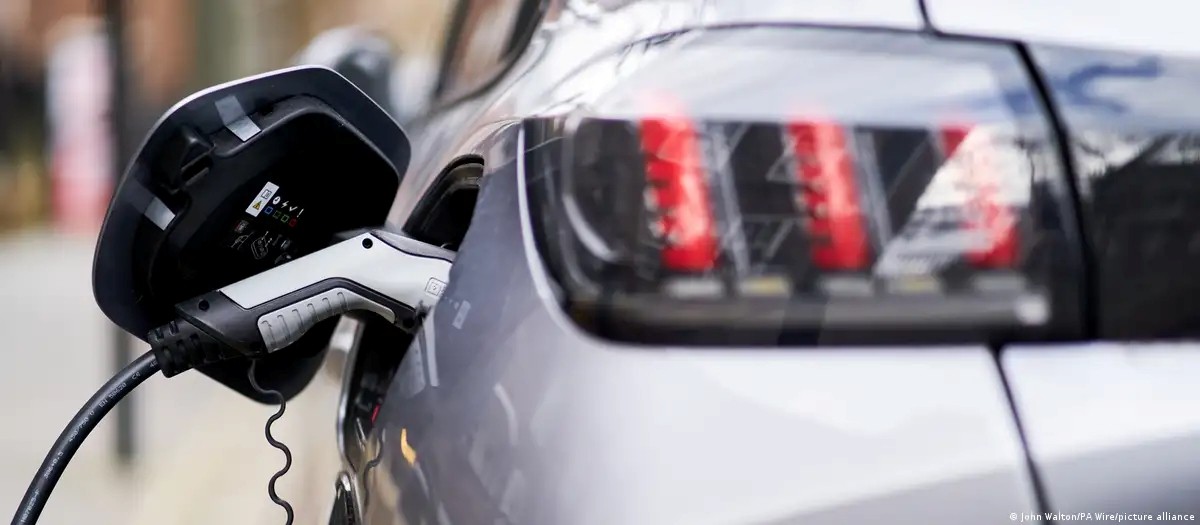
Batteries are by far the most expensive component and remain one of the main vulnerable points of electric cars
John Walton/PA Wire/picture alliance
Electric cars are experiencing a wave of popularity unprecedented since the global oil crisis triggered by the war in Iran.
In Australia, sales jumped more than 150% in April, compared to the same period the previous year, while in the Asia-Pacific region they grew 80% in the first three months of 2026 - excluding China, where significant sales growth has already stabilized.
Do you have any suggestions for a report? Send to g1
In Latin America, around 75% more electric vehicles were sold, and in Europe, almost a third more, according to the International Energy Agency (IEA).
The IEA's executive director, Fatih Birol, said in May that record sales of electric vehicles are "providing some relief amid the biggest oil supply shock in history" and that falling battery prices should further boost the sector.
Now on g1
Still, batteries - by far the most expensive component - remain one of the main vulnerable points of electric cars.
Critics of electric vehicles have long argued that batteries, often made with lithium ions, can catch fire and that fires in these vehicles are harder to extinguish than in gasoline-powered cars. However, this claim ignores the fact that vehicles with combustion engines are much more prone to fires.
The large and heavy batteries in electric vehicles have also been cited as a possible cause of road damage. Experts, however, dispute this thesis and claim that large trucks are mainly responsible for road wear.
Finger pointed at cobalt
Because they contain minerals such as cobalt and nickel, electric vehicle batteries have always raised concerns related to supply chains, especially in cobalt mines in the Democratic Republic of Congo (DRC).
In Australia, the prime-time news program Spotlight, shown in March, investigated cobalt mines. cobalt belonging to Chinese companies in Congo. The report revealed places where thousands of people, including many children, work in precarious conditions and in a highly polluted environment.
By presenting cobalt as "the key element present in practically all storage batteries on the planet, from electric vehicles to homes", the program stated that the search for a "clean and green" future, based on renewable energy and electric cars, has a "deadly and devastating cost".
However, critics of the report argued that it failed to mention an important point: the The chemical composition of electric vehicle batteries has largely transitioned to lithium iron phosphate (LFP) technology, which does not require the use of cobalt.
David McElrea, executive director of the Smart Energy Council, an energy sector group in Australia that advocates renewable energy, questions why the report focused specifically on electric vehicle batteries and other renewable technologies if cell phones, tablets and laptops also contain cobalt.
He says fears of exploitation in extensive mineral supply chains Critics used in renewable technologies are legitimate, but says the electric vehicle industry has reacted to concerns about the origin of materials and encouraged innovations that have eliminated cobalt from most modern car batteries.
Chemistry professor Neeraj Sharma of the University of New South Wales adds that cheaper chemical compositions, such as sodium-ion batteries, are also coming to market. "Electric vehicle manufacturers have been moving away from cobalt because it is expensive, toxic and presents ethical dilemmas," he says.
The dispute over the critical minerals narrative
Experts speak of a "war of narratives" around critical minerals.
The conservative, fossil fuel-friendly Canadian think tank Fraser Institute said by 2023 that around 400 new mines of critical minerals would be needed to meet future demand for electric vehicles.
The study's author, Kenneth P. Green, who has for years advocated investment in "cheap" fossil fuels rather than renewable energy, said that "the risk that mineral production and mining will not be able to keep up with projected demand for electric vehicles is significant."
However, in its Global EV report Outlook 2026, the International Energy Agency says that known geological reserves of critical minerals are sufficient to meet long-term demand for electric vehicles, even in a scenario of phasing out most fossil fuel-powered cars. However, the strong concentration of battery production in China poses risks to global supply chains.
The IEA also notes that the advancement of sodium-ion batteries, which do not require the use of lithium, is expected to further reduce demand for critical minerals. Additionally, the agency advocates a rapid expansion of the recycling of minerals used in batteries as a way to increase the transparency and resilience of supply chains.
Targeted attack or legitimate criticism?
But how do you differentiate legitimate concerns about the impacts of mining from misinformation about electric vehicle supply chains?
While McElrea says there is a "targeted attack" against electric vehicles, promoted by media friendly to fossil fuels, critical minerals and energy security expert Vlado Vivoda of University of Queensland, states that not all criticism is necessarily coordinated or made in bad faith.
"Many concerns related to mineral extraction, processing, working conditions, impacts on soil, waste and the concentration of supply chains are real", he says. This is why, according to him, it is so easy to challenge pro-energy transition narratives that present clean energy as something "immaculate".
Communications co-chair of the global coalition Climate Action Against Disinformation, Philip Newell, says that real concerns about injustice in resource extraction must begin by strengthening the communities affected by mining. misinformation
For Vivoda, "efforts to delegitimize clean technologies" have to do with the current global energy crisis. He argues that suggesting that clean technologies are "as bad as, or even worse than, the fossil fuel-based system" ends up creating inertia and delaying the energy transition. old ones", he says.
Source: G1