Finance Minister defends taxing the rich more, reviewing social programs and cutting tax benefits in the coming years
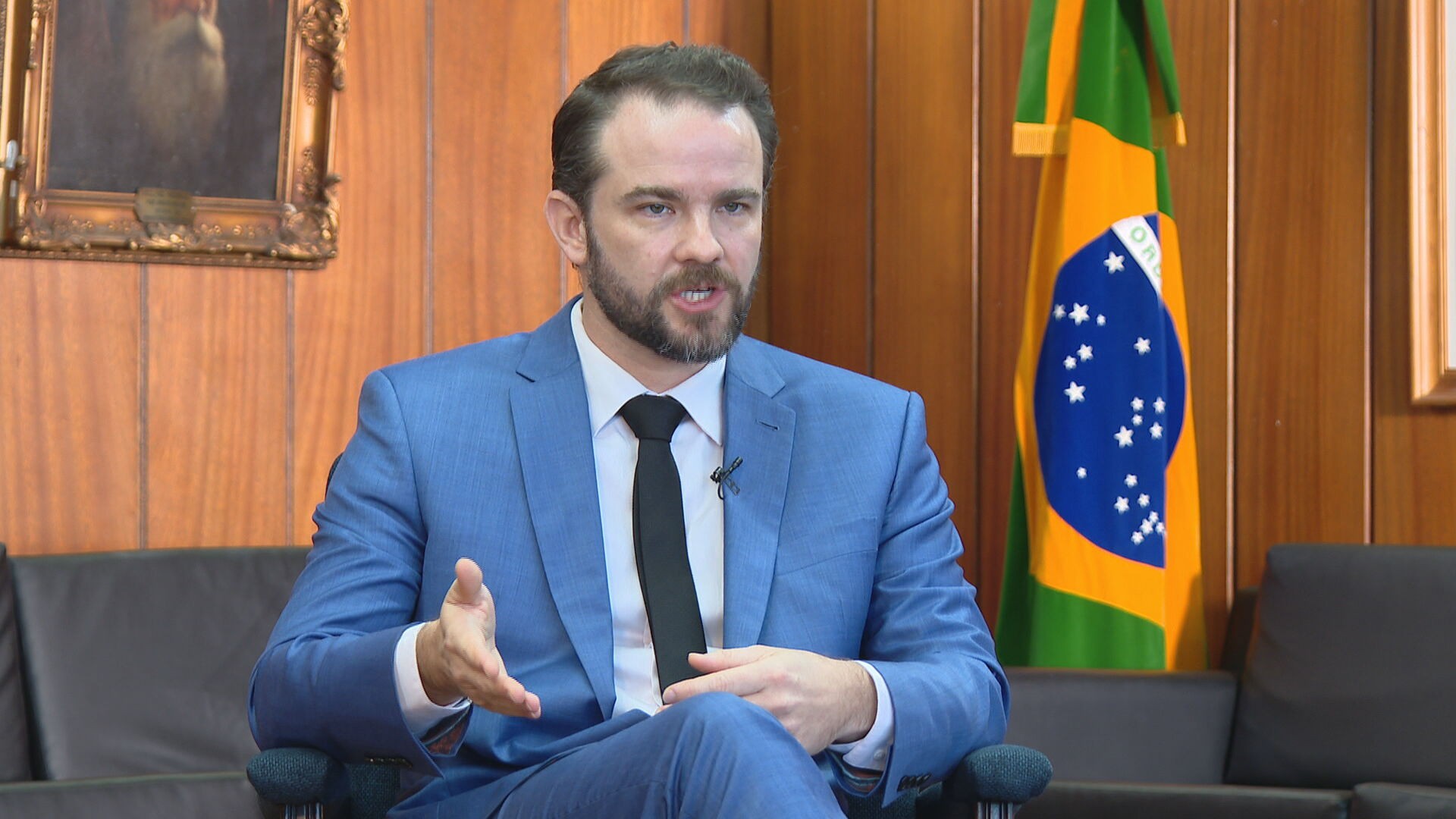
Minister Dario Durigan in an interview with g1
Reproduction/TV Globo
The Minister of Finance, Dario Durigan, defended increasing taxation on income, thus encompassing the richest population, reviewing social programs, increasing focus and cutting tax benefits, as ways to improve the economy in the coming years.
In an interview with g1, he stated that he has not been approached, so far, by President Luiz Inácio Lula da Silva's (PT) campaign for re-election, but that he has spoken with José Sérgio Gabrielli, who heads the PT government program, and with allies.
"I was not approached specifically to contribute to the government plan. That was not the tone. I have, yes, spoken with Gabrielli, with Edinho [president of the PT], with the president himself [Lula], with other figures from the party and allied parties, from the PSB, from the PDT, in order to explain what I think the path of the future should be", said the minister.
➡One of the points defended by Durigan is the increase in income taxation in Brazil, covering the richest segment of the population.
Historically low compared to more developed nations, the tax burden on income did not change with the approved tax reform - which kept the country among those that most focus their taxation on consumption in the world (penalizing the poorest population). The tax rate on consumption is among the highest on the planet.
Taxing profits and dividends
➡To tax income more, the head of the Treasury argues that the Brazilian economy should move in the direction of what happens in the most advanced countries on the planet, taxing profits and dividends, something that was in force until 1995.
Since then, the distribution of profits and dividends has been exempt from taxation in Brazil, which is one of the few countries in the world that have a zero tax rate.
The average rate in OECD countries, in turn, was 24.7% in 2024, according to data from the Tax Foundation. In this group, only Estonia and Latvia do not tax profits and dividends.
➡The taxation of profits and dividends has already been proposed before by former president Jair Bolsonaro and his Economy Minister, Paulo Guedes. The text was approved by the Chamber in 2021, but was not taken forward in the Federal Senate.
Estimates from analysts indicate that it would be possible to raise more than R$100 billion per year with the measure, depending on how it is implemented.
At the same time, according to Durigan, it would be possible to move towards reducing corporate income tax and taxation on consumption, something also sought by former minister Paulo Guedes, during the Bolsonaro administration. 30 years, the taxation of dividends. It was until 1996, now (...) For the future, we should improve these tax discussions and try to tax better, especially the richest, those who have economic capacity, without exaggeration. It is a path that we must follow", declared Durigan.
Cutting benefits
➡To help balance public accounts, the minister also defended, to continue reducing the so-called "tax expenses", that is, the existing benefits through the reduction of taxes. taxes for specific sectors or segments of society. These subsidies are estimated by the Federal Revenue at more than R$600 billion per year.
"I think that as long as they are justified, there is room to correct tax distortions. I'm not talking about increasing taxes, so it's important to include, for example, tax spending here. Tax spending in the country remains high and there is room to review (...) This year, we are cutting 10%. I think there is still room to cut tax spending next year.
And that's fair", said Durigan to g1.
Consolidation of social benefits
➡At the same time, the minister also assessed that it is important to continue carrying out reforms to cut mandatory spending, and cited a proposal, already defended by his predecessor, Fernando Haddad, to review social programs.
Study shows that the country's main social benefits, together, will cost around R$550 billion in 2026, and that there is a record of duplicities and fraud. Durigan stated that he "favors" the proposal to consolidate social programs.
"This effort must be made to rationalize and make social spending more efficient. This is public money and it must be well spent. That is my position (...) We need to look now at the situation as the country recognizes the need for benefits due to its history of inequality and persistent poverty, we are getting out of poverty, we are taking people out of hunger. And this expense needs to be rationalized. For what? So that we can make room for investment", added Durigan.
Deindexation
Asked whether it would be possible to deindex the minimum wage from social security expenses, or the health and education floors from revenues, proposals defended by analysts for a faster improvement in public accounts, he stated that this is a debate for the future government that takes over in 2027.
"We are living in an electoral moment. You need to see what the election will be and, after the election, open up what the specific proposals are", he concluded.
READ ALSO:
Minister of Finance says that people and companies targeted by US sanctions were already being investigated: 'interference worries us'
Durigan says that PIX does not harm Americans and defends 'rationality' in US decision on tariffs
Source: G1