Fed maintains US interest rates in the range of 3.50% to 3.75% per year in the first decision with Warsh as president
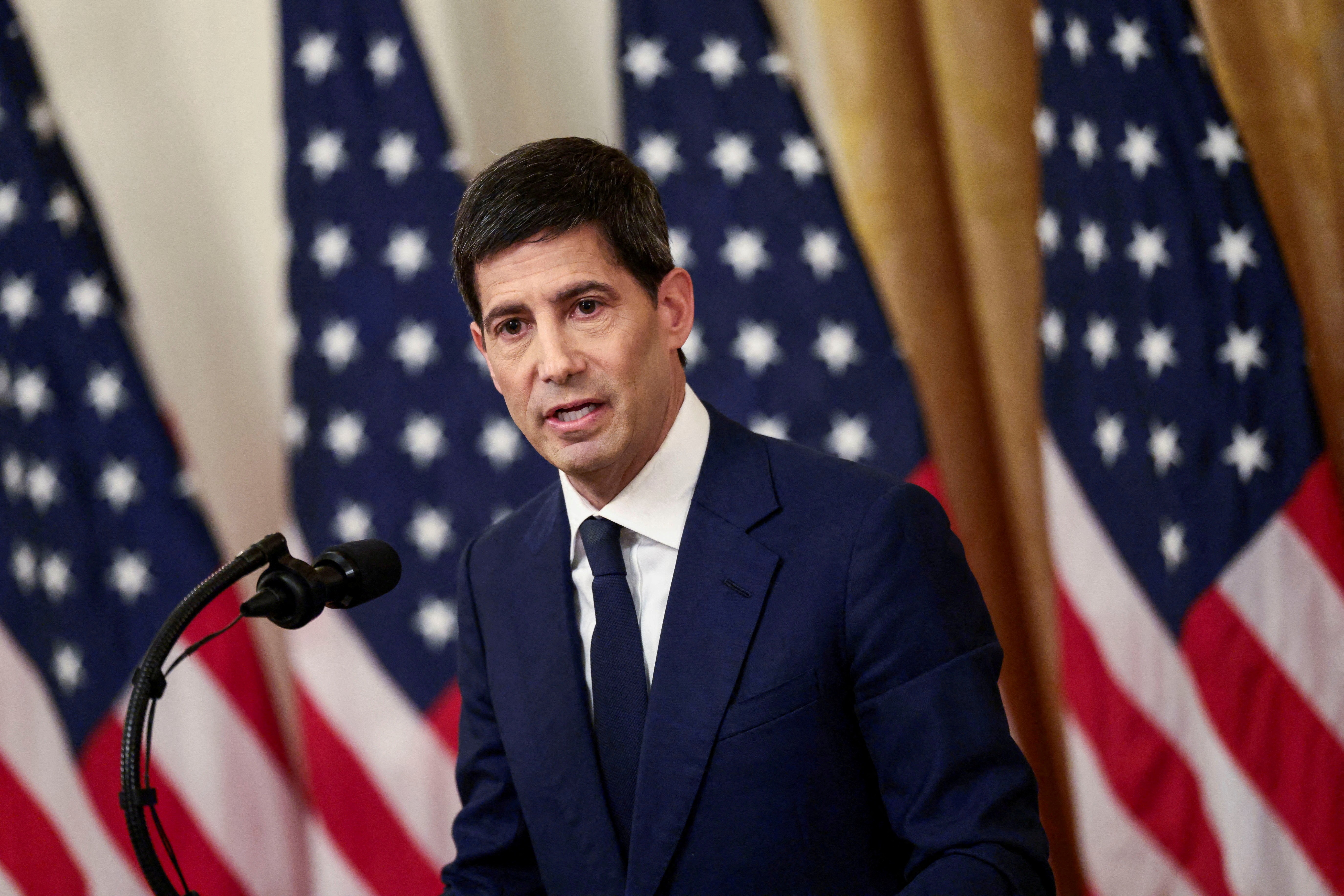
Federal Reserve Chairman Kevin Warsh speaks during an inauguration ceremony in the East Room of the White House, in Washington, on May 22, 2026. File photo.
REUTERS/Evelyn Hockstein
The Federal Reserve (Fed), the central bank of the United States, maintained the basic interest rate in the range of 3.50% to 3.75% per year - the lowest level since September 2022. The decision, announced this Wednesday (17), came in line with financial market expectations.
This was the fourth consecutive meeting in which the Fed left interest rates unchanged. The meeting also marked Kevin Warsh's debut as head of the monetary authority.
Nominated by President Donald Trump, he took office on May 22 and officially began his four-year term after a ceremony at the White House (read more below).
The war in the Middle East and rising energy prices continued to be among the Fed's main concerns. But, faced with an economy that remains heated and inflation still above target, the American central bank's challenges go beyond the conflict, including persistent pressures on prices and issues linked to Warsh's new management.
➡ Interest policy in the USA has repercussions in Brazil. With rates at a historically high level, pressure is growing for Selic, the Brazilian basic interest rate, to remain at a high level for longer, in addition to generating effects on the exchange rate.
This is the 12th decision since Donald Trump took office as the 47th president of the USA, on January 20, 2025. Since taking office, there have been three interest cuts, amid an uncertain economic scenario, with geopolitical conflicts and the tariff war promoted by the Republican.
The What did the Fomc say?
The Federal Open Market Committee (Fomc) reported, in a statement, that the American economy continues to grow at a solid pace, despite the high uncertainties associated, in part, with the conflict in the Middle East.
According to the panel, company investments and productivity gains remain strong, while the labor market remains stable, with job creation following the growth of the workforce.
The committee also highlighted that inflation remains above the 2% target and attributed part of the recent pressures to supply shocks that have raised prices in some sectors, especially energy.
"Inflation remains high in relation to the Committee's 2% target, partly reflecting supply shocks that drove price increases in certain sectors, including energy", stated the Fed.
By justifying the decision to maintain interest rates between 3.5% and 3.75% per year, the Fomc reiterated its commitment to the so-called dual mandate of the American central bank - promoting price stability and seeking maximum employment.
The collegiate also highlighted that it will continue to be attentive to the risks to the economy and reaffirmed that its objective is to guarantee price stability. "The Committee will guarantee price stability," he said.
New Fed presidency
The change of command at the Fed comes after months of friction between Trump and the institution's then president, Jerome Powell. Since the beginning of his second term, the Republican has argued that high interest rates make credit more expensive and harm the economy.
In an interview with NBC News last week, however, Trump adopted a different tone when commenting on the new command of the central bank.
The Republican stated that he wants Warsh to "do whatever he wants", but returned to defending lower interest rates and criticized the possibility of new increases. In the president's view, the American economy remains strong, and making credit more expensive would be a way of "punishing success".
However, recent data from the American economy help to explain why the Fed faces a more complex task and why the perception is growing that interest rates will have to remain high for longer.
Hot job market: the creation of 172 thousand jobs in May and the stable unemployment rate at 4.3% - still at historically low levels - show that the economy continues to generate jobs.
At the same time, wages increase by around 3.4% per year, signaling that the demand for workers remains strong.
⛽ Pressure on prices: inflation has regained strength. The consumer price index (CPI), one of the main measures of the cost of living, accumulated an increase of 4.2% in 12 months, the highest level in three years. The movement was mainly driven by the increase in energy prices amid the conflict in the Middle East.
Inflation still far from target: even when excluding more volatile items, such as food and energy, the indicators remain above the 2% objective pursued by the Fed. The core CPI is at 2.9%, while the core PCE - the inflation index preferred by the American central bank as it better reflects families' consumption habits - remains around 3.3%.
More moderate growth: on the other hand, economic activity shows signs of losing steam. Gross Domestic Product (GDP) grew at an annualized rate of 1.6% in the last quarter, below the 2% previously projected and market expectations, indicating a slowdown in relation to previous periods.
Effect of interest rates in Brazil and on the markets
The still high interest rates in the USA keep the yields on Treasuries, the American public bonds considered the safest investments in the world, at attractive levels.
With higher returns, these securities tend to attract resources from international investors, strengthening the dollar and reducing interest in investments in other countries, such as Brazil.
Although several factors influence this movement, the migration of capital to the USA can reduce the flow of foreign resources to the Brazilian market, putting pressure on the real against the American currency.
A stronger dollar also makes imported products and inputs more expensive, increasing pressure on inflation in Brazil. As a result, the Brazilian Central Bank may have less room to reduce interest rates, which helps keep the base rate at high levels for longer.
Source: G1