Expert sees risk to freedom of expression in big tech decree
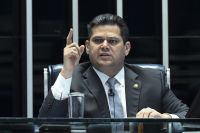
The federal government's decree regulating Big Techs in Brazil became the target of an intense dispute between the Executive, Judiciary and Legislative Powers. Opposition parliamentarians have already filed projects to overturn the measure, opening a new tug of war with Planalto.
In an interview with CNN Novo Dia, digital law specialist Luis Fernando Prado explained the legal scenario behind the clash and the impacts that the new rules could have on the freedom of expression of internet users in the country.
Article 19 of the Marco Civil da Internet at the center of the debate
According to Prado, the backdrop to the dispute is article 19 of the Marco Civil da Internet. "Article 19 of the Marco Civil da Internet said that platforms would not be held responsible, in general, for user content, unless there was a specific court order determining the removal of that content", he explained. Last year, the STF judged this article partially unconstitutional and, more recently, the Executive Branch issued decrees that, in practice, change the rules of the Marco Civil without the Legislature having approved any formal change in the law.
For Prado, this sequence of actions generated significant tension between the Powers. "The competent House to analyze reforms to the civil framework of the internet would be the Legislative Branch, where there are bills that deal with changing the civil framework, but so far there has been no democratic majority or political force in the Legislature to change the civil framework of the internet", he stated. The expert highlighted that both the Judiciary and the Executive acted to justify the inertia of the Legislature, which, according to him, is the core of the current conflict.
Impacts on freedom of expression
When asked whether the decree could restrict freedom of expression, Prado was direct: "These rules that are being re-discussed impact freedom of expression. We cannot escape this debate." According to him, any rule that addresses the liability of intermediaries for third-party content on the internet inevitably affects the way people express themselves online.
The expert warned that, with the Executive's new determinations, platforms will have more obligations to remove content and their filters will have to become more rigorous. "We will have a different internet in Brazil than we have had to date," said Prado. He also raised doubts about the technological ability of these filters to distinguish, for example, satire from genuinely offensive or illicit content, highlighting that the practical effects of these changes will still be felt in the coming months and years.
Review of the rules without the participation of the Legislature
For Prado, one of the most worrying aspects of the process is precisely the way it is occurring. "We are revisiting these rules that are crucial for the use of the internet in Brazil despite the democratic legislative process, which normally involves a multisectoral vision, with greater participation from companies, experts and civil society", he stated. According to him, this type of broad participation does not happen when the decision comes from the Executive or the Judiciary, which makes the current scenario "radically different" from that which the Marco Civil da Internet originally proposed.
The texts generated by artificial intelligence on CNN Brasil are made based on video cuts from the newspapers in its programming. All information is investigated and checked by journalists. The final text is also reviewed by the CNN journalism team. Click here to find out more.
Source: CNN