European Union expands protection for industry and confirms 50% tariff on part of steel imports
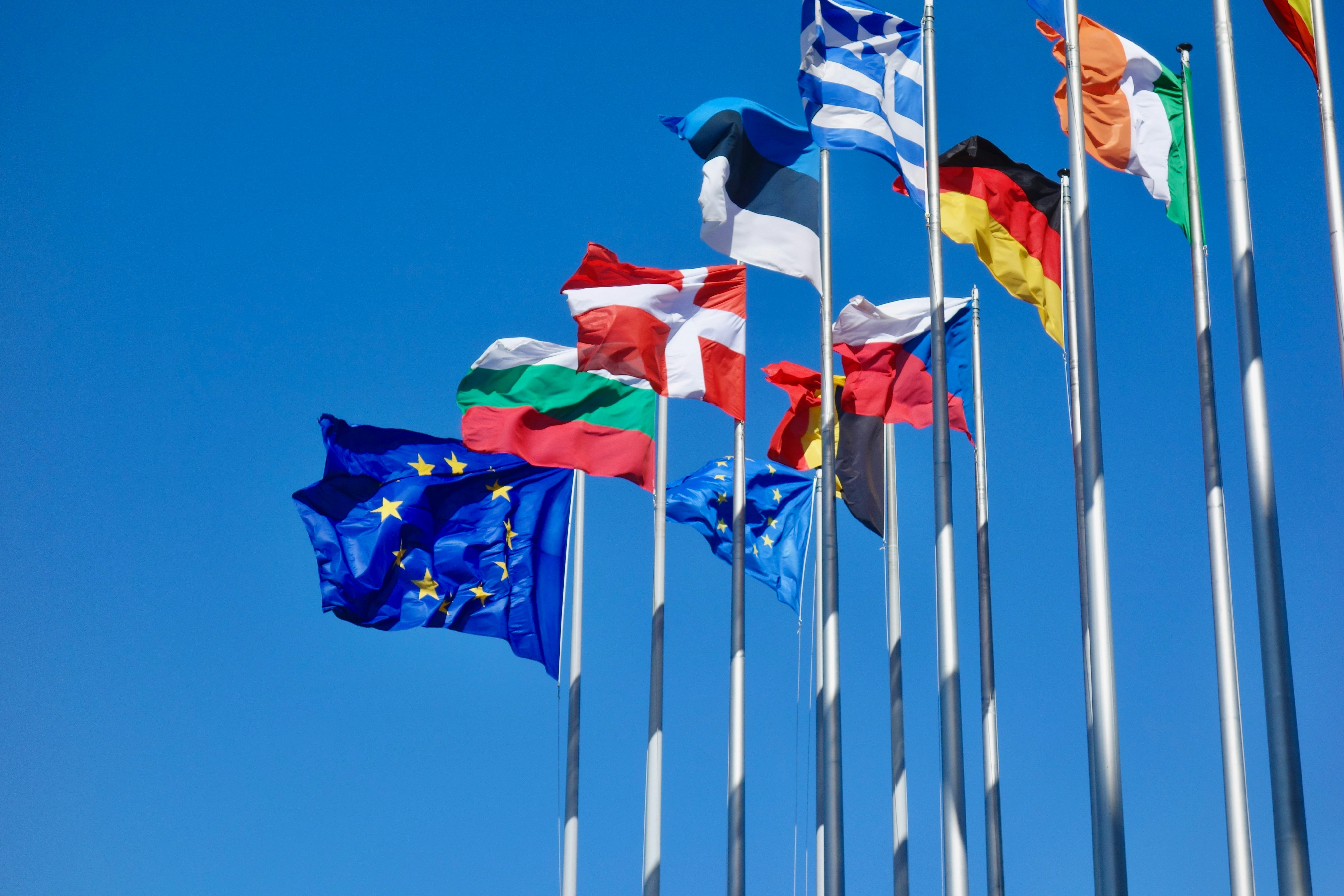
Flags of European Union countries at the headquarters of the European Parliament, in Strasbourg, France
Antoine Schibler/Unsplash
The European Commission announced this Tuesday (30) new rules for the import of steel into the European Union. The objective is to protect the bloc's steel industry from external competition and increase the utilization of plant capacity to 80%.
Under the new rules, the volume of steel that can enter the European Union without paying tariffs will be reduced by 47%, to 18.3 million tons per year. If this limit is exceeded, a 50% tariff will be applied to the surplus in 26 categories of steel products.
Half of the quotas was reserved for countries that maintain free trade agreements with the European Union. The other half will be available to all commercial partners, including these same countries. The Commission also informed that many of them will have specific quotas, defined based on the history of exports to the European market.
According to the body, this distribution will mean that most countries with free trade agreements will have a reduction in access to the European market below the average cut of 47%. The Commission added that a "significant number" of partners have provisionally accepted this division of quotas.
According to the European Commission, the changes are necessary to contain the effects of excess steel production in several parts of the world, which increases global supply and puts pressure on prices. The bloc also cites dumping practices, when companies sell products abroad at artificially low prices to gain market share.
"The persistent excess capacity in the steel sector continues to be a serious problem and continues to distort international markets", stated the Commission. According to the body, the measures seek to reestablish more balanced conditions of competition in the European market.
The rules detail a decision announced by the European Union in April. At the time, the bloc informed that it would reduce the volume of steel exempt from tariffs and increase the charge on shipments that exceed the quota to 50%. According to the European Commission, the initiative seeks to contain the impacts of global oversupply, strengthen the steel industry and increase the utilization of plants, which currently operate at around 65% of capacity.
In 2025, the main origins of steel imports from the European Union were Turkey, South Korea, Indonesia, China, India, Ukraine and Taiwan.
The European Commission also states that the bloc's steel sector has lost around 100,000 jobs since 2008 and that, without the maintenance of restrictions on imports, production tends to continue to fall.
Currently, steel imported into the European Union is subject to a safeguard system that applies a 25% tariff on shipments that exceed quotas. These rules, created during US President Donald Trump's first term, remain in effect until June 30.
Source: G1